

The 2026 FIFA World Cup may ultimately become less about the ticket price itself and more about the combined cost of geography, exchange rates and the strength of the US dollar.
Image: Graphic: Nicola Mawson | IOL
South Africans planning to attend the 2026 FIFA World Cup may find that where they stay matters almost as much as which matches they attend.
New estimates from AceOdds.com suggest Mexico could emerge as the “budget base” of the tournament as fans grapple with the soaring costs of travelling across the United States, Canada and Mexico.
Ahead of the 2026 World Cup, AceOdds crunched some numbers, exploring how much it would cost the fans of all 48 nations to attend the tournament, assuming they would follow their team through every match all the way to the final.
Using current exchange rates, MX$1,000 converts to about R945, making Mexican prices feel far closer to rand values for South African travellers.
By comparison:
The differences become especially noticeable when fans compare what R1,000 can actually buy in each host country.
According to AceOdds’ estimates:
Regardless of which nation you support, one cost stands out above all others: match tickets, says AceOdds. “On average across all 48 nations, tickets would account for nearly half of the entire estimated trip cost, amounting to around £23,000 for two people.”
That translates to just more than half a million in rands.
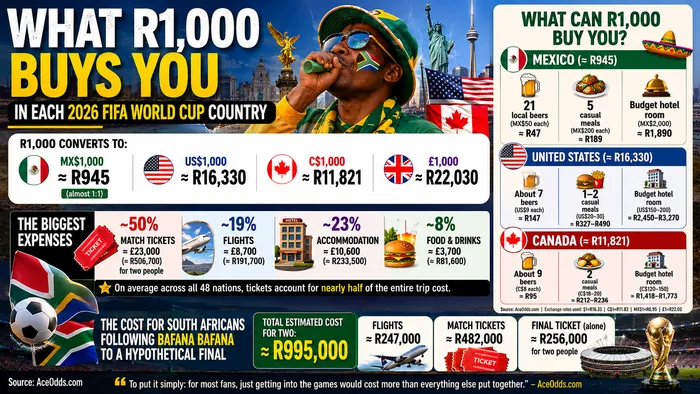
What R1,000 buys you in each FIFA World Cup country.
Image: ChatGPT
And, says AceOdds, ticket prices in this analysis were sourced from a secondary marketplace and reflect the lowest prices available per match on that platform at the time of research.
“The World Cup Final ticket alone is estimated at around £11,600 for two people based on the lowest available secondary market price. That single match would cost more than all three group stage matches combined for the majority of nations.”
That’s a quarter of a million rands.
Flights would be the second biggest expense, making up an average of around 19% of the total cost, though this varies enormously depending on where fans are travelling from.
Accommodation would account for around 23% of the total on average, while food and drinks would represent just 8% - the smallest of the four categories.
AceOdds estimates that a domestic beer in Mexico costs around MX$50, or roughly R47, while a casual restaurant meal averages about MX$200, or around R189.
That means R1,000 could buy about:
The economics are emerging as one of the hidden stories of the 2026 World Cup, which will be spread across massive geographical distances in North America.
Unlike the compact Qatar World Cup in 2022, the 2026 tournament will require fans to move between cities thousands of kilometres apart across three countries.
That geography is already driving up estimates for flights, accommodation and domestic travel.
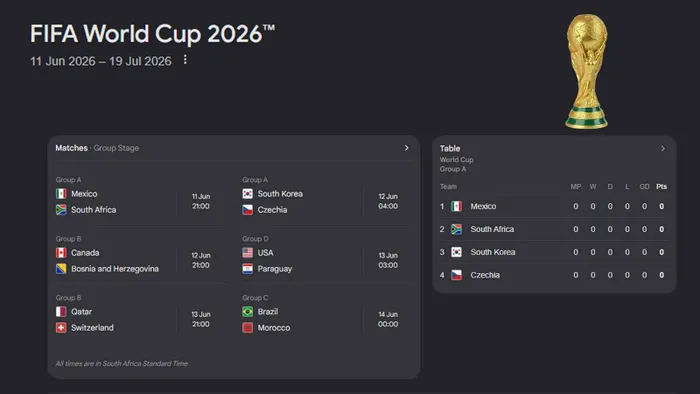
South Africa is up against Mexico for the first round - making that country a good choice to set up base.
Image: Graphic: Nicola Mawson | IOL
AceOdds estimates that two South Africans following Bafana Bafana from the group stages to a hypothetical final could spend nearly R995,000 in total across flights, accommodation, tickets, food and transport.
Flights alone were estimated at more than R247,000, while match tickets could exceed R482,000 for two people depending on how far South Africa progresses.
The final itself was estimated to cost more than R256,000 for two fans.
The data also suggests many supporters may ultimately choose to base themselves in Mexican host cities such as Mexico City, Monterrey or Guadalajara before flying into US venues for specific matches.
Mexico’s lower food, accommodation and entertainment costs could make it significantly more affordable for travelling supporters trying to contain spending during the month-long tournament.
“To put it simply: for most fans, just getting into the games would cost more than everything else put together,” said AceOdds.
For South African supporters, the combination of long-haul flights, exchange rates and North American pricing means the 2026 FIFA World Cup is increasingly becoming as much a financial calculation as a football trip.
IOL BUSINESS