

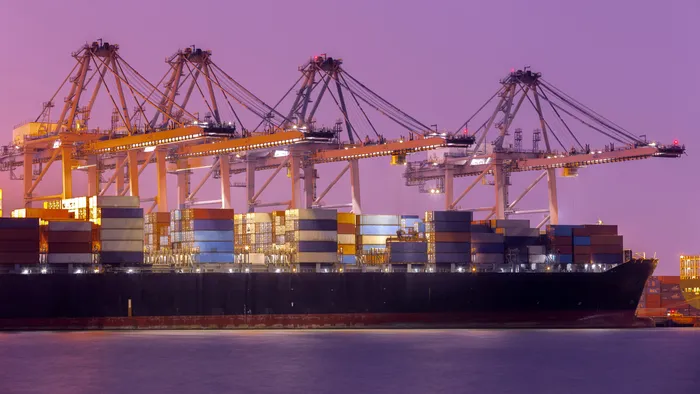
Eight international shipping companies have allegedly been fixing tariffs.
Image: Freepik
The Competition Commission has referred a complaint against eight major cargo shipping companies to the Competition Tribunal for prosecution.
The case involves several global shipping lines, including Denmark-based Maersk, Switzerland-based MSC, France-based CMA-CGM, Singapore-based PIL, Japan-based MOL, Taiwan-based Evergreen, China-based COSCO, and Japan-based K Line.
Liner-shipping cartels, known as “conferences,” date back to 1875, long before most modern industries even existed.
The first one was the UK–Calcutta Conference, where carriers literally sat around a table and agreed not to undercut each other.
In this case, the global shipping companies are accused of fixing General Rate Increase charges – the basic rates customers pay to move general cargo – on routes between South Africa and Asia, and South Africa and West Africa.
The Commission said this allegedly went on from 2008 to 2018.
Its investigation found the companies charged the same increases on routes from Shanghai, Ningbo and Shekou to Durban, from Durban to Hong Kong, and from Qingdao to Durban.
"The dismantling of the cartel will reduce the price of goods imported to South Africa for the benefit of consumers and will also reduce the costs of exports out of South Africa, which will, in turn, render the South African exports competitive in the world markets,” said Commissioner Doris Tshepe.
Shipping cartels are not unique to South Africa.
In 2024, Japanese student Suguru Otani found that cartels shifted shipping prices by 20% to 50% and influenced ship-building investment and market structure.
Interestingly, unlike secret cartels today, early shipping cartels printed their collective price lists in newspapers. It was completely normal – and even considered “efficient”.
IOL BUSINESS