

My reflection from SMS4Gov 2026 is optimistic: the technology is extraordinary, and the public sector showed itself willing to engage with it seriously and ethically, argues the writer.
Image: TVBRICS
Dr Christopher Mahlathi
What happens to the voice of government in the age of AI? That question anchored this year's Social Media Summit for Government (SMS4Gov) in Johannesburg, themed Power Shift+: Reimagining Citizen Engagement through Human Intelligence + Artificial Intelligence. I was honoured to take part in the summit, convened by Decode. under founder and chief executive Lorato Tshenkeng in partnership with the University of Johannesburg Business School (JBS), within dustry and media partners including PRISA, Independent Newspapers, Leadership Magazine and Google Africa.
In his official welcome, Philasande Sokhela of the JBS Centre for African Business set the tone with a principle the summit kept returning to: AI should be applied as a tool, while the power to act, and the accountability for acting, remain with people. Dr Caroline Azionya, president-elect of PRISA, then addressed the ethics of AI in strategic communication, arguing for professionalisation: trained peers should set and enforce standards of professional conduct, and those who apply such advanced tools should at minimum be masters of their own field. The tool does not confer judgement; the profession does.
It was a fitting entry to our panel, AI + HI: The New Engine of Public Trust, which Prof Mandla Radebe of the University of Johannesburg moderated with focus, drawing distinct perspectives from each of us. Alongside Muzi Dladla, executive manager for stakeholder management at Sasria, and Prof Busani Ngcaweni, director of the Centre for Public Policy and African Studies at JBS, my role was to contribute the scientific perspective. Three principles anchor it. AI detects patterns across millions of data points and can flag a shift in public sentiment or climate risk before any human team would notice, but a pattern is a statistical statement, not a decision; what it means, what to do, and who answers for it remain human work. Every prediction carries quantifiable uncertainty, and trust is earned by communicating it honestly rather than concealing it. And predictive systems inherit the biases of their data and their governance: unrepresentative signals in, broken trust out.
I also learned. Muzi Dladla introduced the notion of cognitive surrender, the gradual handover of human judgement to machines, and its implications for society and security. Prof Ngcaweni reflected on intelligence gathering and AI-driven sentiment analysis, drawing on South Africa's July 2021 unrest, reminding us that much of a society's meaning travels visually, through symbols whose significance citizens grasp instantly but text-trained models do not parse.
What struck me hardest concerned exclusion. Our choice of signals can itself deepen inequality. When English-language social media is treated as the voice of the public, the opinions of a connected minority are amplified while the views of those without access, or without the language, are silently discarded. AI reads signals well; it does not read inequality. The preliminary report of the United Nations'; first Independent International Scientific Panel on AI, shared a few days before the summit, which I read in preparation, quantifies the concern: more than 1,000 languages have the foundations for meaningful inclusion in AI systems yet remain unserved, and models are less reliable outside well-resourced languages. Inclusive design is not a courtesy; it is a validity requirement, and it is why the AI + HI framing matters most.
For science, this is a contract. The scientific method already encodes the safeguards this moment demands: stated assumptions, documented methodology, peer review, reproducibility and declared uncertainty. Applied within that discipline, AI genuinely augments the scientific workflow. The UN Panel reports AI-assisted evidence synthesis cutting literature screening workloads by roughly 60 percent and autonomous laboratories raising data throughput in materials discovery more than tenfold. The gains are conditional, though: tools that compress a scientific task into a prompted objective can bypass methodological steps without carrying their guardrails or context, and unexamined biases slip through. Rich scientific experience and expertise therefore become more valuable, not less: the experienced researcher recognises the implausible result and insists on validation. Our task is to establish a working relationship with AI that leaves no room for cognitive surrender. Google Flu Trends failed not because the algorithm was weak, but because human validation was withdrawn too soon.
It is striking how closely the UN Panel's preliminary findings track our conclusions in Johannesburg: capability is advancing faster than our ability to measure or govern it; human oversight must be deliberately operationalised, with people assigned to the tasks carrying high uncertainty, deep context and ethical judgement; and honest evaluation, not confident claims, is the foundation of public trust.
My reflection from SMS4Gov 2026 is optimistic: the technology is extraordinary, and the public sector showed itself willing to engage with it seriously and ethically. But the engine of public trust is not the algorithm. AI can read the signal; interpretation, action and accountability remain Human Intelligence.
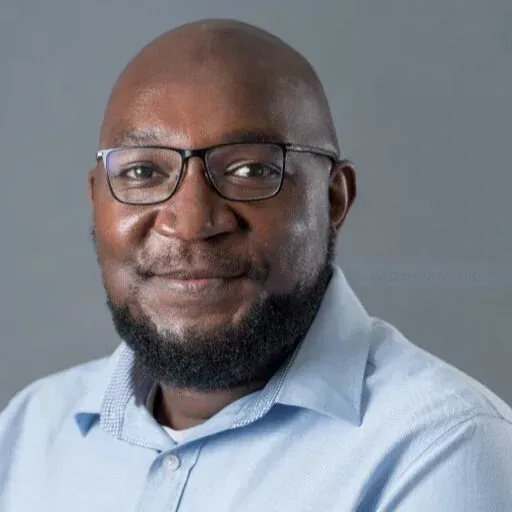
Dr Christopher Mahlathi is a senior engineer at the Council for Scientific and Industrial Research (CSIR).
Image: Supplied
* Dr Christopher Mahlathi is a senior engineer at the Council for Scientific and Industrial Research (CSIR). He served as a panellist at SMS4Gov 2026, Johannesburg Business School, 8 July 2026.
** The views expressed do not necessarily reflect the views of IOL or Independent Media.
BUSINESS REPORT