

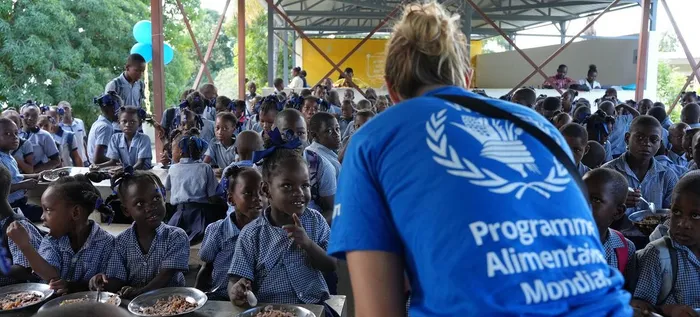
According to the report, an estimated one in every five Africans – or 20% of the continent's population – experienced hunger in 2025. By comparison, hunger affected 6% of Asia's population and 4.8% of people in Latin America and the Caribbean.
Image: Supplied
Africa is now home to the largest number of hungry people in the world, with 309 million people facing hunger in 2025, overtaking Asia for the first time, according to the latest United Nations report on global food security.
The 2026 State of Food Security and Nutrition in the World report, jointly published by the Food and Agriculture Organization (FAO), International Fund for Agricultural Development (IFAD), UNICEF, World Food Programme (WFP) and the World Health Organization (WHO), paints a mixed picture for the continent.
Estimates show that 7.8% of the global population, or roughly 645 million people, faced hunger in 2025. This is down from 8.1% in 2024 and 8.6 per cent in 2022, or nearly 14 million fewer people than in 2024 and 43 million fewer compared to 2022.
While hunger levels in Africa showed signs of stabilising after years of deterioration, the continent remains the world's most food-insecure region and is expected to bear the greatest burden of hunger by the end of the decade.
According to the report, an estimated one in every five Africans – or 20% of the continent's population – experienced hunger in 2025. By comparison, hunger affected 6% of Asia's population and 4.8% of people in Latin America and the Caribbean.
The report noted that although global hunger declined for a third consecutive year, Africa's share of the world's hungry population continues to increase.
Máximo Torero, FAO chief economist said that ongoing geopolitical instability, including the 2026 Middle East conflict, could undermine recent gains by disrupting food markets and increasing pressure on Africa and Asia.
“Depending on the length of the impact of the crisis on food inflation, which is driven by higher energy and fertilizer prices, we simulate that between 510 and 520 million people [worldwide] may still be facing hunger in 2030,” he said.
“The survey of this year has looked at the cost of healthy diets as one of the major reasons that explains the significant increase of adult obesity and overweight. Healthy diets today remain out of reach for billions of people.”
Despite the grim outlook, the report highlights an encouraging development.
“The prolonged upward trend in hunger in Africa has come to a halt,” the report says, pointing to the first signs of improvement on the continent since the Sustainable Development Goals were adopted in 2015.
Globally, the number of people experiencing hunger fell to an estimated 645 million in 2025, down by 14 million from 2024 and 43 million from 2022. Nevertheless, the figure remains higher than pre-pandemic levels.
The report also warns that healthy food remains financially out of reach for much of Africa's population.
An estimated 66.6% of Africans were unable to afford a healthy diet in 2025, more than double the corresponding figures for Asia (28.9%) and Latin America and the Caribbean (25.7%). While affordability improved in most other regions, it continued to worsen across Africa.
The average cost of a healthy diet in Africa reached 4.35 purchasing power parity (PPP) dollars per person per day in 2025, reflecting continued inflationary pressures and rising food prices.
The report identifies several structural factors behind the high cost of nutritious food across African countries, including low agricultural productivity, inadequate transport infrastructure, weak logistics networks, expensive electricity, limited cold-chain facilities and insufficient investment in agricultural research and development.
“On the contrary, when we subsidize high value commodities and we support high value commodities, the returns are a reduction of the cost of healthy diets,” Torero said.
“So the combination of both policies, one on investment on hard infrastructure, which is needed both at the level of the value chain, but also at the level of market access through roads and penetration roads, and having policies that are really targeting the reduction of high value commodities, this means fruits and vegetables in the world, will allow us to be able to achieve a reduction of the cost of healthy diets.”
Animal-source foods represent the single most expensive component of healthy diets in Africa, making balanced nutrition particularly difficult for lower-income households.
Nutrition indicators also remain concerning.
Only 20.5% of African children aged between six and 23 months receive a minimally diverse diet, while just 43% of women aged 15 to 49 achieve minimum dietary diversity, the lowest level among all world regions.
Although Africa is making progress in reducing child stunting and remains on track to meet global targets on child wasting and overweight, anaemia among women continues to worsen globally, and broader nutrition improvements remain too slow to achieve international targets by 2030.
BUSINESS REPORT