

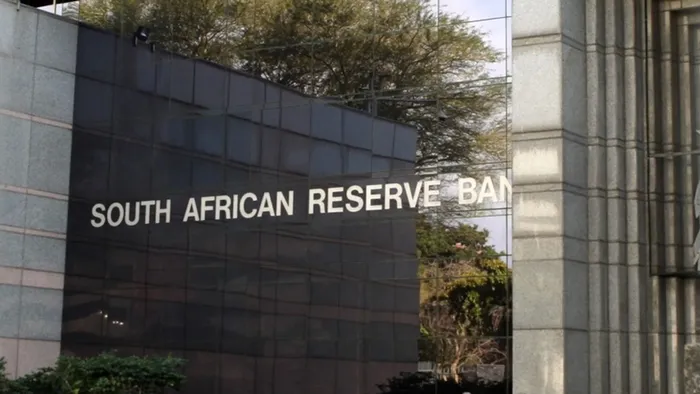
The central bank said it had observed a significant increase in cross-border payment facilitator activities, prompting a coordinated response by its National Payment System Department (NPSD) and Financial Surveillance Department (FinSurv).
Image: File
The South African Reserve Bank (Sarb) is preparing to introduce a new regulatory framework for cross-border payment facilitators as online retail and digital commerce continue to expand, bringing previously unregulated participants under formal oversight for the first time.
The central bank on Tuesday said it had observed a significant increase in cross-border payment facilitator activities, prompting a coordinated response by its National Payment System Department (NPSD) and Financial Surveillance Department (FinSurv).
Cross-border payment facilitators operate by aggregating and acquiring payment transactions in South Africa on behalf of offshore merchants that sell goods and services to local consumers, including digital products. Although these entities are not acquirers themselves, they function through sponsorship arrangements with authorised domestic acquirers.
The Sarb noted that payment facilitators currently operate without direct regulation in South Africa.
“Through its NPSD and FinSurv, the Sarb is developing a coordinated regulatory approach to address these developments,” the bank said in a statement.
The regulatory overhaul is expected to provide greater transparency, strengthen consumer protections and enhance oversight of South Africa’s rapidly expanding cross-border digital payments ecosystem.
Under the proposed framework, payment facilitators will be required to comply with NPSD regulatory requirements arising from their sponsorship arrangements with domestic acquirers. They will also be expected to meet FinSurv’s operational, compliance and application requirements relating to foreign exchange and cross-border transactions.
The central bank said a unified approach was necessary to ensure consistent oversight and to prevent regulatory gaps.
“A coordinated approach is necessary to ensure that regulatory requirements are applied consistently and to reduce the risk of regulatory arbitrage,” the Sarb said. “This approach supports effective oversight of payment models that span both the domestic payment system and cross-border foreign exchange considerations.”
The proposed rules form part of a broader effort to modernise South Africa’s payment system as cross-border e-commerce transactions continue to grow in volume and complexity.
In December 2025, FinSurv published a draft circular for public consultation covering the responsibilities of Authorised Dealers and payment facilitators, as well as settlement and reporting requirements for cross-border retail transactions.
The NPSD has now published a separate draft directive, according to which domestic acquirers sponsoring cross-border payment facilitators will be required to enter into formal written agreements and remain fully accountable for regulatory compliance, acquiring, settlement and scheme obligations associated with transactions processed through these facilitators.
The draft rules also place significant emphasis on consumer protection.
Domestic acquirers will be required to ensure that payment facilitators implement measures addressing transparency around fees and charges, disclosure of exchange rates, complaint-handling procedures, dispute resolution processes and chargeback mechanisms to protect customers engaging in cross-border transactions.
Additional requirements focus on merchant onboarding and due diligence. Domestic acquirers must ensure that offshore merchants using payment facilitators are legitimate, properly registered and comply with applicable scheme rules and onboarding standards.
The draft directive also introduces strict safeguards for merchant funds.
Payment facilitators receiving settlement funds on behalf of offshore merchants will be required to segregate those funds from their own operational accounts, maintain them in separate South African bank accounts and refrain from investing or otherwise using the funds except where specifically permitted under merchant agreements.
To strengthen oversight, sponsoring acquirers will have to provide biannual reports to the SARB detailing the number of onboarded payment facilitators, associated offshore merchants, the nature of merchant businesses and aggregate transaction volumes and values processed.
The draft directive further grants the NPSD authority to regulate, supervise and inspect domestic acquirers and cross-border payment facilitators to ensure compliance with the National Payment System Act and related requirements.
Once finalised, the NPSD directive and the FinSurv circular will be published simultaneously. The Sarb said stakeholders should submit comments only on the NPSD directive, with the consultation period closing mid-17 July.
According to the draft directive, the new rules will become effective six months after publication to allow industry participants sufficient time to implement the necessary operational and compliance changes.
BUSINESS REPORT