

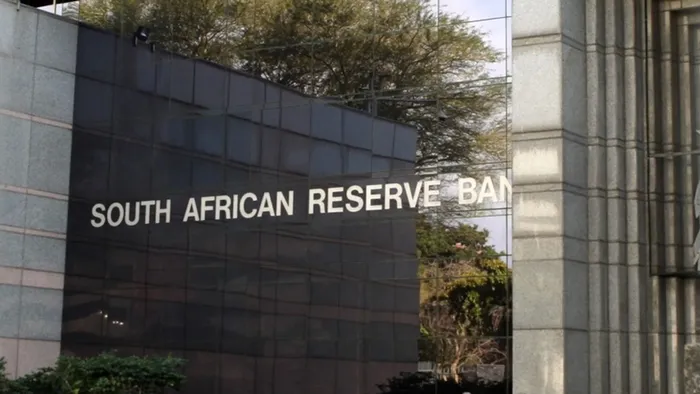
South African Reserve Bank (Sarb) deputy governor Rashad Cassim said the bank does not want to crowd out private innovation, but believes it must take a more active role in shaping the retail payments landscape to keep South Africa aligned with global developments.
Image: File
South Africa should prioritise modernising its payment system to deliver faster, cheaper and more inclusive digital payments rather than rushing to introduce a retail central bank digital currency (CBDC).
This is the advice by the South African Reserve Bank (Sarb) deputy governor Rashad Cassim who was speaking at the Gordon Institute of Business Science on Tuesday.
Cassim reiterated that the Sarb’s research had shown that a retail CBDC was technically feasible, but there was currently no compelling case for immediate implementation.
Instead, he said the Position Paper published in November 2025 ensured that the central bank’s focus is on building a payment system that works better for all South Africans.
“The compelling need is to modernise the payment system to give every South African fast, simple and secure digital payments,” he said.
Cassim said the Reserve Bank’s priority is the Payments Ecosystem Modernisation programme, which aims to upgrade the country’s payment infrastructure and create a safer, faster and cheaper system for households, informal traders and businesses.
He highlighted how payment systems, often described as the “plumbing” of the financial system, underpin economic activity by moving money between banks, companies and consumers.
Cassim said South Africa had been a leader in wholesale payments through the South African Multiple Option Settlement system, or SAMOS, but had lagged behind countries such as Brazil and India in fast retail payments.
To close that gap, the Reserve Bank has been working with the private sector on PayShap, a real-time retail payment platform designed to make digital transactions quicker and more accessible.
Cassim outlined the central bank’s cautious approach to blockchain technology, digital assets and stablecoins. Through projects such as Project Khokha, launched in 2018, the Reserve Bank tested distributed ledger technology for wholesale payments, tokenised securities and CBDC-related applications.
He said the experiments demonstrated that the technology could work, but also revealed significant trade-offs involving privacy, efficiency, legal certainty and interoperability with existing financial infrastructure.
“The Sarb’s exploratory work on retail central bank digital currency is part of a broader effort to understand how public digital money might function in a modernised economy,” Cassim said.
“Exploring a retail CBDC was a logical step in a world where private digital instruments, including stablecoins, are growing, putting more pressure on central banks to provide a safe, public digital money that supports payment innovation and preserves monetary sovereignty. Our task is not to resist innovation but to ensure that innovation serves the public interest.”
On stablecoins, Cassim said the Reserve Bank was monitoring their growth carefully. While stablecoins account for much of the transactional activity on South African crypto exchanges, he noted that this activity is largely linked to trading, arbitrage and settlement within crypto markets rather than everyday consumer payments.
He warned that if stablecoins were to evolve into a widespread alternative to public money, they could raise concerns about monetary sovereignty, financial stability and regulatory oversight.
The Reserve Bank is assessing whether existing regulations can be extended to cover stablecoin arrangements or whether new rules will be needed.
Cassim said the Reserve Bank favours a hybrid payments model in which both the central bank and the private sector play important roles. The Sarb does not want to crowd out private innovation, but believes it must take a more active role in shaping the retail payments landscape to keep South Africa aligned with global developments.
“Cash remains the most popular means of payment in the economy, and we are committed to ensuring cash remains readily available and convenient,” he said. “Our strategy is about giving South Africans more choices, not taking anything away – except hopefully needless fees and delays.”
Cassim concluded that the central challenge is to support innovation while preserving trust in the monetary and financial system.
The Reserve Bank’s goal, he said, is a payment system that is modern and competitive, a monetary system that remains credible and coherent, and a financial system that is both innovative and stable.
BUSINESS REPORT