

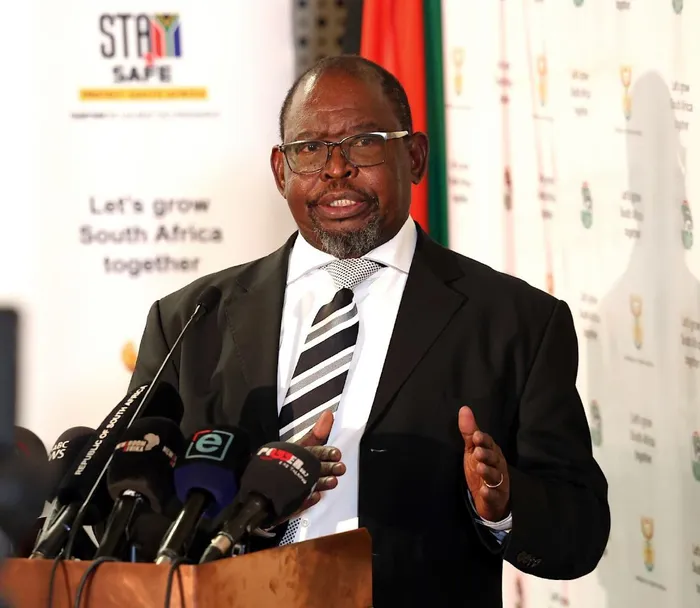
Minister of Finance Enoch Godongwana. The World Bank forecast is also 0.4 percentage points lower than the institution's January projection of 1.4%, reflecting the fallout from the ongoing conflict in the Middle East and its impact on global markets.
Image: Supplied
South Africa's fragile economic recovery is set to remain under pressure over the next two years, with the World Bank forecasting slower growth amid rising global uncertainty, higher energy prices and weaker international demand.
In its latest Global Economic Prospects report released on Thursday, the World Bank revised South Africa's economic growth forecast for 2026 down to 1.0%, from an estimated 1.1% in 2025.
The forecast is also 0.4 percentage points lower than the institution's January projection of 1.4%, reflecting the fallout from the ongoing conflict in the Middle East and its impact on global markets.
The report paints a challenging picture for the global economy, with world growth expected to slow to 2.5% in 2026 from 2.9% in 2025, marking the weakest expansion since the COVID-19 pandemic.
For South Africa, the downgrade underscores the economy's vulnerability to external shocks at a time when domestic growth remains constrained by structural challenges, including weak investment, logistics bottlenecks, electricity constraints and high unemployment.
This is despite South Africa delivering a stronger-than-expected performance in the first quarter of 2026, which expanded by 0.5% from 0.4% growth recorded in the final quarter of 2025.
The outcome exceeded most economists’ expectations and marked a sixth consecutive quarter of economic expansion, providing further evidence that South Africa’s gradual recovery remains intact despite persistent structural challenges.
The World Bank expects South Africa's growth to improve gradually to 1.5% in 2027 and 1.7% in 2028, but these rates remain well below the levels needed to significantly reduce unemployment or accelerate income growth.
The report identifies surging energy prices as one of the biggest threats to global growth. The conflict in the Middle East has disrupted energy supplies and shipping routes, particularly through the Strait of Hormuz, sending commodity prices sharply higher.
The World Bank projects Brent crude oil prices to average $94 per barrel in 2026, up from a previous forecast of $86 per barrel and a 36% increase compared with 2025 levels. Commodity prices overall are expected to rise by 22% this year, reversing expectations for a decline made earlier in the year.
For South Africa, a net importer of crude oil and refined fuel products, higher oil prices are likely to translate into increased transport and production costs, adding pressure to inflation and household budgets.
The World Bank said that for many African countries that remain heavily dependent on imported fuel and fertilizers, rising costs could place further strain on government budgets, businesses and households already grappling with elevated living costs.
The report warns that higher energy costs are already contributing to a resurgence in global inflation, which in turn is raising borrowing costs and limiting the scope for interest-rate cuts in many economies.
Sub-Saharan Africa as a whole is expected to see growth slow slightly from 4.1% in 2025 to 4.0% in 2026 before recovering to 4.4% in 2027.
South Africa's growth outlook remains significantly weaker than the regional average, highlighting the country's ongoing competitiveness and productivity challenges.
The World Bank noted that emerging market and developing economies face mounting difficulties as elevated debt levels, tighter financial conditions and reduced fiscal space constrain their ability to respond to new shocks.
The report also highlighted the growing burden of public debt across developing economies. Since 2010, aggregate government debt has risen from less than 40% of GDP to more than 70%, increasing borrowing costs and reducing resources available for infrastructure, education and healthcare investment.
While the immediate outlook remains subdued, the World Bank argued that stronger policy reforms could help lift long-term growth prospects.
The institution said countries need to focus on improving infrastructure, strengthening fiscal sustainability, enhancing productivity and creating an environment that encourages private-sector investment and job creation.
The report also pointed to opportunities from advances in artificial intelligence and technology adoption, which could support productivity growth over time if countries invest in the necessary digital infrastructure and skills development.
BUSINESS REPORT