

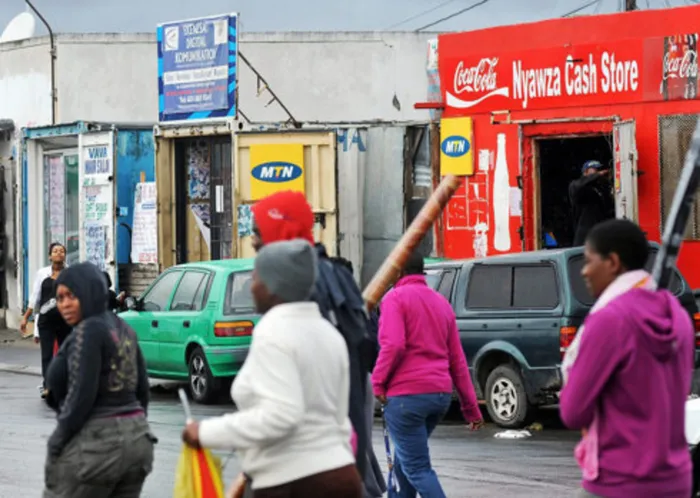
The policy seeks to establish a national framework to guide the development of township and rural enterprises, addressing longstanding challenges that have hindered economic activity in these areas.
Image: Independent Newspapers Archives
The Department of Small Business Development has published a draft national policy aimed at revitalising South Africa’s township and rural economies, a move government believes could unlock economic growth, create jobs and reduce poverty in some of the country’s most underdeveloped communities.
The draft South African Township and Rural Economy Development and Revitalisation Policy was gazetted on Friday by Small Business Development Minister Stella Ndabeni, with the public given 42 days to submit comments.
The policy seeks to establish a national framework to guide the development of township and rural enterprises, addressing longstanding challenges that have hindered economic activity in these areas.
According to the draft policy, townships and rural areas account for more than half of South Africa’s population, with approximately 24.35% of citizens living in townships and 32.15% residing in rural communities.
Government argues that these areas have significant economic potential but continue to suffer from structural barriers including poor infrastructure, inadequate access to services, limited market opportunities and high levels of unemployment.
The department noted that township economies alone generate annual turnover estimated at more than R100 billion, while the agricultural sector, a major contributor to rural economies, recorded turnover of nearly R495bn in 2023.
Despite this potential, the policy highlights that many businesses operating in townships and rural areas remain informal and struggle to access finance, skills development programmes and government support services. An estimated 65% of township enterprises operate informally.
Government said the absence of a dedicated national policy has resulted in fragmented interventions across the three spheres of government, uneven allocation of resources and weak coordination between public and private sector stakeholders.
“The development of township and rural economies requires a coherent policy approach, coordinated interventions and a whole-of-government strategy,” the document states.
Among the key challenges identified are crime and extortion, inadequate infrastructure, regulatory barriers, financial exclusion, limited access to land and commercial property, digital connectivity gaps and shortages of business and technical skills.
The policy also identifies concerns around the proliferation of illicit and counterfeit goods, as well as the dominance of foreign-owned businesses in some township sectors. It proposes stronger enforcement of regulations and improved compliance measures to create a more equitable business environment.
Government further argues that high unemployment rates, particularly among young people, make township and rural economic development a national priority. South Africa’s unemployment rate stood at 32.9% in the first quarter of 2025, while youth unemployment exceeded 46%.
The proposed framework aims to promote entrepreneurship, improve access to finance, expand business development support, strengthen local value chains and encourage investment in sectors with high growth potential. These include renewable energy, information technology, tourism, healthcare, transport, mining beneficiation and manufacturing.
The policy also emphasises the need to revitalise industrial parks and manufacturing capabilities in townships and rural areas to stimulate job creation and attract new investment.
Importantly, the framework seeks to improve coordination among national, provincial and local government institutions, while encouraging stronger partnerships with the private sector, development finance institutions, business chambers and educational institutions.
The draft policy builds on existing initiatives such as the National Integrated Small Enterprise Development Strategic Framework, the National Informal Business Upliftment Strategy, Gauteng’s Township Economic Development Act and KwaZulu-Natal’s Township and Rural Economies Revitalisation Strategy.
Government said extensive consultations informed the policy, including national and provincial dialogues attended by more than 1,000 stakeholders, entrepreneurs, business owners, financial institutions and government officials.
If adopted, the policy is expected to provide a comprehensive roadmap for transforming township and rural economies into more inclusive, sustainable and competitive contributors to South Africa’s economic growth.
Members of the public and interested stakeholders have until mid-July to submit comments to the Department of Small Business Development before the policy is finalised.
BUSINESS REPORT