

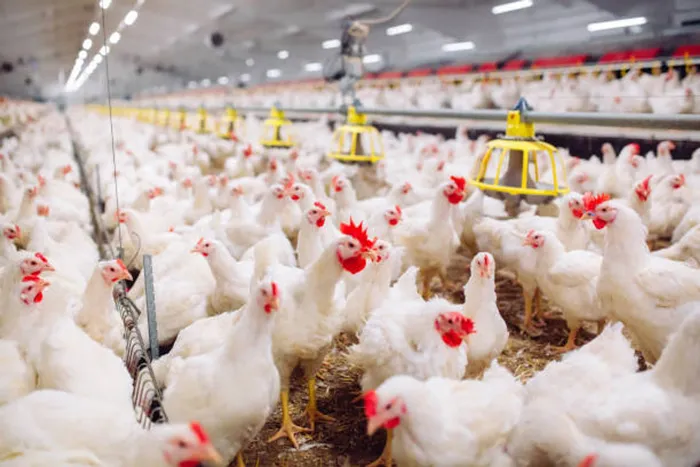
Poultry currently stands as South Africa’s largest agricultural industry, valued at R74bn and supporting more than 110,000 jobs across its value chain.
Image: File
The South African Poultry Association (SAPA) has hailed the powerful comeback of the domestic poultry industry, which has emerged from years of decline to become one of the country’s most competitive and resilient agricultural sectors.
This renewed momentum was highlighted at the first Economic Oversight Committee (EOC) meeting between government and industry stakeholders, where progress under the Poultry Masterplan was both reviewed and celebrated.
Launched in 2019, the Poultry Masterplan was designed to revive a sector that had been battered by a surge in cheap poultry imports.
In the decade leading up to its introduction, local producers struggled to compete against dumped products from multiple countries, leading to declining production and investment.
However, SAPA said coordinated efforts between the Department of Trade, Industry and Competition, the Department of Agriculture, and industry players have reversed this trend.
One of the most significant achievements has been the transformation of the sector through large-scale investment projects. A total of 32 project leaders have successfully established poultry operations, each averaging R45 million in investment.
Collectively, these projects exceed R1 billion in value and have achieved a remarkable 100% success rate. Among the standout developments is the KC Hatchery, which alone represents an investment of more than R135m.
SAPA said the industry has also expanded its production capacity through the development of new infrastructure, including three hatcheries and approximately eight egg-laying facilities. In addition, 20 broiler contract farmers have been supported, contributing to greater inclusivity and participation within the value chain.
The broiler organisation said this wave of investment has translated into tangible growth. Between 2019 and 2025, the poultry industry invested more than R2.1bn, while weekly production rose by 26%, increasing from 19.7 million to 23 million birds slaughtered. Import replacement strategies have begun to take effect, helping local producers regain market share while improving efficiencies.
Despite these gains, the recovery has not been without challenges. SAPA said the industry has had to navigate rising input costs, particularly for feed, as well as the devastating outbreak of Highly Pathogenic Avian Influenza in 2023.
Persistent infrastructure issues — including unreliable electricity supply, poor road networks, and inefficiencies at ports — have also added pressure. Municipal service delivery failures have further complicated operations.
Yet, the sector’s ability to grow in the face of these obstacles underscores its resilience. Poultry currently stands as South Africa’s largest agricultural industry, valued at R74bn and supporting more than 110,000 jobs across its value chain.
The industry accounted for 19.1% of the total agricultural gross value and 44.4% of animal products gross value. In the period 2019 and 2025 aggregate chicken meat inclusive of fresh, frozen, whole, cut into pieces and offal displayed a 9% growth in exports.
Izaak Breitenbach, CEO of SAPA, said these achievements mark a turning point.
“The poultry industry is no longer in distress. It is a globally competitive, growing sector thatcontinues to deliver affordable protein to South African consumers,” he said.
Global competitiveness has also improved significantly. A 2025 study by Wageningen University found that South Africa’s poultry industry ranks among the most competitive worldwide.
For over a decade, the country has produced chicken at lower cost than the European Union and has now surpassed the United States in cost competitiveness. Only Brazil currently produces chicken more cheaply.
South Africa’s technical efficiency is another key strength. The country boasts the lowest feed conversion ratio globally, meaning producers are able to convert feed into meat more efficiently than their international counterparts. This advantage not only reduces costs but also strengthens the industry’s ability to deliver affordable protein to consumers.
BUSINESS REPORT