

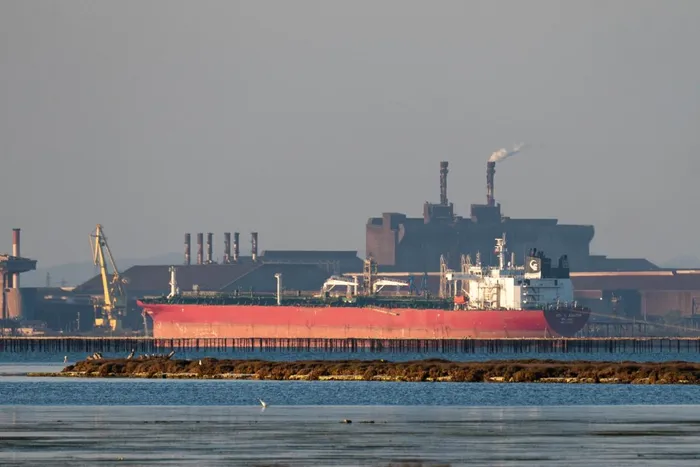
South Africa, meanwhile, is contending with the knock-on effect of global inflation, with Brent crude prices surging by as much as 60%, pushing up transport and fertiliser costs and, in turn, fuelling food and fuel price increases that threaten its already fragile growth prospects.
Image: AFP
By Fawzia Moodley
Energy disruptions triggered by the Middle East war and the closure of the Strait of Hormuz by Iran and its subsequent blockade by the US, has sent shockwaves through global oil markets, forcing countries to scramble for alternative energy supplies.
As prices surge and supply chains tighten, the impact has been uneven but widely felt. Several European countries including Germany, Denmark and the Netherlands, are grappling with steep increases in electricity and gas prices. Across Africa, countries such as Ethiopia, Kenya and Zambia face acute shortages and rising import bills they can scarcely afford.
South Africa, meanwhile, is contending with the knock-on effect of global inflation, with Brent crude prices surging by as much as 60%, pushing up transport and fertiliser costs and, in turn, fuelling food and fuel price increases that threaten its already fragile growth prospects.
China, the world’s second-largest economy, is also under strain. Despite its substantial reserves, Beijing faces headwinds as higher oil prices and shipping disruptions weigh on its export-driven manufacturing sector.
Even the United States is feeling the economic aftershocks of its attack on Iran and Tehran's violent retaliation, as rising fuel costs drive inflation and increase the financial pressure on households.
Among the most vulnerable are South Asian economies such as Bangladesh, Pakistan and Sri Lanka, all heavily reliant on imported fuel and increasingly exposed to the risk of shortages and even rationing.
Yet, India - the world’s second-largest importer of energy - has managed to navigate the crisis with resilience. Given that India imports roughly 88% of its crude oil and about half of its natural gas requirements, it ought to be among the hardest hit. Instead, New Delhi has demonstrated remarkable agility in maintaining supply stability through a combination of economic pragmatism, diversified sourcing, and deft diplomacy.
At the core of India’s strategy is a clear commitment to ensuring the continuous availability, accessibility and affordability of energy. This has been achieved by securing steady procurement channels while cushioning domestic markets from extreme price volatility. A key pillar of this approach is the structural diversification of energy sources.
India’s long-standing policy of “strategic autonomy”, maintaining workable relations across geopolitical divides, including with the West, Russia, Iran and the broader BRICS bloc — has proven particularly effective during this crisis. Despite earlier pressure from US President Donald Trump to halt Russian imports, India has, with Washington's approval, resumed purchase of discounted crude from Moscow, helping to offset supply disruptions elsewhere.
At the same time, New Delhi is aggressively expanding its supplier base. India is now sourcing energy from around 40 countries, including natural gas imports from the United States, Algeria, Guyana, Norway and Argentina. Its engagement with Africa is also deepening, with countries such as Congo and Gabon emerging as new suppliers, while imports from Angola have more than doubled in recent months.
This diversification drive has significantly reduced India’s reliance on the Gulf. Non-Hormuz crude imports have risen to approximately 70%, up from about 55% prior to the conflict - a shift that has materially strengthened the country’s energy security.
India’s ability to adapt swiftly to wartime disruptions when many economies are being forced to scale back activity, underscores a broader lesson in resilience. In an era where energy has become a geopolitical weapon, India is not merely surviving the crisis but rewriting the playbook.
Countries that fail to diversify, hedge their alliances and think strategically about energy security risk being left dangerously exposed in a world where supply shocks are no longer the exception, but the norm.
* Fawzia Moodley is a freelance writer.
** The views expressed do not necessarily reflect the views of IOL or Independent Media.
BUSINESS REPORT