

Picture: Supplied Picture: Supplied
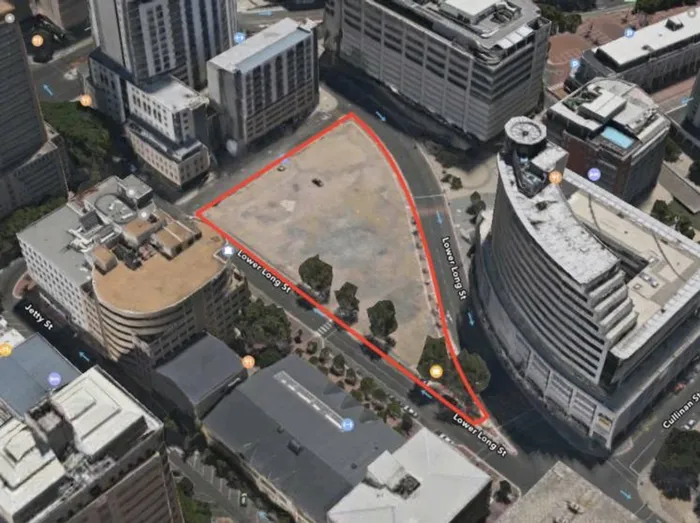
Cape Town - The City of Cape Town is scrambling to mitigate the repercussions of the botched auction of prime public land to a top property company at a price far less than market value, leading to a potential loss of millions in revenue.
It emerged this week that the City was now “engaging” with GrowthPoint following the revelation that the land was sold for R86.5million.
According to activist group Ndifuna Ukwazi, the land could have sold for between R185m and R230m. In 2016, when the City advertised the land, known as Site B, it claimed it had a maximum permissible floor space or bulk rights of 17500m2.
But records showed that 69000m2 of floating rights were granted in 1996 over Site B and a neighbouring piece, Site A.
But 23000m2 was used to build “The Icon” in 2005, leaving 46000m2 available. The size of the land is verified in the title deeds, the zoning certificate as well as the City’s own notice of the application for development of the land, advertised in one of Independent Media’s newspapers.
Both GrowthPoint and the City confirmed that talks were under way but would not comment on whether they were intended to recover the estimated loss. But the botched sale could have far-reaching implications for the City’s audit - which could damage the DA’s claim that Cape Town was the best-run metro in the country. It lost its clean audit status for the first time in more than a decade after the auditor-general highlighted several irregularities.
Deputy mayor Ian Neilson, who was a member of the mayoral committee for finance at the time of the sale, said this week that because of the talks the City was not in a position to comment.
GrowthPoint, which owns properties on three continents valued at R122bn, also refused to comment. It said it bought the property with a vision to create a precinct with two neighbouring office properties it already owned.
It has also emerged that, for its recent development application, GrowthPoint also secured the services of a consultant who was the City’s former executive director of energy, environment and spatial planning, Japie Hugo.
Hugo held this position when the land was subdivided in 1995 and when it was sold in 2016. In his LinkedIn profile, Hugo said he gave strategic direction for Cape Town’s rapid growth and facilitated all major developments.
This week, Hugo dismissed questions on whether he had been privy to any information during that time, but confirmed that he started work as consultant to GrowthPoint shortly after he left the City in 2017.
Neilson said the municipal planning tribunal (MPT) panel that would be selected to deal with the matter would not include anyone who had a conflict of interest. “Different panels are selected for each case, and only a few members of the MPT comprise a panel.”