

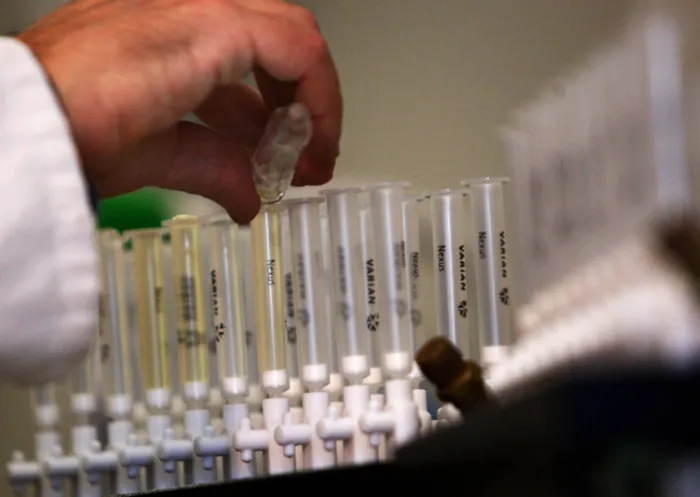
The Western Cape is the first province in South Africa to launch a public toxicology lab that is internationally accredited.
Image: FILE: Sang Tan/AP
The Western Cape has become the first province in South Africa to have a public forensic toxicology laboratory internationally accredited for drug-testing methods.
The lab is situated in Observatory.
The Western Cape Government’s Forensic Toxicology Unit received ISO/IEC 17025 accreditation following an assessment by the South African National Accreditation System (SANAS), marking a major development for forensic science in the country.
The accreditation covers the detection of carbon monoxide poisoning and the identification and measurement of drugs in forensic specimens.
These tests are used in investigations into fires, suspected poisonings, possible drug overdoses and sudden or unexplained deaths.
Western Cape Health and Wellness MEC Mireille Wenger said forensic toxicology could help provide answers to families when the cause of a person’s death was not immediately clear.
“When someone passes away, those left behind often want to understand what happened. Where the cause of death is not immediately clear, forensic toxicology can play an important role in providing answers,” Wenger said.
She said the accreditation provided independent assurance that toxicology evidence produced by the unit complied with internationally recognised standards.
The findings are used by forensic pathologists, police investigators, prosecutors and the courts during medico-legal and criminal investigations.
“This accreditation provides independent assurance that the toxicology evidence produced by our team meets internationally recognised standards, strengthening confidence in the results used by our forensic pathologists, SAPS investigators, prosecutors and the courts,” Wenger said.
“I am incredibly proud that the Western Cape has achieved a national first. It reflects the skill and dedication of a highly specialised team and supports our ability to provide a forensic service that families and the justice system can trust.”
The Forensic Toxicology Unit forms part of the provincial Department of Health and Wellness’ Forensic Pathology Service and supports medico-legal death investigations across the Western Cape.
Toxicology scientists are based within the Forensic Pathology Service, allowing them to work directly with forensic pathologists and medico-legal investigative teams.
According to the department, this approach has improved collaboration, strengthened the reliability of testing and reduced the time needed to produce toxicology results.
Although the accredited tests were already being conducted before the certification was granted, the accreditation independently confirms that the laboratory’s testing methods and quality controls meet international requirements.
Before a method is accredited, it undergoes extensive validation to determine its accuracy, precision, sensitivity, specificity and reliability.
The laboratory also participates in international proficiency testing and conducts ongoing quality-control assessments to ensure that its results remain consistent.
Chief forensic toxicologist and scientific manager of the unit Bronwen Davies said the accreditation represented a commitment to maintaining reliable services and continuously improving the laboratory’s work.
“This accreditation is more than a technical achievement; it’s a promise of quality, reliability and continuous improvement,” Davies said.
“By meeting international standards, we’re strengthening the Western Cape health system and ensuring that forensic toxicology services are available where they matter most: in the public sector.”
Wenger said forensic pathology played an important role in both the health and criminal justice systems.
The work conducted by forensic scientists helped authorities establish how and why people died, supported investigations and could also identify emerging public-health threats.
“Forensic pathology sits at an important intersection between health and justice,” Wenger said.
“This work helps us understand how and why people die, supports investigations where necessary, and helps identify emerging risks to public health.
“This achievement is an important vote of confidence in the quality of forensic science being delivered in the Western Cape public sector.”