

Cape Town’s coastal cocktail: Drugs, pesticides and heavy metals found in False Bay.
Image: Gemini
A potent cocktail of human pharmaceuticals, agricultural weedkillers and heavy metals is silently accumulating beneath the waves of False Bay, turning the seabed into a long-term reservoir for Cape Town’s urban waste.
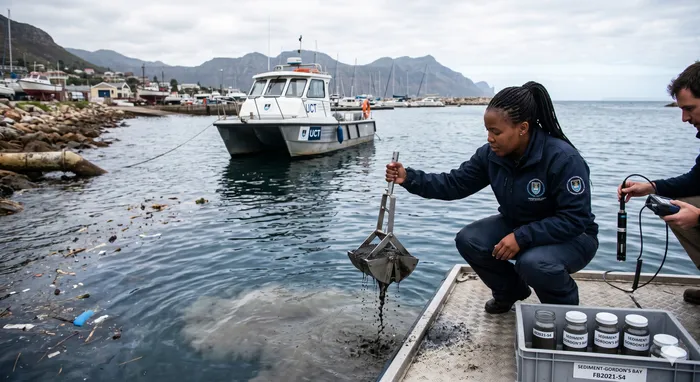
According to a pioneering new study led by researchers from the University of Cape Town (UCT), the bay's waters and sediments are laced with chemicals intrinsically linked to modern city life. Published in the Marine Pollution Bulletin, the research mapped 19 sampling stations across the bay, revealing a troubling environmental footprint driven by wastewater discharges, harbour activities and relentless coastal development.
The research team detected a startling array of everyday substances, including the herbicides atrazine and metolachlor, alongside common human medicines such as acetaminophen, carbamazepine and the widely used anti-inflammatory drug Diclofenac.
Crucially, the findings revealed that chemical concentrations are far higher in the ocean sediment than in the surrounding seawater. Dr Buyani Mazeka, the study’s lead researcher and a postdoctoral fellow at UCT’s Department of Biological Sciences, explained that the seafloor effectively acts as a giant sponge, trapping and retaining these widespread contaminants over extended periods.
The pollution is not distributed evenly across the peninsula. The highest seawater contaminant loads, alongside elevated levels of copper, iron, manganese, lead and zinc, were recorded in the northeastern sector near Gordon’s Bay. Researchers linked these heavily affected areas to vessel maintenance and maritime operations. Meanwhile, the highest sediment accumulations of trapped chemicals were found along the urbanised northeastern coastline and near Muizenberg, areas heavily influenced by wastewater and stormwater runoff.
Yet, despite this pervasive chemical footprint, the study offers a surprising glimmer of hope. Environmental risk assessments show that current pollution levels remain well below internationally recognised thresholds for acute ecological damage. The microscopic nematodes and larger bottom-dwelling organisms that make up the bay's benthic communities remain diverse and remarkably healthy, showing no significant drop in abundance or overall ecosystem quality.
However, scientists fiercely caution against complacency. Dr Mazeka warned tha tthe absence of an immediate ecological collapse does not mean these contaminants are harmless. Because diclofenac and other pharmaceuticals persistently pour into the ocean through municipal wastewater systems, they pose a severe, creeping threat of bioaccumulation.
Previous research in the region has already proven that marine life—including mussels, limpets, sea snails, sea urchins and starfish—are actively absorbing these pharmaceutical residues. As these chemicals continue to gather in the sediment, they threaten to slowly work their way up the marine food web, creating unpredictable long-term risks as marine animals are exposed to complex, lifelong chemical mixtures.
As the first field-based baseline study of its kind in Africa, the research highlights a critical vulnerability for one of South Africa’s most cherished coastal ecosystems. With False Bay continuing to support vital local fisheries, immense biodiversity and a booming tourism industry, the researchers are urging authorities to implement long-term monitoring programmes and rigorous wastewater screening to protect the bay from its unseen chemical burden.