

Youth Month Experts agree that South Africa is ready for young leadership
Image: Pexel
They are young, vibrant, full of ideas, and want to change the world, but are being elbowed out of positions of power by the older folk, stuck in ideologies of a bygone era, at the expense of progress.
This Youth Month, questions are being asked about whether young people are being given enough opportunities to influence the country's future, both at the ballot box and in positions of leadership.
The quick acceptance back into the DA of 25 year-old Liam Jacobs, by 39-year old DA Leader Geordin Hill-Lewis, is a realisation that politics in this country needs younger leaders with fresh ideas and a hunger for change. But will these younger leaders be able to draw young voters to t he ballot box?
The latest IEC registration data shows only 407,835 registered voters aged 18 to 19 and 4.13 million aged 20 to 29, compared to 6.58 million registered voters in the 30 to 39 age group, which dominates the country's under-40 electorate.
Political analyst and Stellenbosch University professor Amanda Gouws believes younger leaders should be given more opportunities to take up positions of leadership.
"I think it is very important for younger leaders to get a chance to lead," Gouws said.
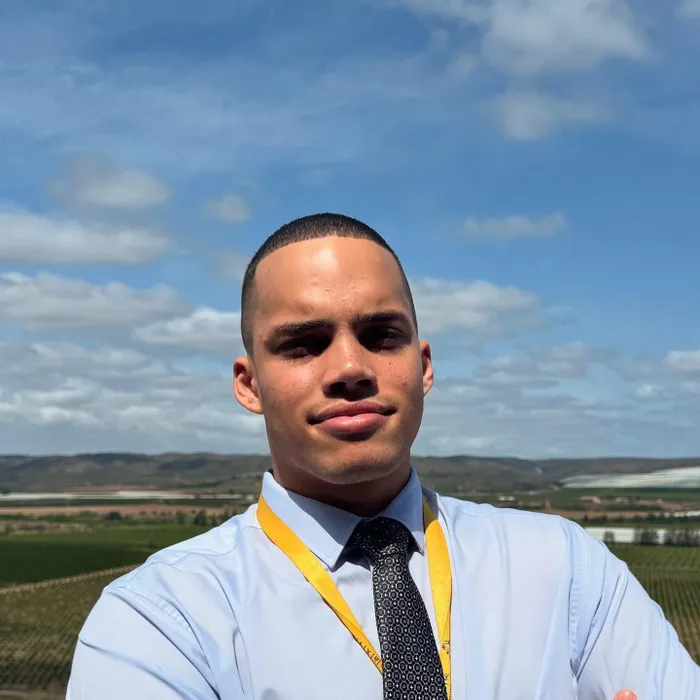
Liam Jacobs
Image: Supplied
She argued that one of the challenges facing South Africa is that liberation movement politics often allows older generations to hold onto positions of power, making it difficult for younger leaders to emerge.
"It is unfortunately in the history of African liberation movements that old liberation strugglers don't want to give up power and we see it in South Africa."
Gouws said many young South Africans are unwilling to spend years climbing party structures before being afforded opportunities to lead.
"They did not live under apartheid. They were born free and they want something else."
She pointed to the #FeesMustFall and #RhodesMustFall movements as evidence that young people are capable of leading when given the opportunity.
"They showed us that they can lead, but they don't get a chance."
According to Gouws, corruption and patronage politics have also contributed to growing youth disengagement.
"As long as young people see the corruption in government, they are not interested in politics."
Political analyst Nkosikhulule Nyembezi said there appeared to be a growing effort by political parties to attract younger candidates ahead of the local government elections.
"Targeted electioneering messages are directed at young people too," Nyembezi said.
However, he cautioned that many youth leaders remain sceptical about whether political parties are truly committed to addressing the issues that matter most to younger generations.
"Youth leaders are understandably unhappy, particularly about the haste with which this is being done without tangible election manifesto promises focusing on priority challenges facing youth."
Nyembezi said greater youth representation could bring significant benefits, particularly for unemployed and marginalised young South Africans who currently have limited opportunities to influence public policy.
"There will be advantages, particularly for unemployed and marginalised youth who do not already meaningfully participate in decision-making legislative and socio-economic bodies."
He also expressed concern about what he described as shrinking opportunities for youth representation within some political structures.
"South Africa's maturing democracy requires new blood, and concerns about the lack of competent and ethical leadership are sky-high."
Political analyst Professor Sipho Seepe believes South Africa's youth have inherited both the inspiration and burden of growing up in the shadow of the generation that fought apartheid.
"South Africa's youth has been both blessed and burdened by sharing physical and political space with the generation that fought apartheid," Seepe said.
While the older generation offered valuable lessons, he argued it has often failed to create enough space for younger leaders to emerge.
"Instead of using that history as a platform to nurture new leaders, it has often overwhelmed the young."
Seepe warned that widespread unemployment, poverty and inequality have created dangerous levels of frustration among young South Africans.
"That disappointment has hardened into disillusionment and dangerous disengagement."
Against this backdrop, political parties say they are actively working to bring more young people into leadership positions.
GOOD National Youth Organiser Kaden Arguile said South Africa currently has a deficit of youth representation in political and administrative leadership despite young people being the country's largest population group.
"South Africa has a deficit of youth in positions of political or administrative power despite being the largest population group currently within the South African age demographic," he said.
Arguile said the current generation of political leaders would eventually need to be replaced and that young people should be empowered to take up those positions.
"GOOD strongly believes that this void must be filled with young people who are directly impacted by South Africa's failure in a variety of areas of governance."
The party has committed to fielding more young candidates in the 2026 Local Government Elections than in previous elections and said it is actively identifying and developing future leaders through initiatives such as GOOD Students.
The Democratic Alliance also believes young people should play a greater role in political leadership.
The DA said South Africa's youth are equipped with fresh ideas and a strong understanding of the challenges facing communities.
"Our youth are equipped with many ideas, energised and understand the needs of South Africans. They are firmly rooted in their respective communities and are well-aware of the DA's values and vision to unite South Africans and ensure our cities and towns work for all."
The party said it has a strong track record of empowering young leaders and creating opportunities for them to step into leadership roles.
While candidate selections for the 2026 Local Government Elections have not yet been finalised, the DA said it intends fielding exceptional candidates across the country, including young leaders who bring fresh ideas, energy and a deep understanding of the challenges facing their communities.
The Patriotic Alliance has also backed greater youth representation.
Cape Town mayoral candidate Cheslyn Steenberg Daniels said the country is long overdue for a new generation of leaders.
"South Africa is not only ready, it is overdue for greater youth representation in political leadership."
He argued that younger leaders are often better positioned to understand the realities facing communities affected by crime, unemployment and inequality.
"Their insights are critical in shaping policies that are practical, immediate and impactful."
The party said it intends fielding more young candidates in the upcoming local government elections and has committed a majority of its candidacies to youth.
Daniels said young leaders should not simply be included as symbolic representatives.
"Too often, young people are sidelined or used symbolically. We believe they must be given real responsibilities, real authority and real opportunities to lead."
The ANC, meanwhile, maintains that it already has a strong pipeline of young leaders within its ranks.
ANC Western Cape spokesperson Sifiso Mtsweni said the party continues to produce young leaders through structures such as the ANC Youth League.
"The ANC is probably the party with the most young minds and leaders than any in the country," he said.
Mtsweni pointed to the ANC's executive mayors in Oudtshoorn, Cederberg and Knysna, all of whom are under the age of 35, as examples of youth leadership already in action.
He also highlighted the role of the ANC Youth League in producing leaders such as Nelson Mandela, Thabo Mbeki and current ANC Secretary-General Fikile Mbalula.
"Our message to young people is that they need to be involved in the politics of our country in greater numbers."