

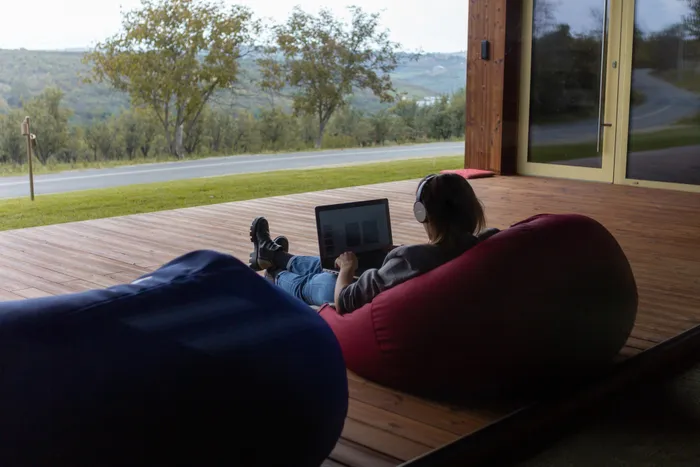
A digital nomad or remote worker relaxes on a bean bag working while over looking a forest.
Image: Unsplash
As South Africa positions itself as a destination for global remote workers, the term digital nomad has become increasingly visible in public discourse, particularly amid growing concern over housing affordability in cities such as Cape Town.
But what exactly does being a digital nomad mean in the South African context?
At its core, digital nomadism is a lifestyle adopted by individuals who use digital technology to work remotely while moving between countries or cities. While often confused with remote work, the two are not the same.
Not all remote workers are digital nomads; many work from a fixed location, such as their home country or city, without frequent travel.
A digital nomad specifically refers to a highly mobile professional who is location-independent and able to perform their job online from anywhere in the world. Digital nomadism, in turn, describes the lifestyle built around this mobility, often involving extended stays in foreign countries rather than short-term tourism.
South Africa has formally entered this global trend by introducing a digital nomad visa, aimed at foreign nationals who wish to live in the country while working remotely for a foreign employer or earning income from a foreign source.
To qualify, applicants must demonstrate that they earn no less than the equivalent of R1 million per year. The visa aims to attract high-earning professionals who do not take local jobs but contribute to the economy through spending on accommodation, services, and tourism.
The tax implications of the digital nomad visa depend on the length of stay:
If the visa is issued for six months or less within 36 months, the foreign national may apply for an exemption from registering with the South African Revenue Service (SARS).
If the visa exceeds six months within 36 months, the individual is required to register with SARS and may become subject to South African tax obligations, depending on residency and income rules.
Where applicable, visa holders must also comply with South African labour and employment legislation, particularly if their activities extend beyond purely foreign-sourced remote work.
While proponents argue that digital nomads bring foreign income into South Africa, critics, especially in Cape Town, have raised concerns about rising rental prices, short-term letting, and housing accessibility, questioning whether the influx of foreign earners exacerbates existing inequalities.
As the digital nomad visa continues to gain traction, the challenge for policymakers lies in balancing economic opportunity with social and housing pressures, ensuring that South Africa’s openness to global workers does not come at the expense of local residents.
IOL