

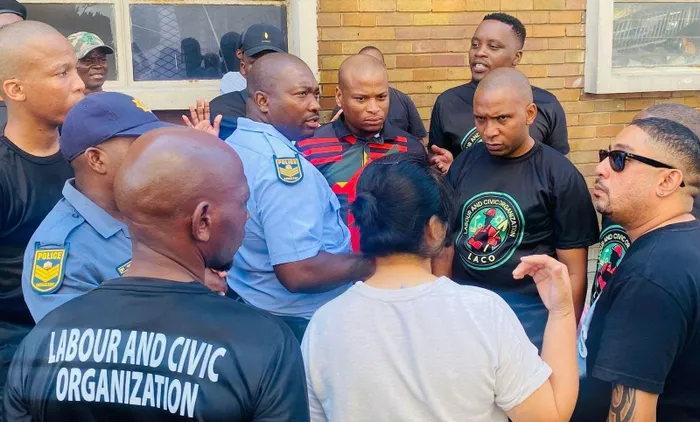
In a constitutional democracy, justice cannot depend on who shouts the loudest outside a factory gate. It must depend on the law. LACO has warned that rising unemployment and alleged labour abuses could fuel an explosion of xenophobia.
Image: Supplied
SOUTH Africa’s unemployment crisis has created fertile ground for organisations that promise direct and immediate action. One such organisation is the Labour and Civic Organisation, known as LACO, which has become increasingly prominent through campaigns urging businesses to prioritise South African citizens when making employment decisions.
LACO recently claimed that its campaigns have helped place approximately 4,500 South Africans in jobs and has vowed to continue protest action against businesses it believes are unfairly employing foreign nationals. The claim speaks to a real national frustration. But it also raises a difficult constitutional question: who has the authority to decide who may work, who must be dismissed, and how the law should be enforced?
South Africa is a constitutional democracy founded on the rule of law. Every person has the right to protest peacefully, assemble, picket and present petitions. Those rights are important and must be respected. But they do not give private organisations the power to compel businesses to dismiss employees or replace them with others. Peaceful protest is protected; intimidation, coercion and unlawful interference with business operations are not.
Business owners also have constitutional protections. Section 22 of the Constitution protects the freedom to choose and practise a trade, occupation or profession, while section 25 protects property rights. Businesses are entitled to operate without unlawful interference and to make commercial decisions, including hiring decisions, provided they comply with labour legislation, immigration laws and anti-discrimination principles.
Employers remain bound by the Labour Relations Act 66 of 1995, particularly sections 185 and 188, which require dismissals to be both substantively and procedurally fair.
They must also comply with the Basic Conditions of Employment Act 75 of 1997, under which sections 63, 65 and 68 give workplace inspection and enforcement powers to authorised labour inspectors. In addition, section 38(1) of the Immigration Act 13 of 2002 prohibits the employment of foreign nationals who are not authorised to work in South Africa, while section 49 prescribes penalties for non-compliance.
The key point is simple: enforcement of these laws rests with the Department of Employment and Labour, the Department of Home Affairs and authorised labour inspectors - not with private organisations.
No private organisation, regardless of its intentions, has the legal power to enter businesses, conduct inspections, decide who should lose their jobs or compel employers to replace one group of workers with another. Those functions belong to authorised government officials acting within powers given to them by law.
Recent reports indicate that LACO has marched to businesses suspected of employing undocumented foreign nationals and demanded that South Africans replace them. The organisation argues that these campaigns have opened employment opportunities for local workers.
Whether those claims can be independently verified is one issue. The more important legal question is whether employment decisions are being made voluntarily by employers, or under pressure created by public demonstrations. If businesses dismiss employees because they fear intimidation, rather than because of lawful disciplinary, operational or immigration processes, they could expose themselves to legal challenges for unfair dismissal or discrimination.
The issue is especially sensitive because the Constitution protects not only citizens, but “everyone” within the Republic in respect of many fundamental rights, including dignity, equality before the law and access to fair legal processes. Foreign nationals who are lawfully employed enjoy labour protections under South African law. They cannot simply be removed from employment because of their nationality.
It would be wrong to dismiss the frustrations that have fuelled organisations like LACO. South Africa continues to face one of the highest unemployment rates in the world. Many communities believe that some employers exploit undocumented workers by paying lower wages or imposing poor working conditions. If true, such practices undermine lawful businesses, disadvantage South African workers and exploit vulnerable migrants at the same time.
That is precisely why lawful enforcement matters. Government agencies have the power to inspect workplaces, examine employment records, verify immigration documentation and impose penalties where employers violate the law. They operate within legal safeguards designed to protect both workers and employers.
Allowing private organisations to assume those powers would create a dangerous precedent. Today, one organisation may target foreign nationals. Tomorrow, another group could target workers based on race, political affiliation or other characteristics. Constitutional rights exist precisely to prevent public pressure from replacing legal process.
There is another practical reality. Many businesses depend on skilled foreign nationals who are legally entitled to work in South Africa. Others employ foreign workers because they cannot immediately fill vacancies locally. A blanket assumption that every foreign employee is unlawfully employed is neither accurate nor legally sustainable. Each case requires proper investigation, not public accusation.
None of this means that immigration laws should not be enforced. They should be enforced consistently and fairly. Employers who knowingly hire undocumented workers should face legal consequences. Equally, employers who comply with South African labour and immigration laws should not be subjected to intimidation simply because of whom they employ.
South Africa’s unemployment crisis requires effective government action, stronger labour inspections, economic growth and meaningful job creation not parallel systems of enforcement driven by public pressure.
LACO has every constitutional right to campaign, protest and advocate for South African workers. Businesses have every legal right to operate without unlawful interference. Employees — whether South African citizens or lawfully employed foreign nationals — have the right to fair treatment under labour law.
Ultimately, the Constitution does not permit private organisations to decide who keeps a job and who loses one. That responsibility belongs to employers acting within the law, subject to oversight by the courts and the appropriate government authorities.
In a constitutional democracy, justice cannot depend on who shouts the loudest outside a factory gate. It must depend on the law.

Lasanthan Pillay
Image: File
Lasanthan Pillay is an attorney and the co-founder of Pillay Cohen Attorneys Inc.
** The views expressed do not necessarily reflect the views of IOL or Independent Media.