

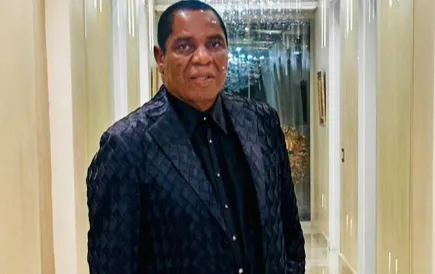
Business magnate Robert Gumede has built a diversified empire spanning technology, infrastructure, agriculture, sports, and philanthropy across Africa and beyond.
Image: Supplied
IN A DRAMATIC turn of events, Tongaat Hulett, a vital player in South Africa’s agricultural economy, narrowly avoided potential liquidation. This rescue deal represents one of the most complex and significant corporate turnarounds in modern South African history. As Robert Gumede, a member and shareholder of the Vision Group Consortium, noted, this plan was signed on a historic day, June 16, marking an important moment in our country’s timeline.
For over a century, Tongaat Hulett has been a major player in Southern African agriculture. However, a devastating combination of extensive accounting fraud, severe mismanagement, and overwhelming debt pushed the 134-year-old sugar company to the brink of total collapse.
When the company entered voluntary business rescue, many feared that this institutional pillar of KwaZulu-Natal was facing its final chapter. Nevertheless, a groundbreaking multi-billion-rand agreement between state and private entities has completely changed Tongaat’s trajectory, halting liquidation proceedings and paving the way for a new future.
Tongaat Hulett's financial decline became evident in 2019 when forensic audits revealed extensive corporate wrongdoing. Senior executives had artificially inflated profits and asset values for years, resulting in a staggering debt legacy of R12 billion. The following years turned into a difficult struggle for survival, marked by legal battles and regulatory challenges.
The successful avoidance of liquidation is directly attributed to an aggressive and innovative capital restructure led by the Vision Sugar Group and the state-owned Industrial Development Corporation (IDC). Instead of liquidating the assets and selling them off in pieces, the approved rescue plan focuses on a radical debt-to-equity conversion and long-term stabilisation.
Under the finalised agreement, the Vision Group will convert approximately R12 billion of acquired debt into equity, effectively eliminating the substantial liabilities from Tongaat's balance sheet and providing a clean slate. At the same time, the IDC has committed to providing post-commencement funding, ensuring financial support through September 2026. In exchange for its financial backing, the IDC will take a 25% equity stake in Vision's broader Southern African sugar operations, which guarantees state oversight and alignment with national development goals.
The plan is not just focused on restoring Tongaat Hulett to its previous status; Vision Group shareholder Robert Gumede has introduced a strategy to transform the company into a modern, diversified Agri-Energy enterprise. This ambitious shift aims to leverage Tongaat's extensive biomass and agricultural resources to make significant investments in bio-ethanol production and renewable cogeneration power plants.
This approach will help protect the company from the fluctuations of the global sugar commodities market. Additionally, there are plans to increase power production and sell that electricity to Eskom and the eThekwini Municipality.
The implications of this rescue package go far beyond corporate balance sheets and boardroom victories; it profoundly impacts the socioeconomic fabric of South Africa. The sugar industry is a key economic driver for KwaZulu-Natal and parts of Mpumalanga, with Tongaat Hulett at the heart of this ecosystem.
First and foremost, the deal directly protects approximately 250,000 jobs across the agricultural value chain. If liquidation had occurred, the immediate loss of employment would have devastated hundreds of thousands of households in rural communities, which already face alarmingly high unemployment rates. More than 17,500 small-scale and commercial sugarcane growers, who depend entirely on Tongaat’s milling infrastructure to process and market their yields, have been given a permanent lifeline, preventing widespread rural poverty.
Additionally, stabilising Tongaat helps preserve South Africa's domestic food security and trade balance, as South Africa is a net importer. As a major producer of refined sugar, Tongaat’s mills' total shutdown would have forced South Africa to rely heavily on expensive sugar imports, driving up basic food prices for citizens already struggling with inflation. By maintaining local production capacity, the agricultural sector ensures the milling season continues uninterrupted, stabilising retail prices and protecting the domestic market.
The successful turnaround of Tongaat Hulett demonstrates the significant outcomes that can arise from effective collaboration between public institutions, such as the Industrial Development Corporation (IDC), and private groups like the Vision Group. By preventing a disastrous liquidation, South Africa has safeguarded its agricultural sovereignty, protected the livelihoods of 250,000 individuals, and established a clear blueprint for corporate restructuring. This case proves that even the most troubled industrial giants can be guided towards a sustainable and diversified future.
** The views expressed do not necessarily reflect the views of IOL or Independent Media.