

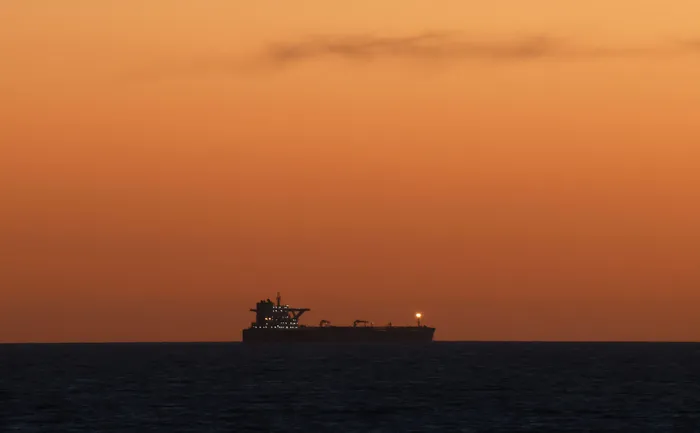
First tankers reportedly exit US blockade in the Strait of Hormuz ahead of US-Iran talks. A sweeping memorandum between the US and Iran could end months of conflict, reopen critical shipping routes and pave the way for hundreds of billions of dollars in economic investment.
Image: Mario Tama / Getty Images via AFP
RELIEF is finally on the horizon for South African consumers affected by the worst energy crisis in modern history. After months of devastating conflict in the Middle East and a near-total maritime blockade, the signing of the US-Iran peace agreement in Switzerland has opened the way for the reopening of the Strait of Hormuz.
For everyday citizens across our country, this geopolitical breakthrough is not just a distant news story - it is a crucial turning point that will determine whether they can afford to drive to work or provide food for their families next month.
The Strait of Hormuz, a narrow waterway that separates the Persian Gulf from the Gulf of Oman, is the world's most critical oil chokepoint. When conflict erupted earlier this year, the sudden disruption of approximately 20% of global petroleum supplies sent shockwaves through international markets. Global supply plummeted by over 10 million barrels per day, causing the price of Brent crude - the benchmark relevant to South Africa - to surge from a stable $70 per barrel to well over $100 per barrel.
For South Africa, which is a net importer of crude oil, the domestic impact was immediate and severe. By May, the price of inland 95 Unleaded petrol had soared to a record R28.66 per litre. This rise in fuel prices had a cascading effect on the economy, significantly driving up the costs of public transport, logistics, and basic groceries.
However, following US President Donald Trump’s announcement to "let the oil flow," international oil prices fell to a three-month low, dropping below $80 per barrel.
The pressing question for consumers in South Africa is simple: how quickly will this global decrease translate into relief at the local petrol pump?
The short answer is that relief is on the way, but it will be a staggered, complex process closely managed and regulated.
According to mid-month data from the Central Energy Fund (CEF), the significant decline in international oil prices has resulted in substantial "over-recoveries".
This information suggests a potential decrease in July fuel prices: a reduction of R2,73 per litre for 95 petrol and a substantial R4,76 per litre for 50ppm diesel.
However, motorists excited about this price drop should keep in mind that these figures do not reflect actual fuel prices at the pumps in July.
The National Treasury is preparing to limit the extent of fuel price reductions. To address the initial price spikes caused by the war, the South African government implemented temporary relief measures by reducing the General Fuel Levy (GFL) over the past three months. However, with the reopening of the Strait of Hormuz and improvements in market conditions, the government is now withdrawing this emergency support.
Starting July 1, the full fuel taxes will be reinstated, increasing petrol by R1,50 and diesel by R1,93. As a result, the actual net decrease that motorists will experience in July is expected to be a more modest R1,23 per litre for 95 petrol and R2,83 per litre for diesel.
Economists caution that broader relief from the cost of living will take time to materialise. While oil prices may drop immediately on paper, oil companies are currently utilising their existing stock, which was purchased at peak wartime prices. Additionally, logistics contracts are set months in advance, meaning it will take three to six months for reduced industrial transport and shipping costs to be reflected in the retail prices of goods on supermarket shelves.
For South Africa's commercial sectors, the reopening cannot come soon enough. The South African Petroleum Retailers Association has recently highlighted the immense pressure on local service stations, especially in rural areas. Since fuel retail margins are fixed by law, station owners earn the same small margin per litre, whether fuel costs R20 or R40. As prices skyrocketed, motorists significantly reduced their driving, leading to a drastic drop in volumetric sales and pushing smaller, rural forecourts to the brink of financial collapse.
The upcoming price drop in July provides a crucial lifeline for businesses; however, organisations like AfriForum are already lobbying the government. They argue that given the ongoing volatility in the Middle East, the government should make the fuel levy cuts permanent. This would help protect the fragile local economy from future geopolitical disruptions.
As mine-clearing vessels begin the careful work of securing the Strait of Hormuz for safe passage of commercial tankers, the global supply deficit is expected to decrease. While South Africa has weathered the worst of the energy crisis in 2026, this situation has highlighted the vulnerability of local consumers to global chokepoints thousands of miles away.
The reopening of the Strait of Hormuz has successfully ended a difficult period of soaring fuel prices in South Africa. Although the reinstatement of domestic taxes may dampen this positive change, motorists - particularly those using diesel vehicles and operating commercial fleets - can anticipate notable financial relief in July.
Currently, South Africans can expect lower fuel prices in July, which represents a small but important victory in the ongoing struggle against the rising cost of living.
** The views expressed do not necessarily reflect the views of IOL or Independent Media.