

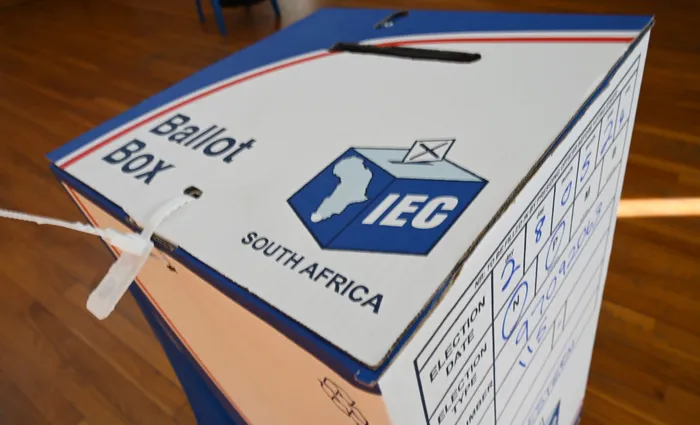
With a plethora of political parties vying for control, the question remains: will promises translate into meaningful action, or will despair continue to overshadow eThekwini's future?
Image: Armand Hough / Independent Newspapers
As the countdown begins to the 2026 local government elections on November 4 , the eThekwini Municipality continues to grapple with service delivery.
With a plethora of political parties vying for control, the question remains: will promises translate into meaningful action, or will despair continue to overshadow eThekwini's future?
Les Govender, a member of the IFP and deputy chairperson of the National Council of Provinces, said eThekwini did not need more promises, instead a competent government.
“As residents prepare to cast their votes in the elections, the central question facing eThekwini Municipality is no longer whether the municipality has plans. The question is whether the municipality has the capacity, discipline and political will to implement them.
“The IFP believes that the crisis facing eThekwini is not a consequence of insufficient policies or strategies. It is the result of poor governance, weak accountability and a municipality that has drifted away from its most basic responsibility to serve the people. Citizens should not be punished for becoming resilient in the face of government,” he said.
Govender said the IFP had consistently argued that eThekwini could not outsource its way out of a crisis.
“Over many years the municipality has become increasingly dependent on external contractors while allowing critical internal skills and institutional knowledge to erode.
“The IFP will ensure that the municipality invests in qualified engineers, technicians, artisans and project managers capable of restoring institutional capacity and accountability. We believe that in-house expertise can respond faster and more efficiently, and provide greater accountability to residents.
“Most importantly, it can focus resources on maintaining infrastructure before it fails rather than reacting to crises after they occur. The IFP will also curtail such wasteful expenditure by ensuring that competent and well-qualified staff are employed in critical positions,” he said.
Govender said the IFP’s position was clear – local government must return to its core purpose.
He said this included delivering services efficiently, managing public finances responsibly and putting communities ahead of politics.
Haniff Hoosen, the DA eThekwini mayoral candidate, said the spiralling downturn in service delivery in Durban had been high on the agenda of the party since the inception of democracy.
“The DA has a proven track record of governance across South Africa. The changes can help save a city where water is still a luxury to many; where a job is scarce because industry has lost its confidence in the administration; and where the elderly are subject to endless queues at revenue centres in desperate search of relief from incorrect bills.”
Hoosen added while the litany of failures were too numerous to mention fully, the billing system debacle hit the residents hard.
“Costing almost R1 billion, the system has consistently spewed out incorrect billing data coupled with estimated readings that have crippled especially the elderly. “
He said crime and by-law enforcement was of particular concern to the DA.
“The evidence is apparent across the spectrum of municipal departments. Unauthorised and illegal buildings remain on municipal servitudes, while thousands of homeless people simply build makeshift structures in city streets. Speed enforcement has taken almost 10 years to be re-established within the metro police, and only on selected roads.
“Perhaps the biggest failure of the municipality has been an almost complete lack of consequence management. Our water loss figures bear testimony to this,” he said.
Hoosen said the DA had a credible and sustainable plan to tackle these issues.
“We believe consequence management, proper fiscal management and a cutting of the luxuries and sponsorships can unlock millions that can ultimately be ploughed into each municipal department. Furthermore, sweeping audits including lifestyle audits for each department coupled with swift prosecution and dismissal, will root out the rot.
“However, implementing these practical changes to alleviate the crippling water, crime, billing and general decay issues comes down to the ballot box. Citizens tired of the daily municipal grind and failures must join hands with us in helping to save the city. Voter participation is critically important in fed up citizens putting a responsive and innovative DA action plan into place. The power to do this rests with the voters, who may not have much of a city left if decisive action is not taken in the elections,” he said.
Sifiso Sonjica, spokesperson for the ANC in KwaZulu-Natal, said the party acknowledged the legitimate concerns raised by residents.
“These are not distant administrative issues. They affect the daily lives, livelihoods and well-being of our communities. As the governing party, the ANC has never shied away from confronting challenges. We remain actively engaged with residents through ward committees, public participation processes, izimbizo and direct community engagement to ensure that concerns are heard and addressed.”
Sonjica said while significant challenges persisted, important progress had been made.
“One notable example is the improvement of the municipal billing system. Ratepayer organisations and civic stakeholders have publicly acknowledged the efforts of eThekwini mayor councillor Cyril Xaba and the current municipal leadership in addressing long-standing billing concerns. This recognition reflects the municipality’s commitment to resolving problems and restoring public confidence through decisive action.”
Sonjica added that the ANC believed that progress must be recognised, while remaining focused on areas that required further improvement.
“Our commitment is not to political point-scoring, but to practical solutions that improve the lives of residents. Under mayor Xaba’s leadership, the city has intensified efforts to strengthen service delivery co-ordination, improve infrastructure maintenance, accelerate response times to service requests and enhance financial governance. Looking towards the elections, the ANC remains committed to building a capable, developmental and people-centred municipality.
“Our priorities include accelerating water and sanitation infrastructure upgrades, strengthening electricity network maintenance, improving waste collection services, enhancing the management of municipal assets and public facilities, and ensuring that public spaces are properly maintained to promote safety and community well-being.
“We will continue working closely with law enforcement agencies, community policing structures and residents to combat crime and build safer neighbourhoods. Our commitment is not merely to make promises, but to work alongside communities to deliver tangible results and lasting improvements in everyday life,” he said.
Mkhanka Nunu Amos Zuma, spokesperson for the uMkhonto we Sizwe Party (MKP) in eThekwini, said: “The suffering of the people of eThekwini will never end until they realise that voting for any party within the Government of Provincial Unity is sustaining the continued exploitation of the people of eThekwini.
“We must all understand that it is no longer the ANC alone that governs this country, from national government down to municipalities. Today, the ANC governs together with its coalition partners. Therefore, the suffering experienced by the people of eThekwini is the responsibility of the entire coalition, not just one party.”
Zuma said the MK Party believed that the government must be proactive rather than reactive.
“Effective governance requires preventing problems before they escalate, rather than responding only after significant damage has already occurred.”
Shameen Thakur-Rajbansi, leader of the Minority Front (MF), said the party had a proven track record of addressing issues faced by communities, such as water outages, electricity interruptions, billing disputes, crime, overgrown municipal properties and declining service delivery.
“During the period when the MF held the balance of power in the eThekwini Metro and several local councils, particularly between 2006 and 2014, our councillors were highly trained, closely monitored and directly accountable to both the party and the communities they served.
“They maintained constant contact with municipal officials, participated actively in council committees and executive committee structures, and ensured that community concerns were addressed before they became crises.
“Those successes were only possible because residents voted for the MF in significant numbers, giving us the influence required to drive service delivery and hold officials accountable,” she said.
Thakur-Rajbansi said despite having only one PR seat in eThekwini, the MF continued to assist residents across the metro, often intervening in cases where ward councillors failed to respond.
“We do not wait for residents to obtain reference numbers before helping them, and many dedicated volunteers continue to support our efforts to serve communities.”
Thakur-Rajbansi said the elections presented an opportunity to restore an effective local government.
“The MF has set itself a goal of securing more than 20 council seats and transforming the communities under its leadership into model suburbs. Our governance approach is guided by the top 100 service delivery challenges identified by residents, with particular focus on the 10 most urgent concerns.
“The future of eThekwini depends on electing capable councillors led by leaders who understand governance and budget provisioning, and place community needs first. A stronger MF presence in council will help restore accountability, improve service delivery and ensure that the right people are placed in the right positions to rebuild our city,” she said.