

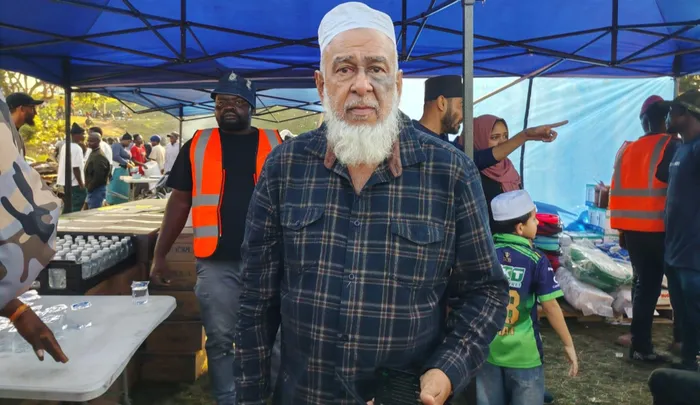
Cassim Malani.
Image: Chumani Mazwi
HUMANITARIAN organisations and volunteers are rallying to support thousands of displaced immigrants, providing essential supplies and working towards their repatriation.
More than 7,000 immigrants await repatriation at the Sherwood grounds, in Durban.
Gift of the Needy, Muslim Relief South Africa and the Gift of the Givers have mobilised to assist vulnerable families; and women and children living in the temporary tents.
Faiaz Magid, founder of the Overport-based Gift of the Needy, said they began providing relief from last June 9.
“We are supplying water, baby essentials, feminine hygiene products and other toiletries. Our duty is just to assist them here, feed them or clothe them until they get ready for their trip back to Malawi. They are still in South Africa, so it is up to us to enforce our Constitution,” he said.
Volunteer Shahzaadee Khan said the scale of the situation was deeply distressing and highlighted the humanitarian responsibility to assist those affected.
“Gift of the Needy is there to help the human population, whether they are illegal immigrants or not. They have human rights at the end of the day. How can we not step in when this is happening right in our backyard?” she asked.
Khan said she was shocked by the number of people seeking shelter at the grounds.
“This situation is distressing and sad. It is also not right as well, because there is a certain way to carry out this process. There is a human approach that one could take.”
She also criticised the violent circumstances that led to the displacement of families.
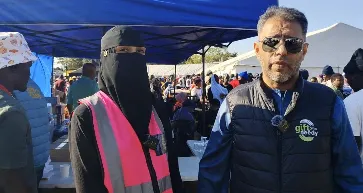
Shahzaadee Khan and Faiaz Magid.
Image: Chumani Mazwi
Muslim Relief South Africa founder, Cassim Malani, said: “I have been here since Sunday night. I am upset that they came here after being chased out of their homes and that they did not have food. They did not have their belongings with them.”
Malani said his primary concern was that the immigrants had access to food, water and basic necessities.
Responding to criticism that the organisation was assisting undocumented migrants, Malani argued that broader immigration and border management issues should be addressed by authorities.
“If Home Affairs sorted the issues out at the borders first, we would not be in this situation,” he said.
“Out of desperation they left their country, believing this is the land of milk and honey.”
Despite acknowledging the complexities surrounding illegal immigration, Malani said his faith compelled him to help those in need.
“I will do the best I can to provide for them as a Muslim. It is my priority. My Qur'an tells me that the best amongst you is the ones that feed Allah's creation, God's creation. If you feed His creation, it paves our way to paradise.”
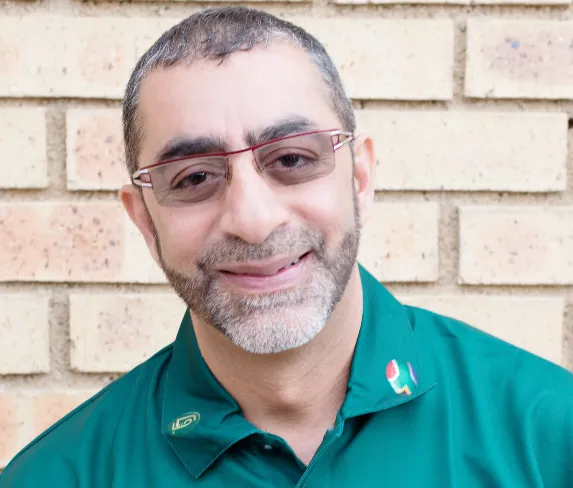
Imtiaz Sooliman, founder of Gift of the Givers
Image: File
Gift of the Givers founder, Imtiaz Sooliman, said they were providing assistance to displaced foreign nationals for several weeks, and continued its humanitarian response at multiple locations.
“Gift of the Givers is a humanitarian organisation. We respond to the needs of people in difficulty, especially when there are women, children, elderly, the ill, and those physically and mentally challenged, irrespective of the circumstances causing the crisis,” said Sooliman.
He noted that the organisation had a long history of responding during xenophobic violence.
“We cannot ignore or turn away from people, especially women and children in difficulty. It's both a religious and humanitarian responsibility.”
Sooliman said aid provided includes mattresses, blankets, hot meals, bottled water, hygiene packs, sanitary pads and diapers.
Calling for a peaceful resolution, he urged governments across the continent to address the root causes of migration.
“Why are there so many foreigners in our country? Obviously there is a problem in African countries. Instead of singling out South Africa for not showing compassion, they should look at themselves in the mirror and see why their citizens are leaving in droves. They need to fix that. As an immediate response, they need to provide transport and humanitarian support for their undocumented citizens in our country,” he said.
“At the same time, while they may be illegal in our country, it does not justify us mistreating, assaulting or intimidating them, especially if they have not committed any crime other than having no documents, and are living peacefully among our people.”
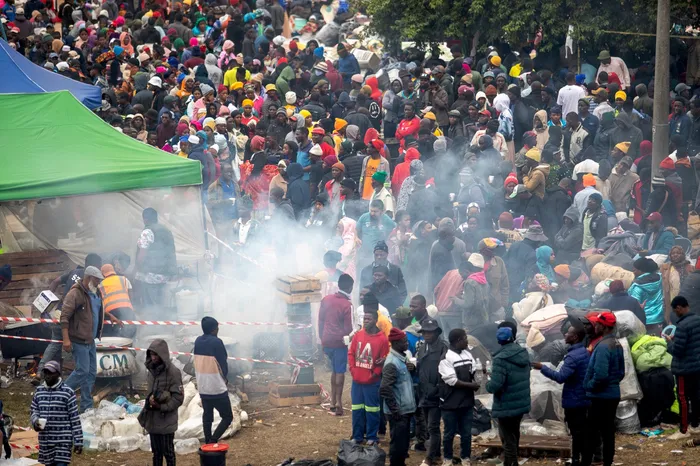
Documented and undocumented foreign nationals are currently displaced across eThekwini (Durban) following threats and protests from armed local groups demanding they leave the country. Thousands of individuals - primarily from Malawi and Mozambique, along with other African nations - are sheltering in makeshift camps and open fields.
Image: Leon Lestrade / Independent Newspapers.
Sooliman added that South Africa must uphold the rule of law.
“Those that are involved in criminal activity should be reported to the SAPS. We are a democratic country. We accept and follow the rule of law. We don't take the law into our own hands. The SAPS then have to act decisively to arrest those engaging in criminal activity, based on irrefutable evidence provided by individuals and groups. These individuals and groups can add value to our society if additionally they can point out South Africans engaged in criminal behaviour.
“We have to fix our border management, delays in processing applications of foreigners, bribery and corruption at Home Affairs, to ensure an efficient control of foreigners entering and leaving our country before their visa expires. But once the foreigners are legal and obey all the rules of our country, we then are obligated to treat them as brothers and sisters, for these are fellow Africans who stood with us in our dark era of apartheid, pre-1994,” said Sooliman.