

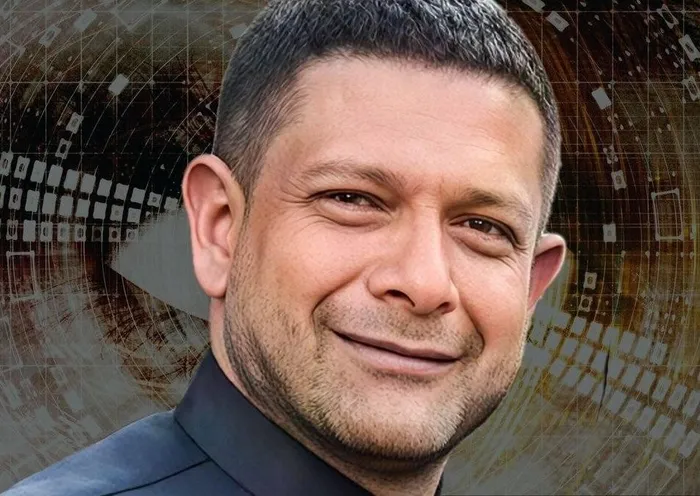
Feroz Khan has launched another application at the Johannesburg High Court to have his devices returned to him.
Image: Supplied
Major-General Feroz Khan, deputy head of Crime Intelligence, is reportedly set to return to the Johannesburg High Court in a bid to reclaim his electronic devices, which were submitted to the Madlanga Commission.
Khan worries that this happened while legal proceedings were still underway.
In his application, Khan added the Madlanga Commission and the President as respondents as he seeks to challenge both the seizure of the devices and their subsequent transfer.
According to court papers, Khan first approached the Urgent Court on May 26, arguing that the devices were unlawfully searched and seized without a warrant.
He also sought to prevent authorities from accessing their contents pending a court ruling on the legality of the seizure.
However, Khan said the matter took a new turn on May 29 when the State Attorney informed him that the devices had already been handed over to the Madlanga Commission despite the urgent application still being before the court.
He argued that the transfer changed the nature of the dispute and prompted him to launch a fresh application on June 1.
Khan maintained that the warrantless search and seizure remained unlawful and that the decision to transfer the devices before the court had ruled on the matter should also be reviewed.
He further claimed that notices issued by the commission are defective and go beyond the powers granted under its regulations.
In his affidavit, Khan said the devices contained sensitive information, including personal data, privileged communications, intelligence-related material and information linked to confidential informants.
He argued that any access to the contents could have serious consequences.
"Once the contents are accessed, copied or distributed, the harm cannot be undone," Khan stated in court papers.
He further warned that confidential information relating to informants and classified operations could be exposed if the devices are examined before the courts determine the legality of the seizure.
Khan argued that the case raised important constitutional questions involving privacy rights, the exercise of public power and the relationship between commissions of inquiry and the courts.
He said he had no alternative remedy because any unlawful access to the information could not be reversed, even if the court later ruled in his favour.
Khan also argued that authorities would suffer no prejudice if the current position was maintained while the legal issues are resolved, as the devices would remain in state custody.
"This application remains urgent in that the devices are in unknown hands, the lives of informants are at risk and the information contained in the devices is classified in nature," he stated.
The matter is expected to be heard next week.
Meanwhile, Khan remains on bail after his arrest in connection with an alleged illicit precious metals and corruption syndicate.
He, Gauteng Hawks head Major-General Ebrahim Kadwa and Durban businessman Tariq Downes were each granted R20,000 bail in the Kempton Park Magistrate's Court on May 11.
The three accused are due back in court on July 14.