

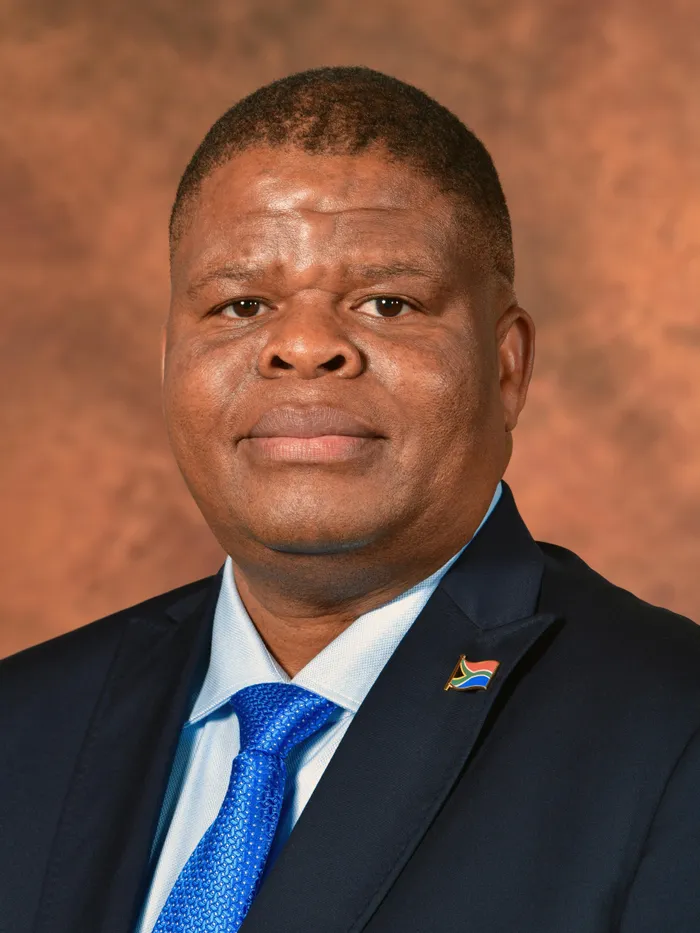
David Mahlobo, Deputy Minister of Water and Sanitation
Image: Supplied
As South Africans, we must support interventions to strengthen border management, enforce our immigration laws, and address criminality wherever it occurs. Every sovereign nation has a responsibility to regulate migration, protect its borders, and ensure that those who live and work within its territory do so in accordance with the law.
Supporting these interventions, however, should never be confused with hostility towards foreign nationals. The enforcement of immigration laws is not xenophobia; it is governance. Equally, opposing xenophobia does not mean turning a blind eye to illegality. South Africa can and must do both: uphold human dignity while enforcing the rule of law. This distinction is important because South Africa is not a xenophobic nation.
Like every country, we have faced isolated incidents of violence linked to migration, unemployment, and socio-economic pressures. These are unacceptable but do not define our nation. Most South Africans live, work, trade, worship, and build communities with people from across Africa and beyond.
Our Constitution, one of the most progressive in the world, recognises the inherent dignity of every person. The values that underpin our democracy were forged through solidarity, inclusion and a belief in our shared humanity. These values remain central to who we are as a people.
South Africans expect fair enforcement of immigration laws. Violators must face lawful consequences. Crime, corruption, and illegal activities threaten social cohesion and strain resources. The government must decisively act against these issues, upholding the rule of law over vigilantism. Laws and institutions must operate without bias or fear.
As Deputy Minister of Water and Sanitation, I am reminded daily that South Africa's future cannot be separated from that of our neighbours. Water teaches us a lesson that is particularly relevant at this moment in our national discourse: cooperation is not a choice but a necessity.
South Africa is water-scarce, relying on neighbouring countries for water security. Key shared river systems include the Orange-Senqu, linking South Africa with Lesotho, Botswana, and Namibia; the Limpopo with Botswana, Zimbabwe, and Mozambique; and the Inkomati and Maputo, connecting South Africa with Eswatini and Mozambique.
Millions of people across Southern Africa depend on these shared water resources for drinking water, agriculture, mining, industry, energy production, and economic development. No country can manage these systems effectively in isolation. Our collective future depends on cooperation, information sharing, joint planning, and mutual trust. For this reason, South Africa plays an active role in several regional water governance institutions.
These institutions are not just symbolic; they are practical mechanisms through which countries cooperate to prevent disputes, manage scarce resources, and secure sustainable development for millions of people.
The Lesotho Highlands Water Project exemplifies successful regional cooperation. For decades, it has supplied water to Gauteng, boosted Lesotho's economy, built infrastructure, and created jobs. It remains a top African example of transboundary partnership, showing what shared interests can accomplish.
Whenever I participate in discussions with ministers and officials from neighbouring countries, I am reminded that the challenges we face are often shared. Whether it is drought, floods, climate change, or economic development, our solutions are stronger when we work together. This is why I find it difficult to accept narratives that portray South Africa as a country hostile to outsiders. The South Africa I know is different.
It is a country whose freedom was made possible through solidarity from across the African continent. This should remind us that our story has never been one of isolation, but of partnership, cooperation and shared humanity. However, this does not mean we abandon our responsibility to protect our borders or enforce our laws. It means we do so in a manner that reflects our values.
Recently, Minister Pemmy Majodina hosted the inaugural Council of Ministers Meeting of the Inkomati and Maputo Watercourse Commission, where water ministers from South Africa, Mozambique, and Eswatini met to boost cooperation and manage shared water resources sustainably. This gathering underscored that regional challenges and opportunities go beyond borders.
It is against this backdrop that narratives portraying South Africa as inherently xenophobic are deeply troubling. Such claims ignore the reality of our daily interactions, our constitutional values and the extensive regional partnerships that underpin our development agenda.
South Africa's history itself stands as evidence against such narratives. When South Africans fought against apartheid, neighbouring countries opened their borders to exiles, freedom fighters and political activists. Many countries across Africa and the international community mobilised diplomatic and economic pressure against apartheid because it believed in justice, equality, and human dignity.
Our history reminds us to value neighbourly solidarity and global cooperation, understanding that our prosperity relies on regional integration, trade, and investment. I reject all xenophobia as morally wrong, unconstitutional, and against our interests.
I support lawful measures to address illegal immigration, bolster border security, and enforce the law, as respecting human dignity involves respecting the rule of law. South Africa's future depends on lawful governance, responsible migration, regional cooperation, and constitutional values, not isolation. We will defend sovereignty through law enforcement; promote partnerships, regional cooperation, and uphold human dignity, equality, and mutual respect—our enduring identity.
Water and Sanitation Deputy Minister, David Mahlobo