

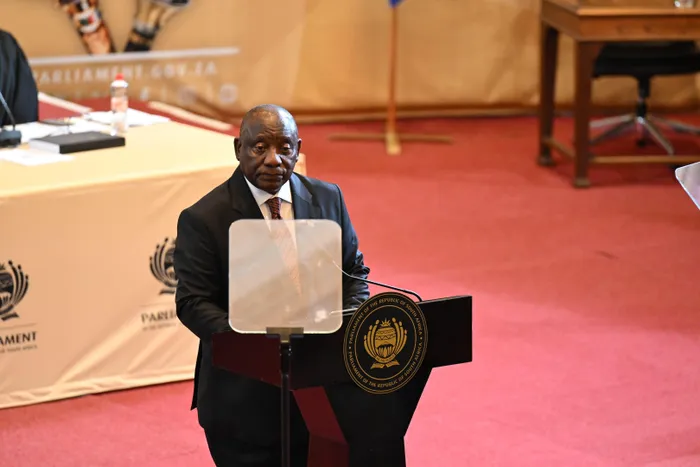
As President Cyril Ramaphosa seeks to block an impeachment probe, critics accuse him of abandoning his anti-corruption pledge.
Image: Henk Kruger / Independent Media
After moving to block the impeachment committee's investigation, President Cyril Ramaphosa has come under fire for allegedly weakening his anti-corruption stance.
Activists and Citizens Forum spokesperson Dennis Bloem said Ramaphosa’s decision to run to apply for an interdict to halt the impeachment process is in direct contradiction with his promises to fight corruption.
This comes after Ramaphosa on Friday filed an urgent application in the Western Cape High Court, arguing that the impeachment committee should not commence its proceedings until a separate court challenge regarding the Section 89 Independent Panel is finalised.
The report found that there was prima facie evidence that Ramaphosa may have committed serious violations of the Constitution and anti-corruption laws regarding the 2020 theft at his Phala Phala farm.
Ramaphosa stated that allowing an inquiry to move forward based on a report whose legal validity is disputed would cause irreparable political and reputational harm.
He added that under National Assembly rules, he has the right not to face impeachment unless it is preceded by a lawful and valid independent report.
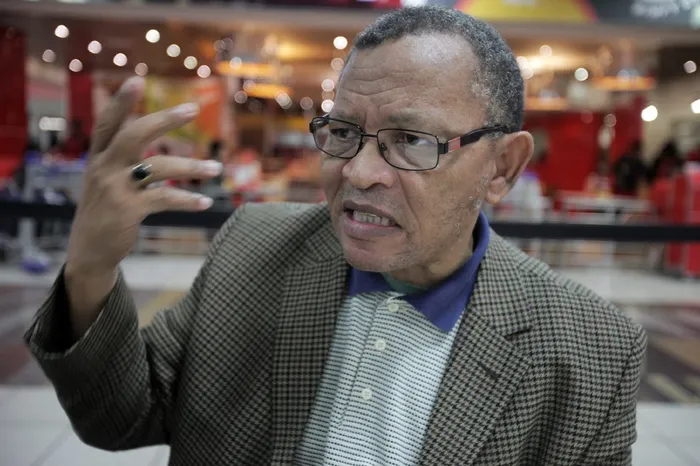
Election campaign Activists and Citizens Forum spokesperson Dennis Bloem says President Cyril Ramaphosa has undermined his anti-corruption stance after he filed an urgent court application to stop impeachment proceedings.
Image: Paballo Thekiso/Independent Newpapers
This follows Ramaphosa's filing of papers in the Western Cape High Court seeking to review, declare unlawful, and set aside the panel report.
The hearing is scheduled to take place from 2 to 4 September.
“The question is, why does President Ramaphosa want to stop the impeachment committee from proceeding with its work? What is it that he wants to hide? It is very clear there is definitely something serious that the president wants to hide,” said Bloem.
Ramaphosa’s urgent filing followed the recent Constitutional Court (ConCourt) ruling, which found that Parliament's 2022 vote to block the inquiry was unlawful.
The ruling forced the National Assembly to establish a 31-member impeachment committee.
Ramaphosa made stamping out government corruption and ending the “state capture” era a cornerstone of his political platform during both his initial rise to the ANC leadership in 2017 and ahead of the 2019 general elections.
He repeatedly vowed to dismantle the networks of “state capture," clean up state-owned enterprises and hold corrupt officials accountable.
Bloem said Ramaphosa has turned against his own words and promises.
“His decision to run to court and apply for an interdict to halt the impeachment process in Parliament is in direct contradiction with those promises. This is the very same person who promised the people of the country that he would fight corruption with everything in his power when he is elected President of the country,” said Bloem, adding that Ramaphosa even coined the “Thuma Mina” speech he delivered in Parliament after his election as President.
The injunction served as a call for active citizen participation and renewal, specifically to cure the country of the “corrosive effects of corruption” and state capture.
Ramaphosa’s spokesperson Vincent Magwenya did not respond at the time of this publication.
Political analyst Professor Ntsikelelo Breakfast also said Ramaphosa’s conduct contradicts his promise of transparency and good governance, adding that he wants to put the matter on hold permanently so he does not have to account.
“I don’t think he initiated that legal action in good faith. That report was handed over to Parliament in 2022, and he did not take legal action against that report? He knew he was going to get political backing. He knew there were political dynamics around this matter and thought the matter would die a natural death,” he said.
Another political analyst, Professor Andre Duvenhage, said there are grounds to argue that Ramaphosa is following a “Stalingrad” strategy.
Duvenhage added that the other perspective is that he is undermining the legislature's oversight function with respect to executive authority.
Meanwhile, the EFF and the African Transformation Movement (ATM) have indicated their intention to oppose Ramaphosa's application.