

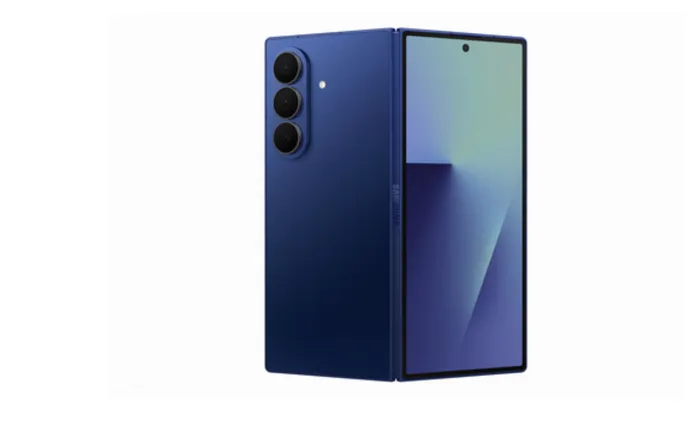
Samsung’s newly announced Galaxy Z Fold 8 range carries a heavy price tag for South African consumers, driven by premium fold tech and rising AI memory costs. Picture: Samsung
Image: Samsung
Samsung announced its new Galaxy Z Fold 8 Ultra and Galaxy Z Fold 8 last week, but South African consumers might feel a slight punch to the gut: pricing starts at a steep R32,000.
The entry-level Galaxy Z Fold 8 will retail for R32,000, while the larger Galaxy Z Fold 8 Ultra steps up to approximately R35,400. Higher-storage configurations climb even further: the 512GB version of the standard Fold 8 costs R40,999, while the 512GB Fold 8 Ultra reaches a towering R50,999.
For comparison, Apple’s flagship iPhone 17 Pro starts at R27,999, with the iPhone 17 Pro Max beginning at R30,699. Of course, because Samsung’s devices feature foldable display technology, a premium price over traditional smartphones is expected.
The main differences between the two Samsung models come down to dimensions and weight. The 6-inch Fold 8 weighs in at a lighter 201g, making it noticeably more compact than the 8-inch Fold 8 Ultra, which weighs 215g.
Aside from form factor, however, the phones deliver nearly identical performance and display quality. Both models start with 256GB of storage and 12GB of RAM, ensuring exceptionally fast, responsive performance across everyday tasks and intensive workloads alike.
Pre-orders open on August 12, with general availability in South Africa starting August 13.
Looking ahead, device prices could push even higher. Global shortages of RAM, unified memory, and storage—fuelled by the insatiable demands of AI workflows—continue to drive up component costs. As modern users increasingly rely on memory-heavy AI tools like ChatGPT, Google Gemini, Microsoft Copilot, Claude, and Perplexity, high memory specs are becoming essential, and pricey.