

Explore the unfolding drama of the Banxso liquidation, where allegations of inflated legal fees and missing invoices raise serious questions about accountability and transparency in the insolvency process.
Image: File
On Friday IOL reported on the founding affidavit filed in the Western Cape High Court by Kobus Senekal of FJ Senekal Incorporated on behalf of Flamingo Clearing House Limited, affected employees, and concurrent creditors of Banxso (Pty) Ltd (In Liquidation).
The first article dealt with the email in which Herman Bester campaigned for his own appointment as liquidator before the liquidation order was granted, the enquiry evidence of creditors who had settled their claims in full and final settlement but were nonetheless permitted to vote and requisition, and the systematic exclusion of the employees whose preferent claims might have provided the most effective check on what followed.
Today’s report examines the next set of allegations in the affidavit: legal costs, a taxation process the Taxing Master’s own certificate says was settled by consent instead of being properly opposed and scrutinised, pro forma advocates’ invoices used to support more than R11 million in legal fees, a R527,850 charge with no supporting invoice attached, and the application’s demand that the liquidators repay the loss personally.
The legal costs of Mostert and Bosman Attorneys, running across nine entries in the First Liquidation and Distribution Account between November 2025 and April 2026, total R11,629,177.23. The single largest of those entries, Voucher 30, amounts to approximately R5,946,082.92 is for the liquidation application itself. It is, by a significant margin, the largest item of expenditure in the entire first account.
South African insolvency law is clear on what must happen before legal costs of this magnitude can be paid from funds held for creditors. They must pass through the office of the Taxing Master: an independent, court-supervised review in which each item is examined, challenged where appropriate, and allowed or reduced on its merits. The process is not optional, and it is not a formality. It exists specifically to prevent the professional advisers of an insolvent estate from charging whatever they wish from a fund that belongs to creditors who have no other protection.
Senekal annexes the Taxing Master's certificate for Voucher 30 to the application. The certificate does not record that the bill was taxed. It records that it was "settled by consent." Those three words, he argues in the affidavit, represent the removal of the only independent check standing between the attorneys and R5.9 million of creditors' money.
A settlement between parties cannot replace the independent duty of the Taxing Master to protect an insolvent estate against unreasonable, excessive, or inflated charges. The liquidators, who bore independent fiduciary obligations to scrutinise the accounts of their own attorneys, instead adopted and advanced those accounts without challenge. The bill was, in Senekal's formulation, effectively allowed in its entirety. None of the items were meaningfully challenged.
The consent arrangement produced an additional absurdity. A taxation attendance fee of approximately R154,480.02 was charged and allowed, even though there was no genuine opposed taxation. The estate paid for a taxation that did not take place.
The costs do not stop at the unsanctioned consent arrangement. The affidavit identifies a Rule 67A surcharge of approximately R288,057.75 charged against the estate. Rule 67A surcharges apply where a court order specifically authorises attorney and client recovery or elevated tariff scales. The court order underpinning the costs in this matter authorised none of those things. It did not authorise attorney and client costs. It did not authorise Rule 67A surcharges. It did not authorise private counsel rates. It did not authorise Scale B or Scale C recovery.
In the absence of explicit authorisation, the default position in South African practice requires Scale A to apply. The attorneys recovered at rates above Scale A without the authorisation that would have been required to do so. The surcharge alone, added to costs already allowed without genuine taxation, represents what the affidavit describes as an extraordinary recovery from an insolvent estate.
The affidavit then turns to the advocates' accounts. Adv MM van Staden and Adv RF van Rooyen SC, the junior and senior counsel engaged for the enquiry, issued pro forma invoices. Not final tax invoices. Not documents that satisfy the requirements of section 20 of the Value-Added Tax Act. Provisional accounts, issued on a preliminary basis, which in law do not constitute valid demands for payment and which cannot properly ground a claim for input tax.
Senekal poses the question in the affidavit and leaves it unanswered because the answer is not available. How could millions of rands be taxed and paid from an insolvent estate based on provisional accounts? The question acquires additional weight when read alongside the enquiry evidence of both intervening parties, Ms Duvenhage and Dr Smit, each of whom confirmed under oath that they made no personal contribution to the legal costs.
Duvenhage told the enquiry she understood the company would bear the costs. Smit confirmed she contributed nothing. The attorneys carried the costs of bringing the liquidation application, on the understanding that those costs would be recovered from the estate they were creating. The advocates whose pro forma invoices were then used to support a multimillion-rand bill of costs occupied the same arrangement.
Van Staden was not merely the advocate whose invoices appear in Voucher 30. He was, on the evidence of Dr Smit at the enquiry, the person who told her she could ignore her settlement agreement with Banxso because the whole system was fraudulent. He referred her to Pierre du Toit of Mostert and Bosman. He is described in the enquiry transcript as the person who did the whole Banxso case. His pro forma invoice is now part of a court record supporting a bill of costs settled by consent rather than opposed by anyone with an interest in protecting the estate.
The annexures to the application set out detailed objections to Voucher 30. In the affidavit, Senekal highlights what he says is a pattern of irregularities serious enough to call the entire bill into question.
According to the affidavit, supporting invoices were missing, attorney and counsel work was duplicated, and copying and perusal charges were excessive. It also alleges that vague global items were included without enough detail to allow proper scrutiny, that travel and accommodation costs were recovered without adequate justification, and that the attorneys effectively billed the estate as a third layer of counsel while both senior and junior counsel were already charging for the same matter.
Item 317 of the bill is singled out. It reflects charges of approximately R527,850. The supporting invoice is not attached to the account.
The affidavit identifies a further internal inconsistency that the objections raise for investigation. The chronology of the charges reflected in the accounts appears inconsistent with the chronology of the affidavits prepared and signed in the proceedings.
Either the underlying documents were in the possession of the attorneys before the dates reflected in the affidavits, or charges were levied for work allegedly performed after the affidavits had already been prepared and signed. Both possibilities require proper investigation.
Senekal's estimate of the quantum that should never have been allowed, taken on a conservative approach to the individual items challenged in the objections to Voucher 30, is approximately R2 million. Against an estate in which 216 proven creditors with combined claims of R194,379,545.72 have received not a cent, R2 million is not a rounding error.
The affidavit places alongside the legal costs dispute a specific example of the differential treatment it alleges was applied to claims in this estate. Claim 150 was submitted by Ingenuity Property Investments (Pty) Ltd and reflected alleged indebtedness of R102,077.04 arising from office and parking rental. The liquidators accepted it and incorporated it into the Liquidation and Distribution Account. It is the only claim from which a distribution was made in the first account.
Senekal's affidavit says the documents supporting the claim called for closer scrutiny and should not have been accepted on mere face value. The amount was not properly reconciled, and the material filed with the claim raised questions that, he says, should have been investigated. In particular, the accounting records and debtor statements needed to be checked against Banxso's books to establish the exact indebtedness before the claim was accepted.
The liquidators did not investigate. They did not invoke section 44(7). They incorporated the claim.
The affidavit does not say Claim 150 was necessarily invalid. It makes a sharper point: the treatment of Claim 150, it says, was wholly at odds with the treatment of the employees' claims, dissenting creditors, requests for section 393 disclosure, and demands for taxation of the legal costs. Claims and creditors that supported the path the liquidators wanted faced little resistance. Those who challenged it, the affidavit alleges, met obstruction at every turn.
That differential treatment is incompatible with the Commissioner's express finding that a liquidator should be wholly independent, should regard equally the interests of all creditors, and should carry out his duties without fear, favour, or prejudice.
The Commissioner further recorded that liquidators bear positive fiduciary obligations to investigate claims, examine the books and records of the company, resist doubtful claims, and protect the concursus creditorum. On Senekal's case, those obligations were consistently breached.
From December 2025, Senekal had been formally requesting disclosure of the section 393 records of the estate: the underlying documents, invoices, mandates, correspondence, and supporting material that would allow creditors properly to scrutinise how the estate was being administered and what the legal costs were for. The request is not an unusual one. Section 393 of the Companies Act exists precisely to make this information available to creditors and interested parties as a matter of right.
The liquidators refused to comply. Senekal then wrote to the Master, Mr Mabusela, asking him to direct the liquidators to make the records available. The Master also refused to act. The correspondence evidencing both refusals is annexed to the application.
The affidavit describes the Master's refusal as inexplicable because, on its case, section 393 leaves no room for discretion. Creditors are entitled to see the records of the estate. That is the point of the provision.
In an insolvency, the Master's role is supervisory. That supervision includes ensuring that creditors can access the documents they are legally entitled to inspect, especially where the estate is being charged millions in legal costs.
According to the affidavit, that did not happen here. Instead, creditors were asked to approve accounts they could not test, ratify costs they had not been allowed to examine, and consent to payments they were not permitted to see in full. In the telling of the application, that was not oversight. It was the removal of scrutiny at the very point scrutiny mattered most.
The application closes with a request that this Honourable Court will not have missed. Senekal seeks a costs order de bonis propriis, on the scale as between attorney and own client, against the second through to the sixth respondents: Bester, Bailey, Eckhoff, Ledwaba, and Schutte. Not against the estate. Against them personally.
A de bonis propriis costs order is the most severe sanction a court can impose on a litigant in civil proceedings short of a criminal referral. It means that the relevant parties pay the costs from their own assets, not from any fund they administer or any professional indemnity arrangement. Courts grant such orders when they find that the conduct of the relevant party went beyond ordinary negligence or error and demonstrated bad faith, disregard for the rights of others, conduct inconsistent with the standards expected of an officer of the court, or deliberate misuse of the process.
The application expressly excludes Victor, the seventh respondent, from the punitive costs claim. The affidavit records that Victor raised concerns about the legal costs, the treatment of employees, procedural fairness, and the failure to investigate disputed claims. He refused to sign the liquidators' report pending resolution of those disputes. He was denied the opportunity to have them resolved before the meeting proceeded. The application asks only that he not be made personally liable for a process he actively opposed.
The application asks that the second through to the sixth respondents pay personally for conduct the affidavit describes as bad faith, procedural manipulation, breaches of statutory and fiduciary duty, and a disregard for the rights of creditors and employees that, it says, falls far below the standard expected of officers of the court.
Senekal concludes his affidavit with a submission that is as much a description of the whole case as it is a legal argument. "This Honourable Court," he states, "cannot merely be expected to rely upon the say-so of the liquidators concerning disputed legal costs, disputed claims and disputed requisitions."
What sits behind that sentence, the affidavit says, is not a single irregularity but an entire pattern.
It begins with a liquidator who campaigned for his own appointment. Then come the attorneys who brought the liquidation application, carried its costs, and later billed the estate they helped create R11 million for administering the liquidation and enquiry process.
The affidavit says creditors who had already settled in full were still treated as creditors for voting and requisition purposes. It says an advocate told a settled witness to disregard her settlement agreement, and urged her to submit a claim anyway.
It points to a Taxing Master's certificate that records consent instead of scrutiny on a R5.9 million bill, a Rule 67A surcharge with no authorising court order, pro forma invoices used to support payments of millions, and an item of R527,850 with no invoice attached.
It adds a meeting shifted to a virtual format on twenty-four hours' notice, employees whose documents were removed from the Master's office and returned only after meaningful participation was no longer possible, and, ultimately, a Master of the High Court accused of allowing it all to happen by condoning all of the above.
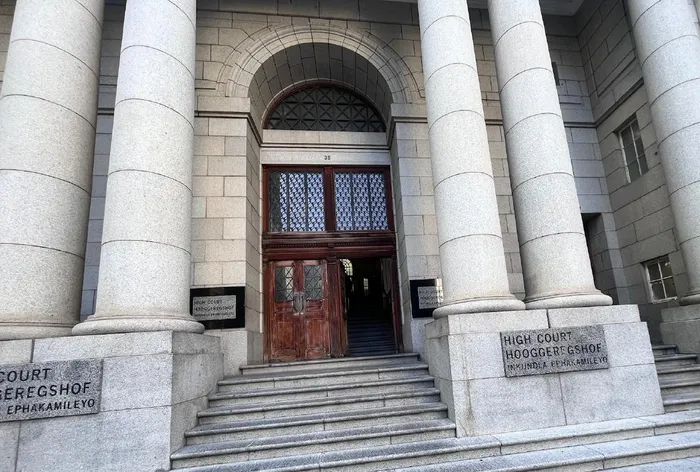
The Western Cape High Court must now decide whether those allegations, set out in the founding affidavit with extensive annexures and enquiry transcripts, have been made out.
For Banxso's 216 proven creditors, who have lodged claims of R194 million and received nothing after nine months of administration, the stakes could hardly be higher.
The liquidators, Mostert and Bosman, and the Master of the High Court are entitled to respond to the court filings. They have not yet done so in these proceedings.