

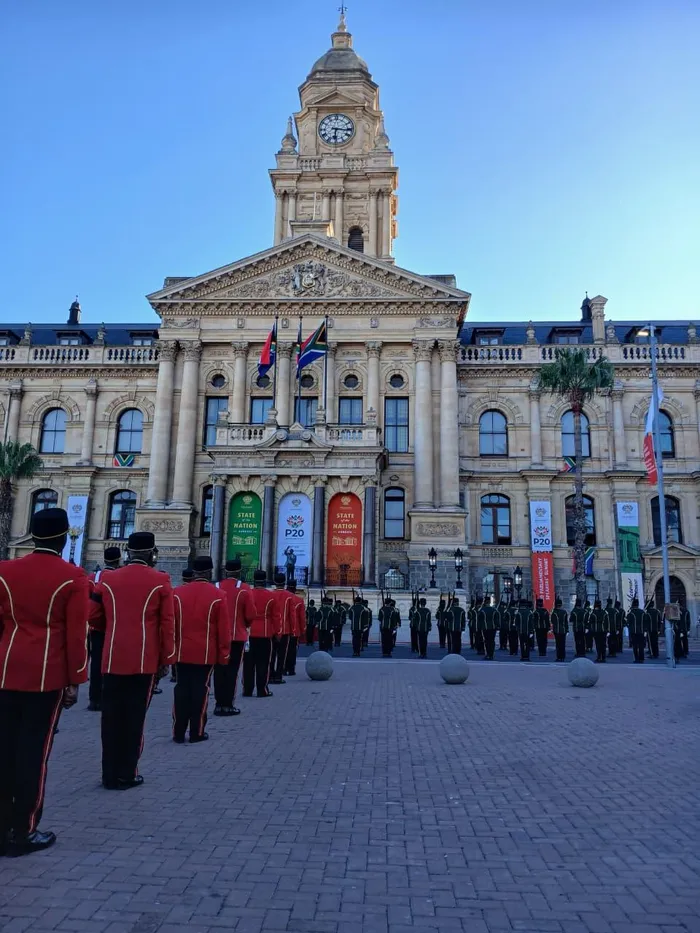
The State of the Nation Address takes place on Thursday at Cape Town City Hall. Free SA says what the country now requires is decisive reform grounded in fiscal responsibility, private sector empowerment, and constitutional governance.
Image: Robin-lee Francke / IOL
AS South Africa awaits the State of the Nation Address (Sona) by President Cyril Ramaphosa, the Foundation for Rights of Expression and Equality (Free SA) has called on President Cyril Ramaphosa to move beyond rhetoric and present a bold, measurable plan to restore economic growth, rein in the unsustainable public wage bill, and rebuild South Africa’s credibility on the global stage.
“South Africans have heard many promises before. What the country now requires is decisive reform grounded in fiscal responsibility, private sector empowerment, and constitutional governance.
“South Africa’s persistently low growth, high unemployment, and investor uncertainty cannot be solved by expanding the state. They will be solved by unleashing enterprise.
“As Free SA has consistently argued, sustainable job creation lies in enabling the private sector, not expanding government payrolls or temporary state programmes,” Free SA said in a statement on Wednesday.
The Foundation called for Ramaphosa to commit to:
Free SA said the country’s crisis was not a lack of government intervention, but the excess of it. “The QLFS figures may fluctuate quarterly, but a structural unemployment rate above 30% remains a national emergency. Incremental adjustments will not suffice.
“If the President is serious about ‘inclusive growth’, he must make it easier to start, run, and grow a business in South Africa. The public sector wage bill continues to consume an unsustainable share of national expenditure. At a time when taxpayers are stretched to breaking point and economic growth remains anaemic, the government cannot continue to insulate itself from the fiscal realities facing ordinary citizens.”
Free SA has previously proposed a drastic reduction in the size of Cabinet, from 77 executive members to 26, to improve governance and reduce costs. It said Ramaphosa now had an opportunity to demonstrate genuine fiscal leadership by:
The Foundation said South Africans could not be expected to accept higher taxes, reduced services, and mounting debt while the executive remained one of the largest and most expensive in the world. “Fiscal discipline must begin at the top.”
Economic recovery depends on trust. Trust depends on adherence to the rule of law and respect for public participation. Free SA has previously raised concerns when the government bypassed proper consultation processes and imposed regulations without transparency. In his address, the President must reaffirm the government’s commitment to constitutional governance, public participation, and regulatory certainty.
“Investors, both domestic and foreign, require a stable, predictable environment. Policies made through rushed processes or political expediency erode confidence and deter capital.
“South Africa’s international standing has become increasingly strained in recent years. Ambiguous foreign policy positions, inconsistent diplomacy, and alignment with controversial blocs have created uncertainty among key trading partners,” Free SA said.
The organisation called upon Ramaphosa to use Sona to clarify South Africa’s foreign policy direction and prioritise:
Free SA said rebuilding international confidence was not about abandoning sovereignty; it was about demonstrating that South Africa is stable, predictable, and open for business.
Gideon Joubert, Free SA spokesperson, said: “South Africa does not need another speech filled with aspirations and slogans. It needs a credible, costed, and time-bound reform agenda. If the President is serious about turning the economy around, he must reduce the size of government, empower the private sector, and restore policy certainty. Anything less will simply prolong stagnation.”
The organisation said South Africans deserved leadership that matched the scale of the crisis. Sona should mark a decisive break from incrementalism and signal a bold shift toward fiscal prudence, economic freedom, and accountable governance.
The country cannot afford another year of drift.