

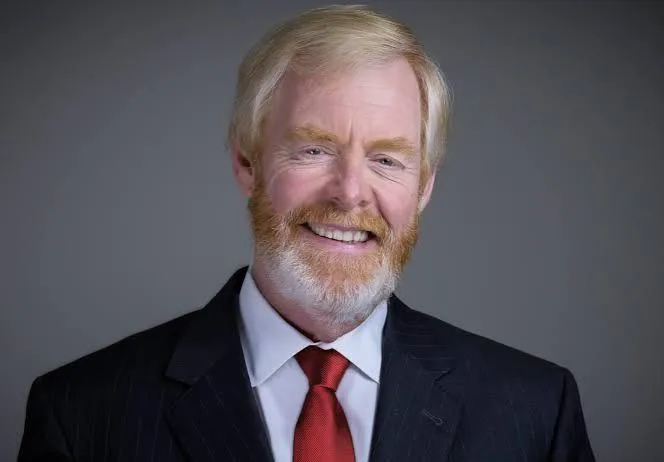
US ambassador to South Africa, Leo Brent Bozell.
Image: Supplied
THE United States has once again taken aim at South Africa’s independent foreign policy. In a post on the social network X, the US ambassador to South Africa, Leo Brent Bozell, criticised Pretoria for hosting Iran’s deputy foreign minister while Deputy President Paul Mashatile was in Beijing deepening ties with China.
“Pretoria calls this non-alignment,” Bozell wrote. “We call it what it is: a choice. The South African people deserve an honest conversation about who their government is choosing to stand with.”
The remarks amount to a thinly veiled rebuke of a sovereign government for declining to fall in line behind the Trump administration. They also carry an unmistakable message about Iran.
By singling out a routine diplomatic visit at a moment when Washington has been pressing its own confrontation with Tehran, the ambassador appeared to be signalling that South Africa should treat America’s adversaries as its own, a posture that many in the country read as an attempt to draw Pretoria toward a conflict that is not its own.
The double standard is difficult to miss. President Donald Trump himself travelled to China on a state visit from 13 to 15 May 2026, with the express aim of deepening ties with Beijing.
If an American president may court China in the name of national interest, it is unclear why a South African deputy president may not do the same.
The episode raises an obvious question about the assumptions behind Washington’s conduct: why does the United States believe it has the standing to dictate which nations South Africa may engage with and on what terms?
South Africa, Iran and China are all members of BRICS, a grouping that South Africans have embraced as an expression of a more balanced international order. Engagement among its members is neither secret nor sinister; it is the ordinary business of a bloc to which Pretoria belongs by choice and which enjoys broad public support at home.
That support was visible in the public response to the ambassador’s post. The replies beneath it were dominated by South Africans rejecting what they saw as foreign interference and defending their government’s right to chart its own course.
The reaction suggested that opposition to external pressure is not confined to officials in Pretoria but is shared widely across the population.
The South African government responded firmly. The Department of International Relations and Cooperation said that while it does not engage in public disputes with resident envoys, the remarks required a clear restatement of principle.
Its spokesperson, Chrispin Phiri, said the country pursues an independent foreign policy anchored in non-alignment, adding that non-alignment should not be mistaken for neutrality.
South Africa, he said, refuses to be drawn into geopolitical contests or pressured to take sides, and reserves the right to cultivate relations across the full spectrum of nations. He also pointed to the contradiction in being publicly scrutinised for engaging Iran and China, the very states with which the United States itself continues to deal.
The friction has deeper roots. Washington’s displeasure has sharpened considerably since South Africa condemned Israel’s conduct against the Palestinians. So long as Pretoria holds to that position, there is little sign that the pressure will ease.
It has already taken tangible forms, among them the recent withdrawal of United States funding for HIV programmes in South Africa, a decision that placed the burden of a political quarrel on the most vulnerable.
Taken together with the earlier boycott of the G20 summit hosted by South Africa and the expulsion of its ambassador from Washington, the pattern points to an administration willing to use every available lever of pressure.
South Africans, for their part, have shown no inclination to yield to it. The government has reaffirmed its course, and the public has rallied to the same position. Seen in that light, the ambassador’s intervention is more than an undiplomatic outburst.
It is a challenge to South Africa’s sovereignty and an interference in the internal affairs of a nation that has made clear it intends to decide its own friendships and its own future for itself.
* Asim Al-Bilal Al-Tayeb is a prominent Sudanese journalist and political analyst. He belongs to a well-known media family in Sudan (the Al-Bilal Al-Tayeb family) and currently serves as Deputy Editor-in-Chief of the Sudanese newspaper Akhbar Al-Youm.
** The views expressed here do not reflect those of the Sunday Independent, IOL, or Independent Media.