

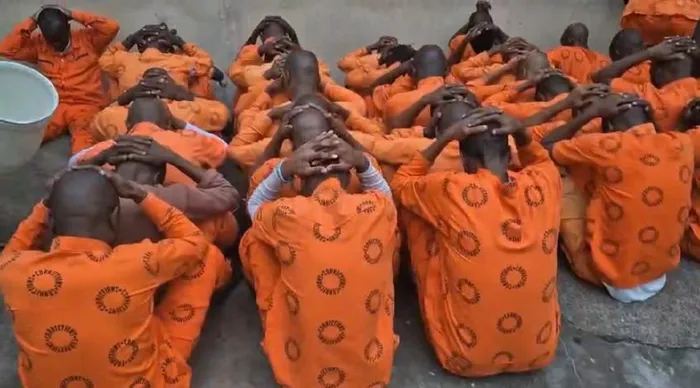
South Africa spends more than R11 million every day incarcerating foreign nationals, according to Correctional Services Minister Pieter Groenewald. He revealed the figure during a briefing to Parliament's Portfolio Committee on Correctional Services this week.
Image: File
South Africa is spending approximately R11.7 million a day to house foreign nationals in its correctional facilities, with thousands of offenders being repatriated to their home countries upon release.
This was revealed by Correctional Services Minister Pieter Groenewald this week during a briefing to a parliamentary committee, where he disclosed that about 26,000 foreign nationals are currently incarcerated in South African prisons.
Groenewald said the Department of Correctional Services continues to work with foreign governments to facilitate the repatriation of offenders once they are released on parole or complete their sentences. However, he acknowledged that some of those deported eventually find their way back into the country.
"The campaign to repatriate immigrants is ongoing because it costs us R11.7 million per day to keep them in our facilities. Once they are released, we return them to their countries through agreements and partnerships we have with other nations. I know some of them return," he said.
His remarks come amid increasing public pressure on government to clamp down on undocumented immigration. Several protest marches have been held across the country calling for the deportation of undocumented foreign nationals, with anti-illegal immigration groups such as March and March demanding action before their June 30 deadline.
Groenewald also raised concerns about the department's financial constraints, saying limited resources have prevented the wider use of electronic monitoring devices for parolees.
He said that, if resources permitted, parolees should be fitted with electronic monitoring devices to enable authorities to track their movements and ensure compliance with parole conditions.
"If it were up to me, everyone who wants to be released on parole would wear a monitoring device so that their whereabouts can be tracked at all times. But we must also respect people's rights," Groenewald said.
His comments followed questions regarding allegations that the department had lost track of more than 28,000 parolees. Department officials rejected the claims, insisting that parolees remain subject to strict monitoring and supervision measures.
Deputy Commissioner responsible for rehabilitation and community corrections Gustav Wilson told the committee that parolees are subject to numerous restrictions and conditions while serving their parole in the community.
The department maintains that monitoring systems are in place to ensure compliance, although officials acknowledged that resource limitations continue to present operational challenges.
For more news click on the link: Sunday Tribune