

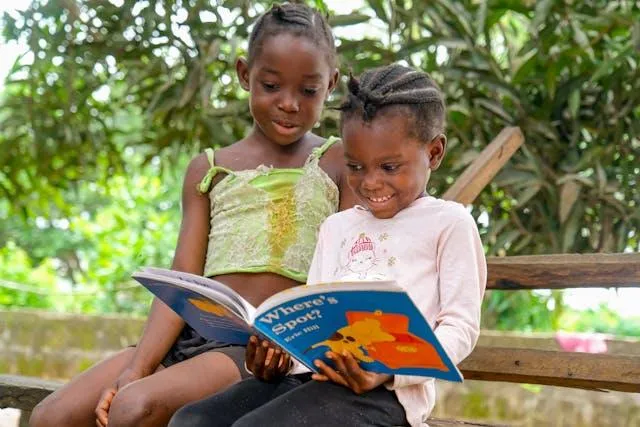
New analysis highlights a persistent literacy crisis in South Africa, where reading comprehension challenges are driven by gaps in early childhood education, classroom resources and teacher training.
Image: B. Aristotlè Guweh Jr/pexels
When we think about the issues facing South Africa's youth this Youth Day, the conversation tends to gravitate towards the visible ones – unemployment, drugs, violence, exam pressure. There is, however, a quieter crisis sitting underneath all of those, and it is the one that will shape almost every other outcome in a young person's life: the country's literacy gap.
The numbers are bracing. 81% of South African Grade 4 learners cannot read for meaning in any of the official languages. That figure, drawn from successive Progress in International Reading Literacy Study (PIRLS) results, is not a fluctuation. It has been telling the same story year after year.
A child who cannot read for meaning by the end of Grade 4 is a child who will struggle in every subject that depends on reading – which is almost all of them. Literacy is not one school subject among many. It is the gateway to every other subject, and to most of life beyond school. For two decades, the national conversation around education has been about access – getting children into classrooms. We have, in fact, achieved near-universal access to basic education. What we have not achieved is what is supposed to happen inside those classrooms. The challenge today is no longer whether children are at school, but whether they leave it with the foundational skills that unlock every other kind of learning.
And the barriers to that are real and stubborn. Classes are often so large that the children who are struggling most are precisely the ones who never get the individual attention they need. Quality reading materials in a child's mother tongue remain in short supply. And a child who arrives at school hungry or anxious cannot concentrate on the page in front of them, however good the lesson. These are not excuses. They are the conditions our teachers are asked to work within every single day.
Of all of these, the most decisive barrier is teacher training – and it is the one we talk about far too rarely.
Foundation phase teachers in this country are seldom equipped with the evidence-based methods that ensure cumulative, explicit, multisensory literacy instruction – the kind of teaching every learner needs to read accurately, fluently and with comprehension. The science of reading is clear about what works. It rests on a principle established decades ago in Gough and Tunmer's 1986 Simple View of Reading: that reading comprehension is the product of two things working together – the ability to decode the words on a page, and the language comprehension to make sense of them. Take either one away, and comprehension simply does not happen. That is why instruction has to be built deliberately around phonological, orthographic, semantic, syntactic and morphological skills, and why reaching all of them demands proper training in research-based structured literacy approaches.
Without that, even the most dedicated teacher is working with the wrong tools. Interventions that include professional development and coaching for teachers are not a nice-to-have. They are the single highest-leverage investment we can make in this country's literacy outcomes.
Here is something the research is unambiguous about: the foundations of literacy are laid long before a child sets foot in Grade 1.
Early childhood development programmes are essential for stimulating cognitive, language and emotional development. Yet universal access to quality ECD remains an aspiration in South Africa rather than a reality. This matters because the early years are when neural pathways are at their most adaptable – the most impactful window for introducing language-rich environments, stories, conversation and play-based learning that prepare a child for formal schooling.
This is also when vocabulary growth opens up the world of literacy. If a child knows a word well, they are far more likely to read it fluently once they encounter the sound-symbol associations. That fluency, in turn, opens up further vocabulary and more reading. It is the positive spiral our country urgently needs.
The schools cannot fix this alone. They were never going to be able to. Improving literacy requires a collaborative effort that stretches well beyond classroom walls. Schools have to be resourced and staffed with properly trained teachers. Every teacher in this country should receive training in structured literacy instruction. Families need to be supported in encouraging learning at home, through initiatives like community reading clubs and parental workshops. Communities can play their part by building safe, language-rich environments and pushing for better educational resources.
The future of literacy in South Africa is not predetermined. It is chosen, every year, by what we prioritise and what we tolerate. By investing seriously in literacy, we give our children the tools to write their own stories, build their own opportunities, and contribute to a more inclusive, prosperous country.
For more information and resources, visit www.bellavista.org.za
Annelize Clark Hendry is an occupational therapist and HOD Professional Awards at Bellavista S.H.A.R.E