

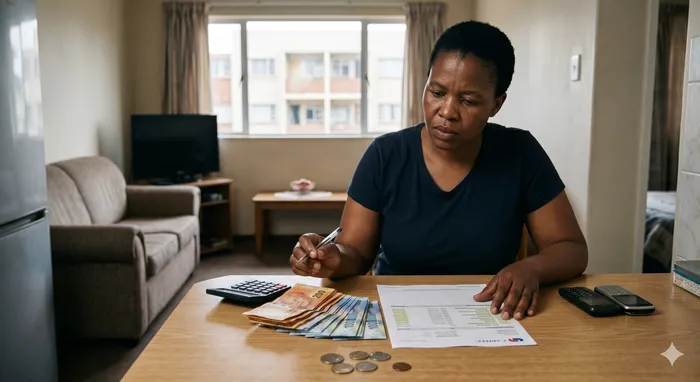
Every July, Savings Month prompts South Africans to save more for the future. This year, let's focus on the importance of preserving your existing savings and the risks of premature withdrawals from your retirement fund.
Image: Gemini
Every July, Savings Month encourages South Africans to think about putting more money away for the future. And that’s important. But this year, let’s talk about something that doesn’t get nearly enough attention: the money you’ve already saved, and the very real danger of spending it before you need it most.
If you’re a member of a retirement fund at your employer, chances are you’ve heard about the two-pot retirement system. Since September 2024, your retirement contributions have been split into two buckets: a retirement component (which you can’t touch until you retire) and a savings component (which you can access, once a year, in amounts of at least R2,000). It was designed as a safety net for genuine financial emergencies and for many people, that’s exactly what it has been.
But here’s where we need to have an honest conversation.
The Savings Pot was never meant to be a Spending Pot
The fact that you can access your savings component doesn’t mean you should. Think of it less like a savings account and more like a fire extinguisher - there for emergencies, not for everyday use.
The problem is that life throws a lot of things at us that feel like emergencies but aren’t quite. A holiday that’s overdue. A car upgrade. School fees you didn’t budget for. While all of these are real, dipping into your retirement savings to cover them is a bit like using the fire extinguisher to cool down your coffee. It works. But now you don’t have it when you really need it.
Let’s talk real numbers
Here’s where it gets important, and we want you to really sit with this.
Imagine you have 15 years until retirement, and you withdraw R50,000 from your savings component today. Maybe it feels manageable, R50,000 is R50,000, after all.
But that R50,000, left inside your retirement fund and growing at a reasonable average return of 10% per year, would be worth approximately R209,000 by the time you retire. You’re not just spending R50,000. You’re spending R209,000 of your future self’s money.
And that’s only part of the story.
The double hit at retirement
This is the part that catches most people off guard, and it matters enormously.
When you retire, you’re allowed to take a portion of your retirement savings as a cash lump sum. Many people count on this, whether to pay off the bond, clear a car loan, or handle a big expense right at the point they stop earning a salary. It’s a moment of real financial relief, and a lot of retirement plans are built around it.
Here’s the thing: your savings component is that lump sum. When you withdraw from it before retirement, you’re not just reducing your monthly pension income. You’re spending the cash you were planning to have in hand on the day you retire.
So that R50,000 you needed today? At retirement, it would have become R209,000 - sitting there, ready to clear a chunk of your debt and give you a clean financial start to your retirement years. Instead, it’s gone. And your future self is left to manage without it.
Sometimes you have no choice, and that’s okay
Let’s be clear, sometimes life genuinely leaves you with no other option. A job loss, a medical emergency, a family crisis, these are real, and the savings component exists precisely for moments like these. There is no shame in using it when it’s truly necessary.
But before you make that call, it’s worth pausing to ask yourself a few honest questions. Have you looked at cutting back on expenses, even temporarily? Could a short-term personal loan bridge the gap, one you could repay over a few months without touching your retirement savings? Is there support available from family, your employer, or a community fund? And have you spoken to a financial adviser who can help you see the full picture?
The savings component should be the last door you open, not the first.
Savings Month is also about keeping what you have
We tend to think of saving as something you do, whether it is a deposit, a debit order, a decision to put money away. But saving is also about the decisions you make that are don’ts. The withdrawal you hold off on. The temptation you resist.
This Savings Month, before you think about what more you can put in, take a moment to think about what you already have and what it could be worth if you leave it alone to do its work.
Sometimes the most powerful financial decision you’ll make is the one you decide not to make.
If you’re unsure about your two-pot savings component or want to understand your options better, speak to your HR department or a registered financial adviser.
* Giles is the head of strategy at Prescient Fund Services.
PERSONAL FINANCE