

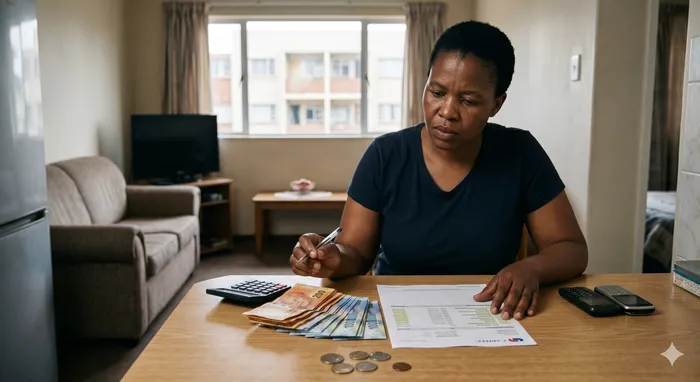
July marks National Savings Month, highlighting the financial struggles faced by many South Africans. This article explores the challenges of saving in a high-cost environment and offers practical advice for building financial resilience.
Image: Gemini
July is recognised as National Savings Month, but for many South Africans, the idea of putting money aside for the future increasingly feels like a luxury rather than a realistic financial goal.
Recent research shows that the biggest challenge is not a lack of financial discipline, but the growing pressure households face simply to cover their monthly expenses. When households have to choose each month between food, fuel, electricity and other essential expenses, it is understandable that saving often falls by the wayside. South Africans are not necessarily saving too little because they don't want to. Many simply no longer have the same financial breathing room they had a few years ago. TransUnion's second-quarter Consumer Pulse Report found that inflation remains the biggest financial concern for 79% of South Africans.
Nearly four in ten consumers even expect to miss at least one bill or loan repayment over the coming months. These figures confirm that many households no longer have surplus income available. Even when salaries increase, those increases are often quickly absorbed by rising living costs. Bond repayments, electricity, municipal tariffs, medical expenses, insurance, fuel and groceries are consuming an ever-larger share of household budgets.
According to data from the South African Reserve Bank, households are often spending more than they earn, a trend that has been exacerbated by rising living costs and debt. In some cases, consumers are relying on credit and savings simply to make ends meet because their income is no longer sufficient.
This should serve as a warning. When people no longer have financial buffers, even a relatively small unexpected expense, such as a vehicle repair or a medical bill, can force them into debt. National Savings Month nevertheless provides an important opportunity to rethink financial security.
When people think about saving, they often think first about retirement or large investments. However, the first priority should be financial resilience. An emergency fund is often the most important form of saving a household can build.
Many people make the mistake of waiting until they have "enough" money before they start saving. One of the biggest misconceptions is that saving only becomes worthwhile once you can afford to put away substantial amounts. In reality, consistency is far more important than the amount itself. Even relatively small monthly contributions help establish sound financial habits.
People should also not underestimate the value of time. Many people focus only on how much they save, when in reality, when you start saving often has a far greater impact on your long-term financial outcome. National Savings Month should not be used to make South Africans feel guilty about their saving habits. The reality is that many households are already under enormous financial pressure. The most important thing is to take control. That starts with a realistic budget and a clear plan for both short- and long-term financial goals. Financial security is rarely built through one major decision.
Many people try to save whatever is left at the end of the month. In practice, however, there is seldom anything left. It is far better to treat saving like any other fixed monthly expense and transfer it automatically at the beginning of the month. After all, you pay your bond, vehicle instalment and insurance first. Your future financial security deserves the same priority.
Saving is not only about spending less; it is also about finding ways to earn more where possible. Many South Africans are supplementing their income through freelance work, online services, consulting or by starting small businesses. Even a relatively modest additional income that is saved or invested consistently can make a meaningful difference to a household's financial resilience over time.
* Van Zyl is the chief executive officer of Everest Advisory Services.
PERSONAL FINANCE