

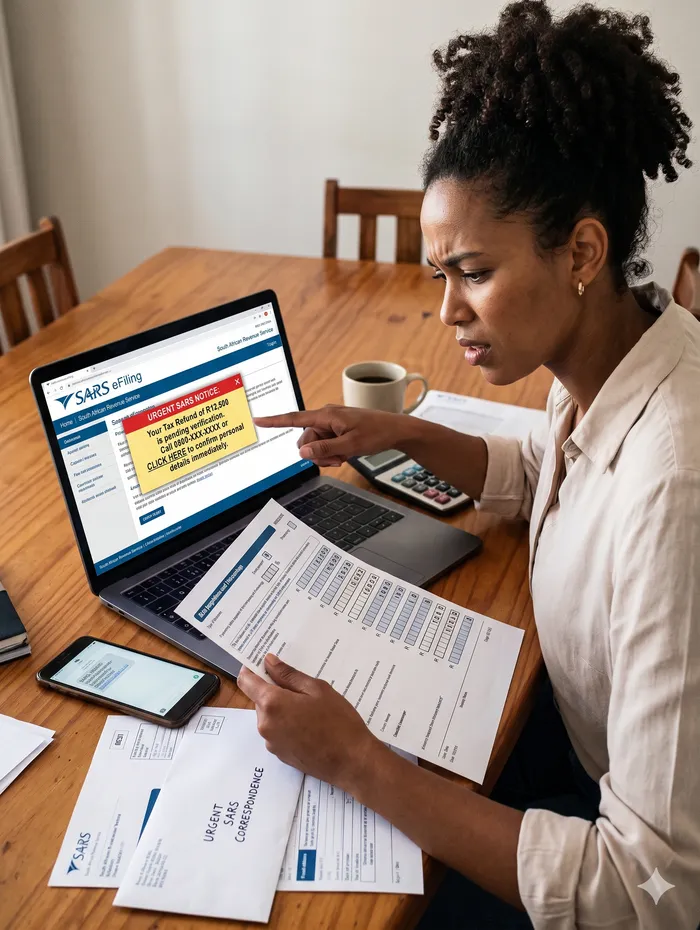
Many South Africans mistakenly believe they don't need to file a tax return if they earn below the tax threshold. This article explores common misconceptions about tax compliance and offers practical advice to avoid penalties and ensure financial security.
Image: Image: Gemini
Many South Africans believe that if they earn below the tax threshold, R95,750 annually for those under 65 in 2026, they don’t need to file a return. This assumption is dangerously wrong.
The Income Tax Act technically places the onus on anyone earning even R1 to file a return with SA Revenue Service (Sars): “Seemingly minor financial events can unexpectedly force you to file. A savings- or two-pot withdrawal creates a second income stream that’s taxed as normal remuneration. Having more than one IRP5 generally makes filing a tax return compulsory, as Sars requires all sources of employment income to be declared and assessed together.
Other events include accruing bank interest exceeding R28,300 annually for under-65s (R34,500 for over-65s); making a profit from selling assets such as shares, unit trusts, cryptocurrency, or your primary property for over R2.5 million; and earning income from foreign dividends and rental properties.
Here are other areas that are commonly misunderstood:
Some individuals with normal remuneration and other taxable income (earned from interest, foreign dividends, rental from letting of fixed property, and remuneration from an unregistered employer) more than R30 000 might be required to register for provisional tax and follow a different assessment requirement.
Two-pot withdrawals are taxed at marginal rates and can push you into a higher tax bracket. Spending the entire withdrawal without setting aside money for taxes can be an expensive mistake.
Practical steps to protect yourself
Sars’ tax simulation calculators on e-filing and the Sars Mobi App, you can test the tax implications of a lump-sum withdrawal or taking a savings withdrawal from your savings Pot, helping you to make better decisions.
It’s also a good idea to work with a financial planner or tax specialist if you’re unsure about tax, budgeting, saving, and planning.
Arnold notes that misunderstandings generally stem from complexity, not deliberate non-compliance, but the truth is that no one can afford to ignore their tax status, not even low-income earners or pensioners.
Taking action early lowers the likelihood of tax hardship and penalties, and helps prevent debt accumulation.
The 2026 tax season
The ‘tax traps’ are catching ordinary South Africans off guard
* Arnold is a tax specialist at financial advisory firm NMG Benefits.
PERSONAL FINANCE