

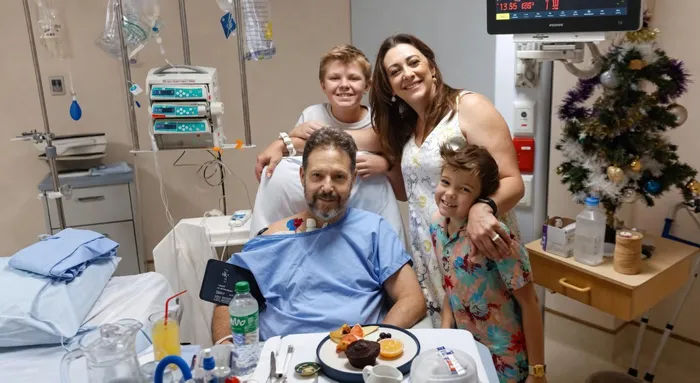
After a sudden medical emergency left financial adviser Andrew Wolmarans fighting for his life, he learned the hard way about the importance of financial planning and insurance coverage. His story highlights the need for preparedness in the face of unexpected health crises.
Image: Supplied.
A routine day turned into a fight for survival for financial adviser Andrew Wolmarans, whose sudden medical emergency in 2022 left him in intensive care for nearly two months and facing medical costs running into millions of rand.
Wolmarans says he had always considered himself healthy and active. At the time, he was 50, regularly competing in endurance events and cycling races exceeding 100 kilometres.
“I used to think I had time and health on my side. I trained hard, stayed active, kept an eye on my numbers. By most measures, I was doing what you’re supposed to do,” he says.
But in November 2022, after what he describes as an ordinary day, he suddenly became violently ill and was rushed to hospital by his brother.
Doctors initially struggled to diagnose the problem. It was later identified as a rare and severe form of pancreatitis caused by gallstones blocking the biliary system. The condition escalated into septic shock, with multiple organs beginning to fail.
Wolmarans was placed in a medically induced coma as doctors fought to stabilise him.
“My family was told I had a 50/50 chance of making it, which later dropped to 5% when my organs went into failure,” he says.
His wife ultimately had to consent to an emergency operation on his behalf. Surgeons performed a complex keyhole procedure to remove his gallbladder, an operation that took six hours instead of the anticipated two-and-a-half.
The surgery saved his life, but his recovery was long and traumatic, he says.
Wolmarans spent 62 days in hospital, including 58 days in intensive care. He was unable to work for 54 weeks and had to relearn basic skills such as walking and writing through months of rehabilitation and therapy.
The financial impact was equally severe.
“The bill for my hospital care for that initial phase alone was R1.8 million,” he says.
Fortunately, just six weeks before he fell ill, Wolmarans had reviewed and updated his financial plan and insurance cover after a gap unexpectedly opened in his work schedule.
He increased his income protection, added personal disability benefits, boosted his critical illness cover, and topped up his life insurance.
“That review, done on an ordinary afternoon, turned out to be one of the most important pieces of planning I have ever done,” he says.
His income protection cover helped support his household during the 13 months he was unable to work, while his critical illness cover paid out more than R800 000 to help fund rehabilitation and medical costs not fully covered by his medical aid.
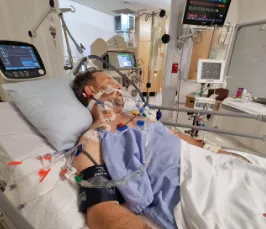
Andrew Wolmarans in hospital.
Image: Supplied
The expenses continued long after he left hospital. Wolmarans underwent another nine operations, bringing the total to 11 procedures. He also required physiotherapy, occupational therapy and PTSD counselling following his ICU experience.
“In that year alone, I spent about R280 000 on rehabilitation,” he says.
His story comes as research highlights the extent to which many South Africans remain financially exposed to major illnesses and disabilities.
According to the 2025 Insurance Gap Study by the Association for Savings and Investment South Africa (Asisa) and True South Advisory, more than 85% of formally employed South Africans have no critical illness cover. The study found that South Africa’s 16.1 million formally employed income earners collectively generate around R4 trillion annually, but hold only R1.1 trillion in critical illness cover.
The report also estimates that more than 24 000 formally employed South Africans are expected to be diagnosed with a critical illness such as cancer, a heart attack, or a stroke in 2025.
Wolmarans says his experience shattered the belief that good health alone offers protection against catastrophic events.
“You can’t predict a rare medical emergency. You can’t train your way out of septic shock. You can only make sure your financial foundation is set up so you can weather any storms without having to worry about financial shocks,” he says.
He says many people avoid conversations about financial protection because they do not want to confront worst-case scenarios.
“People sometimes avoid planning for the worst because they don’t want to think about the unthinkable happening. It’s only natural, we all want to plan for our dreams instead of our nightmares,” he says.
Wolmarans believes the experience reinforced the importance of proper financial planning and regularly reviewing insurance cover as circumstances change.
“Don’t assume it won’t happen to you. You can be fit, healthy, and doing everything right and still face the unexpected. Before investments or wealth-building, make sure your ability to earn an income is protected. You are your most important asset,” he says.
PERSONAL FINANCE