

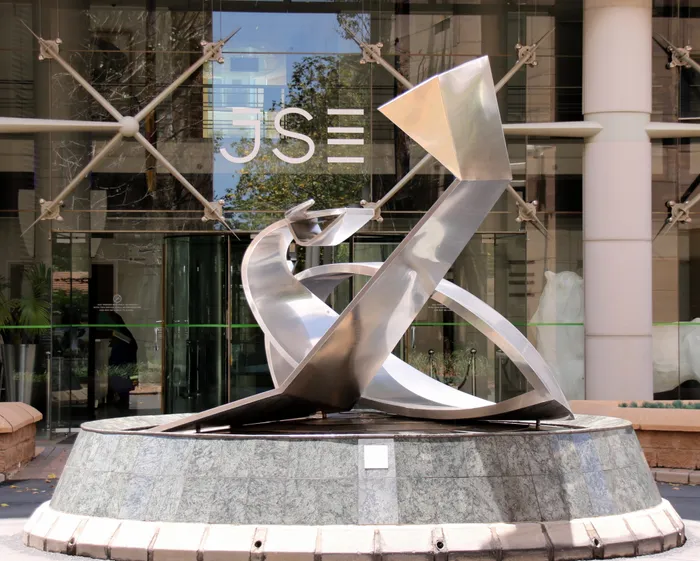
South African equities enter 2025 with strong momentum, driven by improved economic sentiment and rising commodity prices. Experts discuss the implications of these trends during a recent webinar, highlighting both opportunities and challenges for investors.
Image: Nicola Mawson / Independent Newspapers
South African equities entered 2026 with strong momentum as improved sentiment around the country’s economic outlook, rising commodity prices, and renewed investor interest helped drive one of the JSE’s strongest starts in years.
This emerged during Anchor Capital’s latest “Where the Money Will Be Made” quarterly webinar, where speakers unpacked developments in local and global markets, the impact of geopolitical events, and the growing influence of artificial intelligence (AI) on investment decisions.
Anchor Capital fund manager Liam Hechter said South Africa’s exit from the Financial Action Task Force (FATF) grey list created a very different environment for the local market, with renewed talk around credit rating upgrades filtering through to various parts of the equity market.
He notes that this is an environment investors have not been used to for a very long time in South Africa, with significant market breadth emerging through 2024 and continuing into 2025.
While there were some concerns around retailers and shifting consumer habits in South Africa, Hechter says this was not necessarily a sign of major consumer stress. Instead, he believes conditions for consumers were improving.
The stronger backdrop was reflected in the performance of South African equities last year, with the JSE materially outperforming on a global stage.
According to Hechter, the local market has continued that momentum into the beginning of this year, rising about 11% in the first two months of 2026.
Anchor Capital’s expectations at the start of the year were for SA equity market returns of about 12% for the full year, but the market came close to reaching that level within the first few months.
Hechter attributes much of the early gains to the continued rise in export commodity prices, particularly gold and platinum group metals (PGMs), which now account for a significant portion of the local index.
He notes that there was reasonable buying activity from both foreign and local investors, particularly in banks and insurers, creating what he describes as a healthy backdrop for South African equities.
However, he says conditions changed sharply at the end of February when events in the Middle Eastn triggered renewed pressure on markets, .
Once again highlighting the South African market’s vulnerability to external shocks.
According to Hechter, South African equities react far more severely than many other equity markets, particularly when compared with broader emerging markets performance.
He notes that while emerging markets are up about 15% in US dollar terms, South Africa is down in US dollar terms, highlighting what he describes as a major decoupling between South Africa and the rest of the world.
He says this again demonstrates how difficult it is for the South African market to absorb the effects of an energy shock.
At the same time, he believes that South Africa can benefit quickly from any rapid resolution to the Middle East conflict, which could support a sharp recovery in local equities.
AI also featured prominently during the webinar discussions.
Anchor Capital fund manager David Gibb says that one of the themes identified earlier is that markets are increasingly questioning the impact AI could have on certain businesses.
He says those concerns have intensified further in recent months, although many of the businesses being questioned still have stronger competitive advantages than the market is currently recognising.
According to Gibb, this continues to create attractive long-term buying opportunities in selected companies.
From a global equities perspective, fund manager Mike Gresty says valuations do not yet fully discount some of the worst-case short-term scenarios that could still emerge.
As a result, they remain cautious in the current environment and describe it as “not a time for heroes”.
However, speakers still expect healthy real returns over the longer term and continue to see strong individual stock opportunities for investors willing to maintain a long-term investment approach and patiently accumulate quality shares during periods of market weakness.
PERSONAL FINANCE