

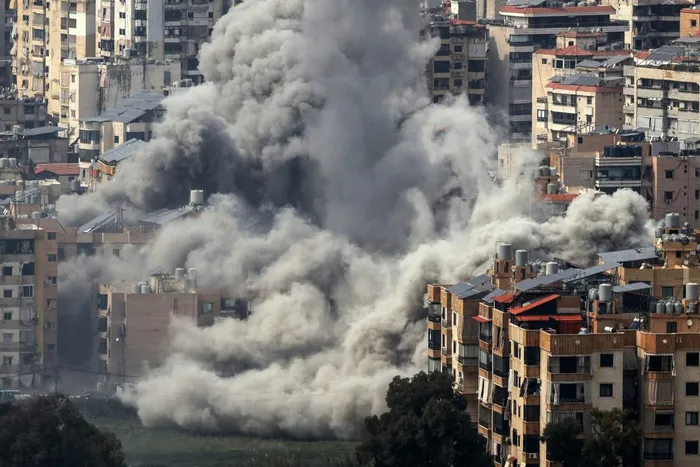
This article delves into the inevitable consequences of the war on Iran, exploring its impact on energy prices, inflation, and currency crises, while highlighting the broader geopolitical ramifications.
Image: AFP
The average South African citizen struggling with his or her personal finances is a mere spectator in this devastating war. It affects each person when the transport cost doubles, inflation rears its devastating effect on consumer spending, and credit becomes impossible to obtain. South African Banks have lost more than R200 billion in market capitalisation.
The USA and Israel created the narrative that they want to prevent Iran from acquiring nuclear weapons. The data below shows the nuclear capabilities of nations.
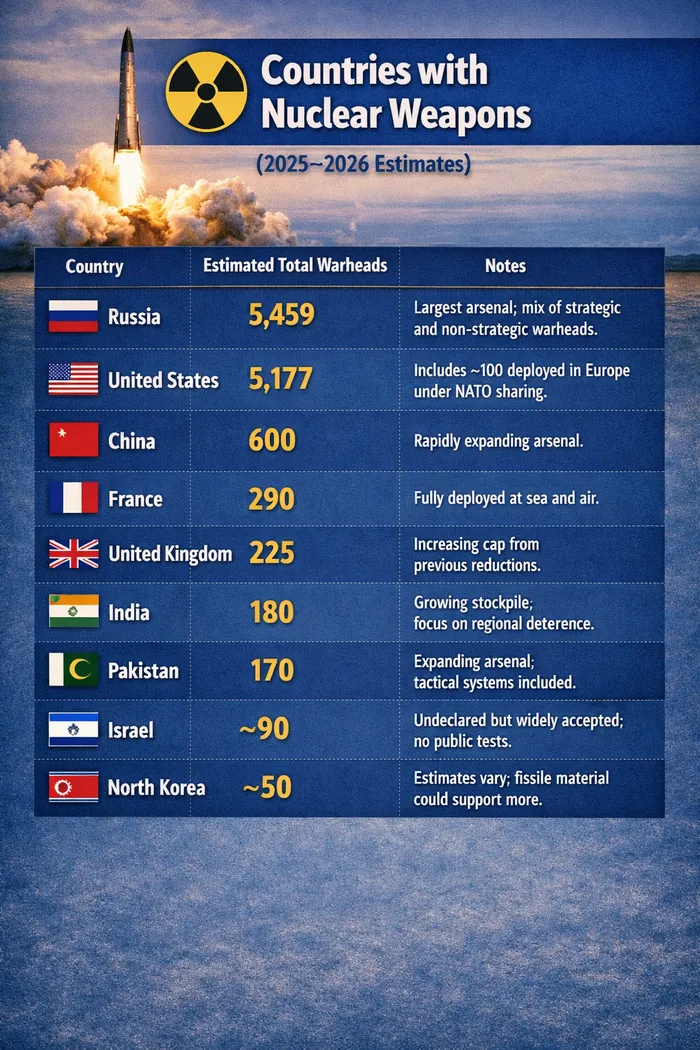
Countries with nuclear weapons (2025–2026 estimates)
Image: Supplied
The narrative that Iran must be attacked, whilst there are so many nuclear weapons in the hands of other countries, is beyond belief. Many observers are claiming that this is an illegitimate war.
2. The phrase “the king has feet of clay” comes directly from the Bible, where it symbolises hidden weakness in someone who appears powerful or admirable. The King requested Daniel, a prophet, to interpret a dream he had. Daniel interpreted this as a prophecy: A powerful kingdom built on a weak foundation will eventually fall.
A few centuries later, an Author, Hans Christian Andersen, authored a Story, The Emperor’s New Clothes. It was Published on April 7, 1837, in Fairy Tales Told for Children. “The emperor has no clothes” is what a child blurted out, the obvious truth everyone else was too afraid to say.
How was this possible? Comprehensive Authority and the illusion of competence
The emperor’s power creates a bubble where:
Many observers conclude this is the situation with President Trump.
3. Global Scale of U.S. Military Bases
The United States operates over 750 military bases across more than 80 countries and territories, making it the largest global military footprint of any nation. This number is consistent across recent analyses from 2025–2026 and reflects everything from major air bases to small drone sites.
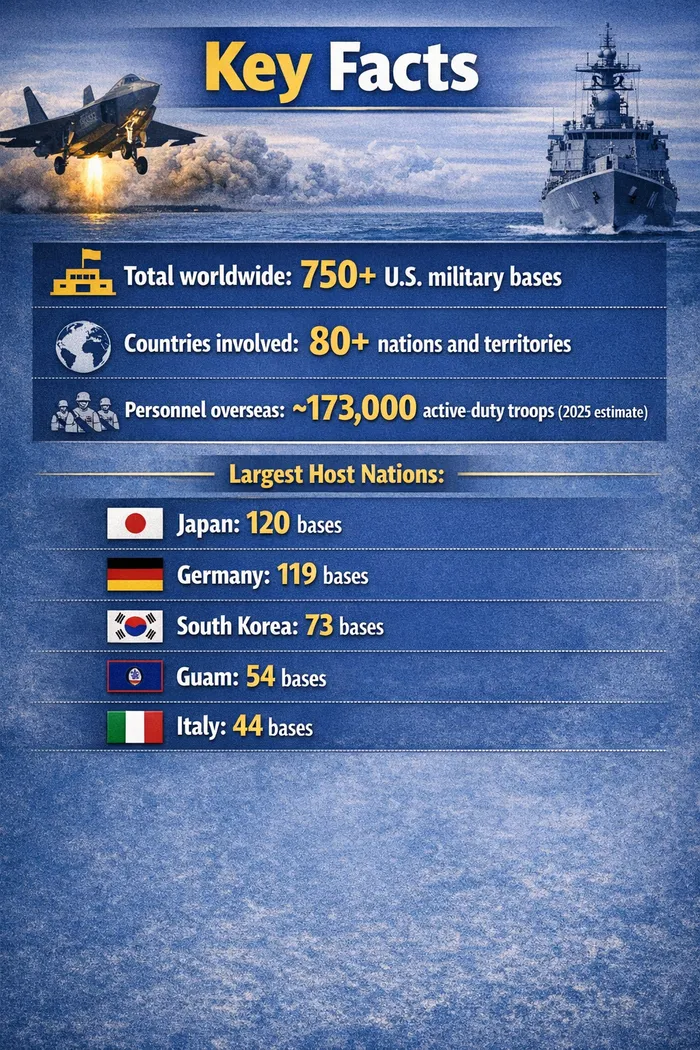
Global scale of U.S bases
Image: Supplied
There are 195 widely recognized sovereign states in the world today, based on the most accepted international standard: 193 UN member states plus 2 UN observer states (the Holy See and Palestine).
Russia’s bases are mostly in its near abroad. Its 52 sites are concentrated around former Soviet republics and a few Middle Eastern/African partners.
China is building a network, but it remains limited. Its 29 overseas facilities are mostly dual-use ports and early-stage military access points.
Over the last 80 years (1946–2026), the United States has participated in at least 40–50 wars, conflicts, and major military operations, depending on how one counts covert actions, peacekeeping missions, and counterterrorism campaigns.
4. Major wars + significant military operations + ongoing engagements
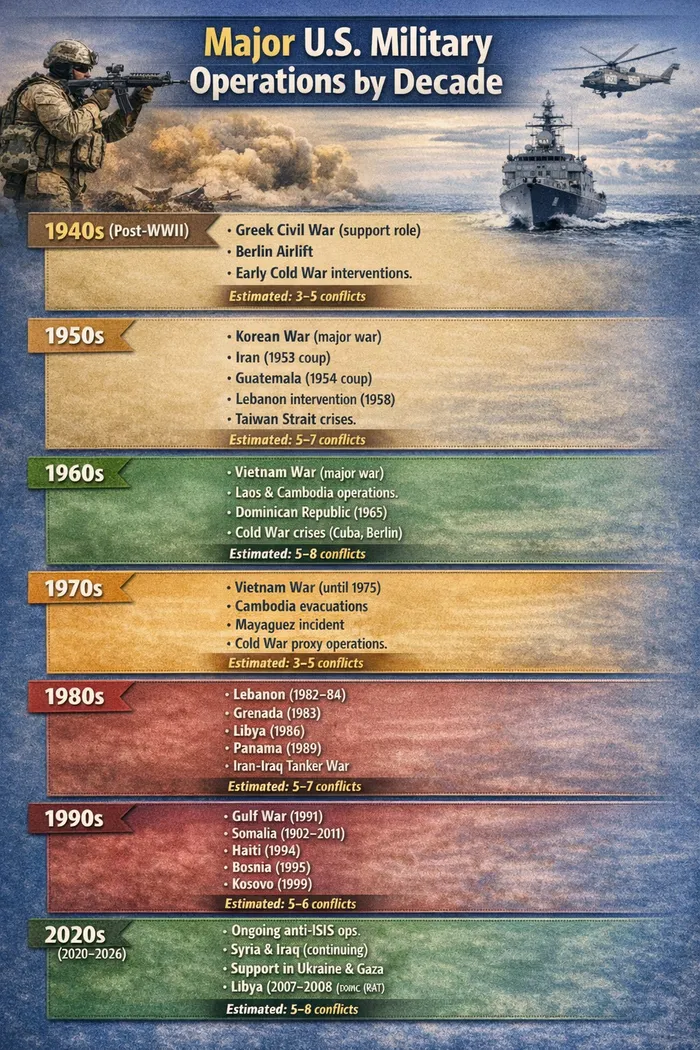
Major wars + significant military operations + ongoing engagements
Image: Supplied.
5. The US has negotiated deals with the Gulf Cooperation Council (GCC), which includes Saudi Arabia, the United Arab Emirates, Oman, Kuwait, Qatar, and Bahrain. These countries were not consulted before Israel and the USA decided to attack Iran. They now must pay the price as their countries become targets of Iran, as their economies are being destroyed since their main income is derived from oil sales. They are now having second thoughts about being a USA ally.
According to recent regional demographic data, their combined population is roughly 63–64 million.
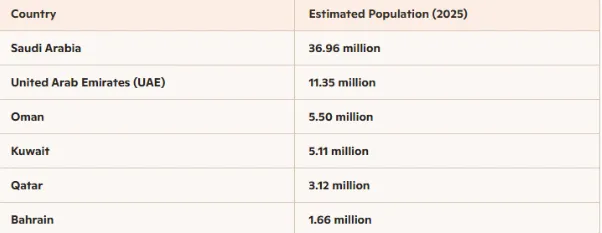
The US has negotiated deals with the Gulf Cooperation Council (GCC) includes Saudi Arabia, United Arab Emirates, Oman, Kuwait, Qatar, and Bahrain.
Image: Supplied.
Israel’s current population is approximately 9.6–9.8 million people, based on the latest 2024–2026 demographic estimates. Iran’s population is currently estimated at about 92–93 million people. The situation between these nations appears to be one in which the tail is wagging the dog. It is not a sustainable power balance.
What They Share
Despite differences, Sunnis and Shias share:
6. Empires almost always fall in recognizable patterns. Across history, from Rome to the Ottomans to the British and Soviet empires, the same internal weaknesses and external pressures repeat. Modern historians and analysts consistently identify economic strain, declining cohesion, elite corruption, overextension, and external shocks as the universal drivers of collapse.
Economic overstretch
Empires become too expensive to maintain:
When revenue can’t keep up, the empire becomes fragile. Rome, Spain, and Britain all experienced severe financial crises before their collapse.
📉 Debt spiral — a critical red flag
Military overreach.
Despite having maintained a huge presence across the globe, the cost has become too expensive to maintain even for the USA. During conflicts such as the Iranian war, the daily cost exceeded the capabilities of the largest economy in the world. The Petro Dollar arrangement has come to an end.
The U.S. has intensified geopolitical pressure around major oil regions — Venezuela, Iran, and the Arctic/Greenland — as part of a broader strategy to reassert control over global energy flows. This includes sanctions and political pressure in Venezuela, confrontation and escalation risks with Iran, and aggressive rhetoric (even annexation talk) around Greenland due to its strategic oil and mineral potential.
Venezuela: Oil, Sanctions, and U.S. Leverage
Venezuela holds the largest proven oil reserves on Earth — roughly 303 billion barrels.
U.S. actions in the past year
Consequences of this war.
This war was fought with missiles and air attacks, but there was a war of words from many sides, a lack of transparency and honesty, for instance, on who accepts responsibility for the 150-plus school children that die in Iran. Energy cost has surged, driving down stock prices and raising bond rates. The blame game is now starting. Europe cannot afford the triple rise in gas prices, and its economic future looks very weak. The same goes for Japan. Canada has offered some assistance to Japan in the form of gas provision.
New alliances are being formed. China and Russia are prepared to back Iran to retain its sovereignty. These nations have much to offer one another. Mostly, the oil trade between them will be secured in a win/win relationship. The Gulf states will want to see themselves as part of this new order.
Iran expects to be compensated for damages during the war, plus the cost to it of crippling sanctions over the last thirty years. Iran has now decided to resign from the International Atomic Energy Agency (IAEA), monitor nuclear programs worldwide to ensure safety, security, and compliance with non-proliferation agreements.
In the short term, everybody loses, but some lose more than others. Israel, Iran, and the GCC are the big losers. The USA fights wars on other countries territory and only loses taxpayers money and credibility with few deaths of their citizens compared to the adversaries. The early signs of the end of an Empire are there for those who wish to see.
* Kruger is an independent analyst.
PERSONAL FINANCE