

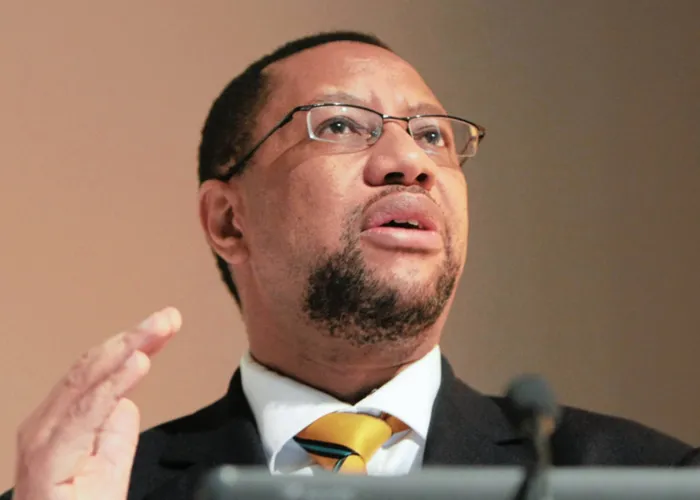
Phuthuma Nhleko.
Image: Simphiwe Mbokazi/ Independent Media
It is true that Africans got born into this world, live their live and finally depart without a trace.
It is the scandal of invisibility.
Through the Africa Symposium for Statistical Development (ASSD) that I chaired for eleven years with an unwavering support from Trevor Manuel then minister of Finance and later in the presidency, we fought this scandal of invisibility through statistics.
The record on census taking and making Africa discoverable to itself reached record highs in the 2010 Round of Censuses.
Asia envied the African Civil Registration and Vital Statistics (CRVS) movement that enjoined the statistical offices, ministries of health and home affairs. It was the height of our success.
But my father quoting Lord Kevin “the heights by great men reached and kept were not by sudden flight, but they, whilst their companions slept scaffolded throughout the night.
Yes heights reached but not kept – that is what stalks Africa today as the programme has been captured by the likes of ID4Africa. It is these heights that Phuthuma Nhleko is calling us to reach but also keep.
The launch of Phuthuma Nhleko’s The Invisible People: Identity, Economy and Geopolitics was a gathering of the "arrived"—the upper echelons of the South African middle class.
Yet, the message delivered was a jarring disruption to that comfort. Nhleko, a man whose career has been defined by the heights of the JSE and MTN, did not speak as an outlier.
Instead, he performed what Amilcar Cabral termed a "class suicide," declaring: "I am them and they are me."
He acknowledged that whether one sits in the boardroom of the Stock Exchange or on a stoep in a depleted township, the global geopolitical lens renders the African effectively invisible.
This is not a mere philosophical crisis; it is an impending demographic collision. By 2050, Africa will represent a quarter of the world’s population. If the current trajectory of "intentional ignorance" continues, we are headed toward a world where 25% of humanity is composed of "invisibles"—a continent of people whose labor, identity, and assets are extracted but never truly counted.
For over a century, the global North has viewed Africa through the lens of extractive economics.
This model leaves behind literal and metaphorical "holes in the ground." We see the classical Big Hole of Kimberley—a specific place of vanished wealth—and its human counterpart in the depleted streets of Galeshewe.
We see the ghost towns of Thabong and Welkom, where the pulse of the economy has flatlined.
The equation is as brutal as it is consistent: Diamonds flow to London, while misery settles in Kimberley.
Gold flows to New York, while poverty anchors in Matlosane.
Nhleko has boldly defined which side of the fence he is on. He has chosen to stand with the "invisible" because he recognizes that without a radical shift in structural analysis, the "arrived" middle class is merely a temporary passenger on a sinking ship.
Nhleko addresses the critique Marx levelled at Feuerbach: that philosophers have only interpreted the world, while the point is to change it.
The Lehohla Ledger will certainly offer to join Nhleko on this journey as the practical instrument of that change.
The Ledger is the foundational diagnostic framework required to turn the "weapon of theory" into a wheel of action. An answer to the illusive district development model politically exhaled breathlessly without results, just like the triple challenge for almost a decade to date.
The Lehohla Ledger answered that we must reject the last twenty years of stagnation and the sedative of the five-year planning cycle.
A country without scenarios is a country walking blindly into the 2050 abyss. The Ledger provides the census mesh—the empirical bedrock—to ensure that no African citizen remains a statistical ghost.
To make the invisible visible, we must master the "statistics of the ward." The Lehohla Ledger utilizes 2752 specific instruments—validated metadata tools—to analyze the density of the population. While extractive industries measure what is taken out, the Ledger measures what remains.
By tracing Enumeration Areas (EAs) across the 1996, 2001, 2011, and 2022 Censuses of South Africa, we can document the specific changes in places like Galeshewe and Thabong.
We aggregate these contiguous EAs to create a high-density mesh that authenticates the essence of the African experience. This is not proxy data generated in Washington or Brussels; this is Data Sovereignty. It is the only way to ensure that by 2050, the 25% are not just a "population" but a documented, agentic economic force.
The journey toward 2050 requires a "Successor Ledger" for the entire continent. The African Continental Free Trade Area (AfCFTA) cannot be a "hollow declaration." It must be powered by the International Comparison Program (ICP) Africa.
The Ledger utilizes ICP Africa to bridge the gap between the gold in New York and the reality in Matlosane. By standardizing Purchasing Power Parities (PPPs), we reveal the true size of the African economy. We strip away the colonial exchange rates that keep our purchasing power hidden. This is the technical realization of Cabral’s "return to the source." It allows the "invisible people" to see their own value in the mirror of the Ledger.
Nhleko’s book is a call to arms for the African intellect. He has rejected the comfort of his class to highlight the geopolitical erasure of his people. The Lehohla Ledger provides the lampstand for this mission. We must deploy the 2752 instruments to build robust scenarios that predict the "ghost town" effect before it happens. We must move with a "timeous Ledger" that is ready for the wheel of policy the moment a crisis—or an opportunity—emerges.
By 2050, the 25% will either be the engine of the world or its greatest tragedy. To honour the spirit of Cabral and the courage of Nhleko, we must choose to count. We must choose to see. We must choose the Ledger so that we can not only reach these heights but we must keep them. Nhleko at the pinnacle of the JSE is saying I have seen the promised land and I have tasted its fruits but without you fellow Africans the fruits are bitter, and I will not count because I can only count when the 2,5 billion of us count. This is the Botho Morena Mohlomi spoke about at the beginning of the 18th Century when he inducted Morena Moshoeshoe to be the King of the Basotho nation.
Dr Pali Lehohla is a Professor of Practice at the University of Johannesburg, a Research Associate at Oxford University, and a distinguished Alumni of the University of Ghana. He is the former Statistician-General of South Africa.
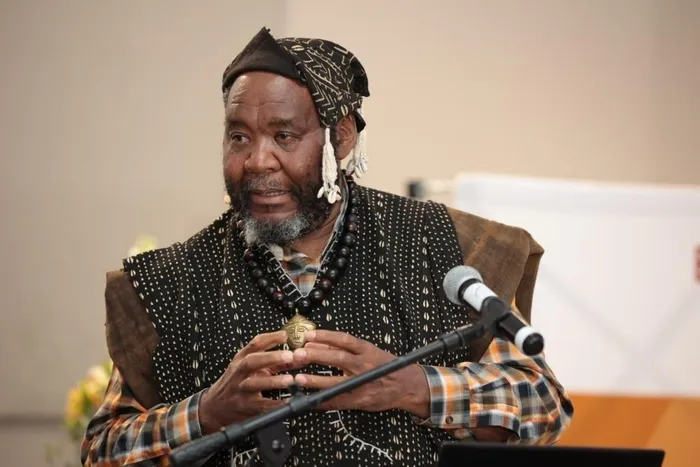
Dr Pali Lehohla is a Professor of Practice at the University of Johannesburg, a Research Associate at Oxford University, and a distinguished Alumni of the University of Ghana. He is the former Statistician-General of South Africa.
Image: Supplied
BUSINESS REPORT