

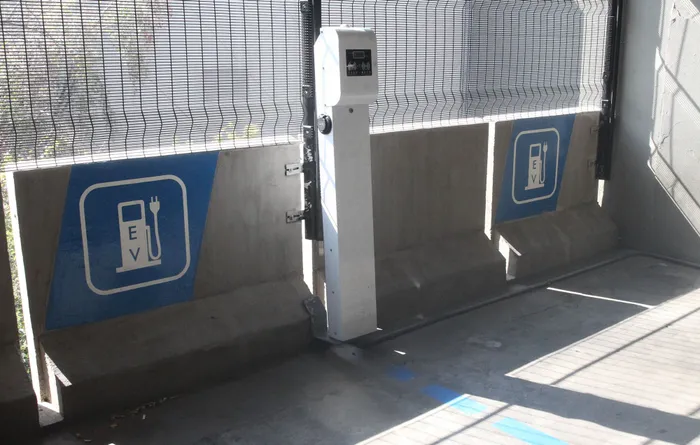
Higher tariffs risk increasing the cost of already expensive electric vehicles, says the author.
Image: Jacques Naude
South Africa’s automotive sector remains a critical anchor of employment, exports and industrial capability, yet it is under growing pressure from both domestic structural constraints and rapid global technological change. As value chains shift towards net-zero production and New Energy Vehicles (NEVs), the country faces a dual imperative: protecting existing jobs while positioning the sector for inclusive, low-carbon growth. This must be done in a manner that addresses long-standing inequalities related to race, gender, geography and economic access, while maintaining competitiveness and affordability.
The proposal by the International Trade Administration Commission to raise import tariffs on vehicles from China and India from 25% to as high as 50% reflects a defensive industrial policy response to a surge in lower-cost imports. Higher tariffs could provide short-term relief for local assemblers and serve as leverage to encourage foreign original equipment manufacturers (OEMs) to invest in domestic production rather than exporting fully built-up vehicles. This is particularly significant given the role of vehicle assembly in sustaining regional economies and extensive value chains.
However, tariffs alone do not resolve South Africa’s structural competitiveness challenges. Persistent constraints that include policy uncertainty, energy reliability and affordability, logistics bottlenecks, distance from major markets and limited export integration. These challenges continue to undermine the sector’s global positioning. At the same time, the country faces a severe affordability crisis. New vehicle prices remain far beyond the reach of most households and small businesses, making lower-cost imports an important entry point into mobility. A sharp tariff increase would likely raise prices further, slow fleet renewal and push consumers towards the second-hand market, with limited benefit for domestic manufacturing in the medium term.
Higher tariffs risk increasing the cost of already expensive electric vehicles, delaying market readiness and exacerbating transition risks for the sector. Both industrialisation and affordability are non-negotiable in a just transition; policy choices must therefore balance job protection, consumer access and long-term decarbonisation pathways. Short-term trade measures cannot substitute for a clear, sequenced strategy to strengthen local assembly, deepen component manufacturing and enable the shift to low- and zero-emission vehicles.
In 2024, the Asian region accounted for over half of global vehicle production and sales, with China dominating electric vehicle manufacturing and exports. As a member of BRICS and a participant in multiple trade and investment partnerships, South Africa has an opportunity to leverage these relationships to attract investment across automotive, mining and renewable-energy value chains. The strategic objective should be localisation of key technologies — particularly batteries and components — alongside phased commitments by foreign OEMs to establish domestic production capacity.
The South African Automotive Masterplan (SAAM) 2035 provides a coherent framework for this transition, targeting 1% of global production, 60% local content, local employment growth and accelerated NEV adoption. These goals are consistent with the Just Transition Framework’s emphasis on inclusive, low-carbon industrialisation. Yet progress on NEVs remains limited: only a small share of such vehicles sold locally are domestically produced, and component localisation is still nascent. Without decisive action, the global shift to electric mobility could erode South Africa’s automotive base rather than transform it.
The European Union’s decision to relax its 2035 internal combustion engine targets creates short-term export space for locally produced Internal Combustion Engin (ICE) and hybrid vehicles. While this offers breathing room, it also risks delaying domestic investment in NEV innovation and undermining long-term emissions commitments. South Africa must therefore use this window strategically by maintaining current export flows while accelerating the regulatory, infrastructure and investment frameworks required for electrification.
Industrial policy must also extend beyond the factory floor. Greater utilisation of the African Continental Free Trade Area (AfCFTA) could expand regional markets for vehicles and components, supporting economies of scale and deeper intra-African value chains. At the same time, localisation strategies should be linked to broader economic diversification, skills development and small-enterprise participation to ensure that the benefits of the transition are widely shared.
Crucially, vehicle technology alone will not deliver a just and climate-compatible transport system. Electrification must be complemented by spatial planning that reduces travel distances, significant improvements in public transport quality and accessibility, a shift of passengers and freight from road to rail, and support for shared and low-carbon mobility. These interventions are essential to lowering emissions, reducing costs and improving mobility outcomes, particularly for low-income households.
The upcoming update of the Green Transport Strategy, undertaken in partnership with the Department of Transport, will be a key policy signal in this regard. It will outline scenarios and pathways for aligning the transport sector with South Africa’s net-zero trajectory, as reflected in the Nationally Determined Contribution. By integrating industrial, trade, infrastructure and social considerations, it can provide the long-term certainty required for investment while ensuring that the transition supports workers, communities and consumers.
In this context, tariff measures should be viewed as one instrument within a broader, coordinated strategy. The priority must be to address structural constraints, enable localisation, expand regional markets and accelerate the shift to low-carbon mobility in a manner that is socially inclusive and economically viable. A just transition for the automotive sector depends not only on protecting existing capacity, but on actively building the industries, skills and systems that will sustain competitiveness in a decarbonising global economy.

Simphiwe Ngwena, Senior Manager: Mitigation at the Presidential Climate Commission.
Image: Supplied
Simphiwe Ngwena, Senior Manager: Mitigation at the Presidential Climate Commission.
*** The views expressed here do not necessarily represent those of Independent Media or IOL.
BUSINESS REPORT