

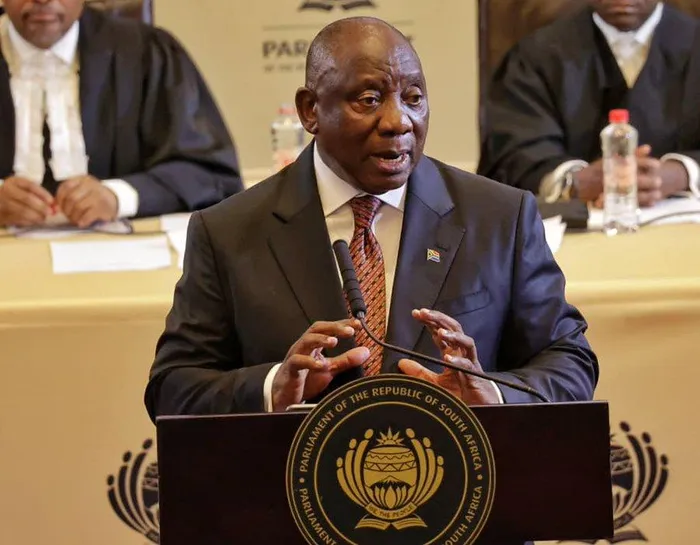
President Cyril Ramaphosa delivering the 2026 State of the Nation Address.
Image: GCIS
Recent statements from organised business, civil society and parts of government reflect a shared frustration: South Africa’s public institutions are not implementing reform or delivering infrastructure fast enough.The consequences are visible in stalled projects, constrained growth and declining public trust.
In the 2026 State of the Nation Address, President Cyril Ramaphosa made it clear that the period of crisis management must give way to decisive execution. The message was direct. Policy reform is no longer enough. Delivery must follow. Energy reform sits at the centre of this test. Transmission capacity has become the main constraint on adding lower-cost electricity supply. Grid access remains uncertain. Connection timelines stretch.
Governance arrangements still create doubt about neutrality and fairness. Investors read this uncertainty as risk. Developers price it into projects. Consumers ultimately pay for it.The President’s directive that the Transmission System Operator should own and control transmission assets marks an important moment.
Earlier proposals from the Minister of Electricity and Energy would have retained these assets within Eskom Holdings. Clarifying that transmission must sit in an independent, state-owned entity realigns governance with the objectives of electricity market reform. It signals that structural separation should not be a future aspiration but is a prerequisite for credible reform.
Ownership matters because control over the grid determines who connects, when they connect and at what cost. The grid is the backbone of market access. If connection decisions are slow or opaque, new generation cannot compete on equal terms. Cheaper supply then remains theoretical. A standalone transmission entity with clear accountability and ring-fenced governance reduces this risk and lowers the cost of capital across the system.
The same urgency appears in the President’s intervention in water infrastructure. Persistent outages, treatment failures and municipal incapacity have eroded confidence in local government. The establishment of a National Water Crisis Committee, chaired by the President, is intended to coordinate intervention and enforce accountability. Where municipalities fail to meet their obligations, constitutionalpowers will be used. The instruction to public servants is unambiguous. Service delivery is a legal duty,not a discretionary ambition.
Electricity reform now stands in a similar phase. South Africa spent years managing the acute crisis of load-shedding. Emergency procurement and operational stabilisation were necessary responses. Those measures bought time. That time must now be used to complete structural reform.
Operational recovery at Eskom, including improved plant performance and reduced diesel reliance, deserves recognition. It has eased pressure on the system. Yet operational improvement does not substitute for institutional reform. The risk is complacency. When immediate crisis subsides, structural weaknesses are easier to postpone.Transmission expansion has lagged behind planning targets. Private capital remains available, but it requires predictable rules and firm timelines. Reform legislation already envisages open access, competitive markets and an independent system operator.
The task is implementation. Institutional incentives explain much of the delay. Dominant incumbents rarely design reforms that diminish their own control. Even where leadership is constructive, the underlying structure favours caution and continuity. Stability and internal control are rational objectives within a monopoly framework. They are not sufficient objectives in a reforming market.
President Ramaphosa’s address challenges this inertia. Public servants are instructed to execute policy, not reinterpret it. That standard applies equally to energy and water. Transmission reform must proceed according to the intent of the Electricity Regulation Act. Water infrastructure must meet statutory service standards. Accountability mechanisms must function.The credibility of the broader economic reform programme depends on delivery in these network industries.
Competitive electricity markets cannot operate without independent grid governance. Industrial growth cannot proceed without reliable water supply. Investors respond to evidence, not statements. Clear timelines, published connection queues, transparent procurement and consequences for non-performance will demonstrate seriousness.South Africa has reached a point where policy direction is largely settled. The debate now centres on execution. The President has signalled that underperformance will no longer be tolerated as an administrative inconvenience. That signal must translate into measurable progress.
The phrase “no more excuses” is more than rhetoric. It describes a transition from aspiration to accountability. Structural reform has been legislated. Institutional design has been clarified. The remaining question is whether public institutions will implement the mandate they have been given.
If execution follows direction, transmission capacity will expand, grid access will stabilise and water systems will improve. Confidence will strengthen because outcomes will be visible. If execution stalls, the cost will be borne by households and firms that depend on reliable infrastructure.The era of policy declaration has run its course. The era of delivery has begun.
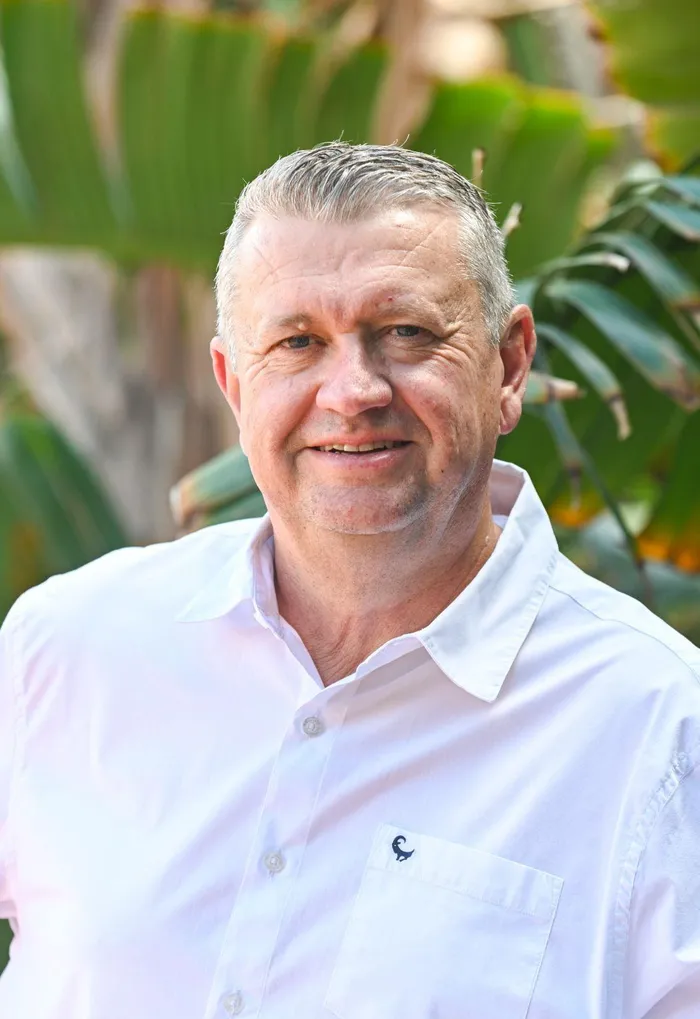
Thomas Garner holds a Mechanical Engineering degree from the University of Pretoria and an MBA from the University of Stellenbosch Business School.
Image: Supplied
Thomas Garner holds a Mechanical Engineering degree from the University of Pretoria and an MBA from the University of Stellenbosch Business School. Thomas is self-employed focusing on energy, energy related critical minerals, water and communities. He is a Fellow of the South African Academy of Engineering and a Management Committee member of the South African Independent Power Producers Association.
*** The views expressed here do not necessarily represent those of Independent Media or IOL.
BUSINESS REPORT