

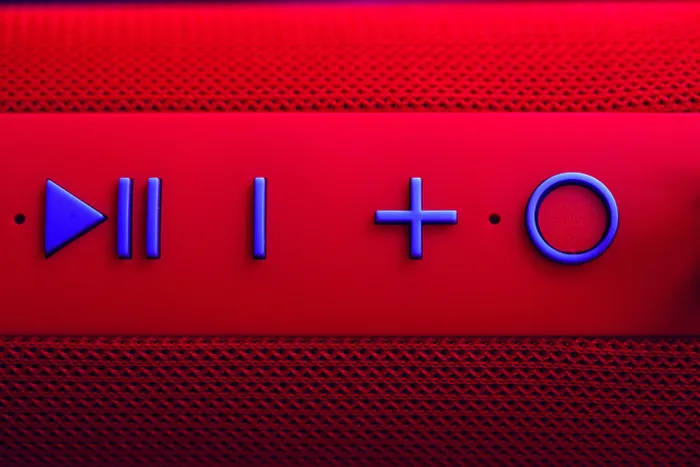
No screen required.
Image: Alexander Grey on Unsplash
This week's column hijacker, Adam Wakefield, is a radio journalism major turned reporter turned consultant turned marketer turned comms strategist, who co-founded and co-hosted the Elite Rugby Banter podcast before, as he puts it, life got in the way.
When I shared some Western podcast consumption data with Wakefield, it triggered the reflections below.
In major African podcast markets, and across the continent more broadly, radio remains the most democratised medium, and the audio podcast, arguably the most malleable digital media show format despite the hype around video growth.
I learned this the hard way. After experimenting with producing African Tech Roundup Podcast as a video pod (alas, you might never actually see the stuff, except in short-form snippets on social), I found that video made an already challenging workflow ten times harder while delivering precious little upside. Booking and hosting guests became more tenuous. The chemistry shifted: guests are more candid when they can nearly forget they are being recorded.
Our listeners tune in for insight depth and singular sensemaking, and video added near-nothing to that. And so, African Tech Roundup will remain audio-first, at least in the short to medium term.
A recent Podcast Business Journal Q&A with Brad Mielke, managing editor and host of the ABC News's formidable Start Here in the US (over 2,000 episodes and counting), reinforced my conviction.
Mielke described how audio-only production lets him book top-drawer contributors calling in from pajamas and closets, no set, no lighting, no excuses. If someone in Antarctica wants to contribute, they can. Video would eliminate that access entirely. I reckon the lesson is disarmingly simple: the voices carry the value; everything else is collateral.
Adam Wakefield’s insights, in his words:
How we use and apply language heavily influences its impact. Eighty years ago, George Orwell published an essay titled Politics and the English Language in which he complained that public English was full of bad habits spread by imitation. One wonders what Orwell would think of the current state of podcasting, a word whose context has transformed beyond recognition over the past decade.
Podcasting's official history began in 2001 when Dave Winer and Adam Curry figured out how to wrap audio files into RSS feeds. The 25 years since have seen a technological revolution that Gen Z finds rather status quo, while Millennials like me and older still remember life before the internet.
Radio, the granddaddy of podcasts, fought with outdoor, TV, and print for market dominance. Those with the largest pulpit wielded influence on audiences that were far more trusting. Today, taste has become individualised, with media consumers able to pick and choose what they want to read, hear, or watch.
Video podcasts are nothing more than glorified chatshows
As a broad and at times cynical observer of media, I have watched the podcast format bifurcate from its audio-only, homage-to-radio roots into the simultaneous world of audio and video. Today, The Joe Rogan Experience is a touchstone of Western media. Yet when it launched in 2009, video podcasts - defined as an audio podcast that happened to be filmed during recording - were still in their infancy.
Over time, the format's ability for a subject to project their voice without intermediaries has been recognised by savvy media operators, businesspeople, and sportspersons as a vital pillar of their brands. It is a direct communication channel to an audience, leveraged for influence, commerce, or otherwise.
As someone who consumes a fair amount of sports media, ex-international rugby players with their own video podcasts abound.I find much of this content (hosts inevitably inviting other ex-players on to reminisce) boring and stale, with strong whiffs of South Park’s memberberries. But when a large audience cannot wait for the latest anecdote about Player X going out the night before a Test match, should we be surprised?
In the broad light of day, the state of video podcasting illustrates how the medium has remained the message. TV has always demanded obedience and consumption. The wave of video podcasts is nothing more than a glorified extension of the chatshow format: a group of people sitting around on a set, talking about subjects their audience expects, playing to type or crowd depending on the day's conversation.
Audio stands alone, both immovable and entirely flexible
Amid this turmoil, the humble audio podcast continues to soldier on. US audience research by Cumulus Media and Signal Hill Insights highlights how podcast listeners consume both audio and video (92%), with 17% choosing audio only versus 8% that opt for video-only podcasts.
The research suggests video podcasts will continue to grow, with YouTube's importance stark. Yet an anecdote in the summary highlights how video podcasts are frequently minimised to just be listened to.
If a video podcast is minimised, does reverse Darwinism kick in and just make it an audio podcast, the one true format for the puritans? I would love to reach for a Schrodinger's cat metaphor, with video podcasts being neither alive nor dead the moment they are minimised.
But what is clearer is that the flexibility of audio remains its greatest strength. You can do many things while listening to a podcast; watching a video podcast demands the full attention of the viewer, a cap on growth in a medium groaning under the weight of the attention economy.
As a last missive, should we do away with the term "video podcast" altogether? Is it really a podcast if the only quality separating it from a chatshow is the presence of visible microphones and a lackadaisical approach to set design?
As McLuhan argued, the content of media binds the audience to its character. Audio is fundamentally different from video, promoting and rewarding different behaviours.
As greater societal awareness develops around media overexposure, with the spectre of AI-generated content looming, that distinction makes audio stand apart. Its purity and lack of dynamism as a format is its greatest strength and weakness as a medium of consumption.
There is room for all formats in the unitary mess that is the modern media environment. Yet to suggest video podcasts should be classed in the same category as their audio forerunners misses how their respective mediums of expression have evolved and failed to do so at the same time.
The last 25 years has seen a podcast evolution so circular that we are almost back to where we started. Video remains video, and audio will forever remain audio.
Andile Masuku is Co-founder and Executive Producer at African Tech Roundup. Connect and engage with Andile on X (@MasukuAndile) and via LinkedIn.
Image: File.
Andile Masuku is Co-founder and Executive Producer at African Tech Roundup. Connect and engage with Andile on X (@MasukuAndile) and via LinkedIn.

Adam Wakefield is a media professional
Image: Supplied
Adam Wakefield is a media professional at heart who has worked across journalism, consulting, marketing, and communications in a range of sectors since the late 2000s. Adam holds a deep interest in all things media and is a major believer in the influence and power of complex systems.
*** The views expressed here do not necessarily represent those of Independent Media or IOL.
BUSINESS REPORT