SA’s crisis: Is our infrastructure turnaround possible?
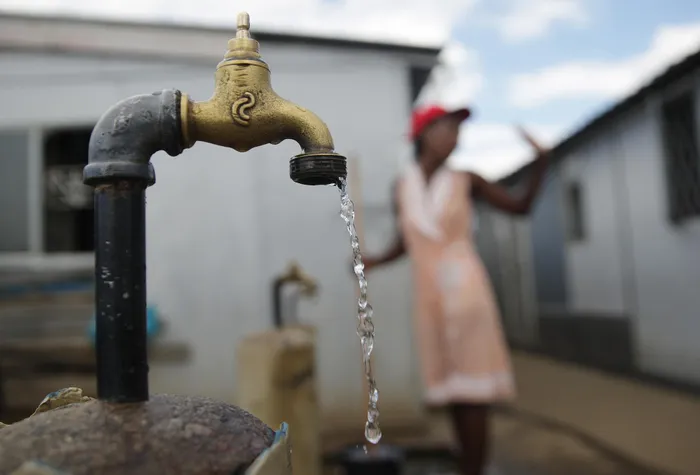
When water systems collapse, and the electricity supply becomes unreliable, it’s not about service delivery but fundamental human rights.
Image: Independent Newspapers Archives
A number of the leading political parties in South Africa have announced the establishment of ‘war rooms' or similar emergency structures to address local government issues ahead of this year's municipal elections, with water supply and rural infrastructure as top priorities.
Can South Africa repair its ageing infrastructure?
The North West province demonstrates a classic example of asset management failure: municipalities struggle to deliver water to residents despite adequate water levels in dams. The problem is poor water reticulation infrastructure (the pipes, pumps, and distribution systems that should transport water from dams to taps).
The ANC's new war room has identified water reticulation and rural road infrastructure as top priorities for immediate intervention.
When water systems collapse, and the electricity supply becomes unreliable, it’s not about service delivery but fundamental human rights.
Neglect infrastructure long enough, and rebuilding costs will vastly exceed routine repairs.
The medium-term budget policy statement delivered by Finance Minister Enoch Godongwana in November outlined three strategic priorities that have gained traction: professionalising the public service, stabilising government debt, and investing in growth-driving infrastructure. What makes this approach notable is its origin.
These weren't demands imposed by external stakeholders but emerged from the government's own strategic planning.
The market responded positively. S&P Global Ratings upgraded South Africa's credit outlook before any major projects had broken ground, suggesting that credible planning can restore confidence even ahead of visible results. We await the February budget speech.
Beyond the headlines, something fundamental is shifting. Municipalities are moving away from crisis management toward systematic lifecycle planning.
Asset registers are being established, maintenance schedules formalised, and infrastructure policies codified. This represents a key transition that could prove more valuable than any single capital injection.
Eskom's trajectory over the past year offers proof of concept. As operational reliability improved, the utility shifted from consuming resources to generating them. The return to profitability wasn't achieved through magic but through disciplined, scheduled maintenance. When assets function as designed, they create value rather than drain it.
However, execution remains the critical challenge. Request-for-proposal documents often reveal a gap between intention and expertise.
Specifications are written by officials who understand the problem but lack the technical grounding to define solutions effectively.
Procurement processes default to selecting the lowest bidder rather than the most capable provider. And in too many cases, commitments are postponed to the next budget cycle as debt constraints limit immediate action.
This creates both a problem and an opportunity. South Africa has developed world-class asset management capabilities.
Pragma, a leader in enterprise asset management, has proven local solutions now deployed in 46 countries. The challenge is ensuring these capabilities are applied where they're needed most.
Public-private partnerships offer a practical path forward. During the pandemic, Pragma delivered free training to Eskom personnel, covering maintenance fundamentals, failure analysis, and project preparation. Similar initiatives have helped municipalities improve asset data quality and define appropriate service levels across all three spheres of government.
Modern enterprise asset management platforms like Pragma’s On Key software can coordinate maintenance workflows, allocate resources efficiently, and ensure work quality through systematic oversight.
For contracted services, digital systems can match jobs to the nearest qualified provider, reducing response times while minimising administrative overhead.
The infrastructure and technical knowledge exist, and the political commitment has been articulated. What this year will test is whether political will can be converted into sustained action.
Bani Kgosana is the Chief Revenue Officer at Pragma.

Bani Kgosana is the Chief Revenue Officer at Pragma.
Image: Supplied.
BUSINESS REPORT