

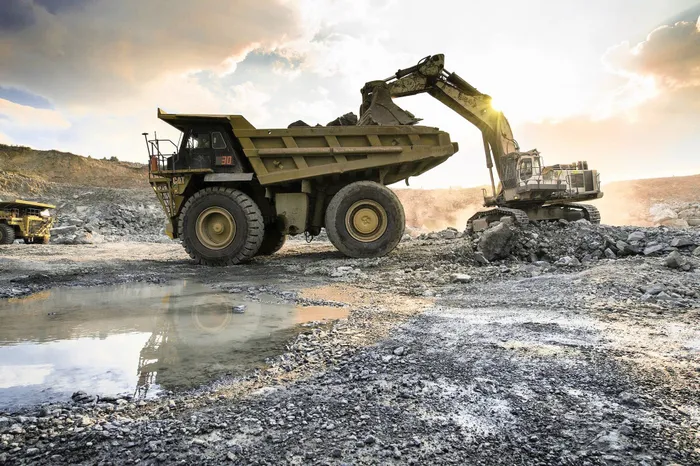
As the rush for critical minerals accelerates, attracting exploration capital requires clear, credible data, says the author.
Image: Supplied
Global exploration statistics often tell a partial story—and South Africa is a prime example. Countries such as Australia and Canada dominate international exploration rankings not only because of their geological activity, but because their junior mining companies are publicly listed on exchanges that require detailed disclosure. This visibility makes their exploration footprint easy to measure.
South Africa appears to contribute less than 1% of global exploration spend, but this figure reflects only the work of listed companies. When privately funded and unlisted explorers are included, the country’s true contribution is significantly higher. The reality is simple: a lack of disclosed data does not mean a lack of exploration.
The mining sector remains a cornerstone of the South African economy, contributing R444.2 billion to GDP and employing nearly half a million people in 2023. Exploration—vital for sustaining this economic engine is taking place across the country, yet much of it goes unrecorded in international datasets because most junior miners are not listed on the JSE. With only about 10 listed junior mining companies, the majority of exploration activity unfolds outside public reporting frameworks.
By contrast, the Australian Securities Exchange lists more than 860 metals and mining companies, and Canada’s host over 1 000 mining issuers. Their reporting obligations automatically translate into global visibility which is something South Africa’s private exploration ecosystem does not currently enjoy.
Recognising this, the 2022 Exploration Implementation Plan identified the lack of junior miner listings as a barrier to raising capital. While the JSE’s Private Placements platform aims to support private companies, requirements such as Competent Person’s Reports remain a hurdle for earlystage explorers.
To address these gaps, the Department of Mineral and Petroleum Resources (DMPR), working with the Industrial Development Corporation and Council for Geoscience, established the Junior Mining Exploration Fund (JMEF). This initiative is a tangible commitment to revitalising earlystage exploration and supporting black-owned junior miners. Through convertible grants, the Fund backs greenfield and brownfield projects across critical minerals including copper, lithium, rare earth elements, nickel, tin, and uranium. It also advances transformation by supporting youth and women-owned enterprises.
Eight projects are already underway across five provinces, with more being evaluated. None of these appear in global exploration statistics because they are privately held. Beyond the JMEF, more than 190 exploration projects targeting key minerals are active nationwide—substantial activity that remains largely invisible to international observers.
What South Africa lacks is not momentum, but measurable visibility.
As the rush for critical minerals accelerates, attracting exploration capital requires clear, credible data. To strengthen competitiveness, the country’s critical minerals implementation plan is considering targeted incentives, expanded public geoscientific data, and additional public-private funding partnerships as these measures have proven successful in other mineral-rich jurisdictions.
Regulatory throughput also underscores South Africa’s commitment to enabling responsible mining. Between 2021 and 2025, the Department of Mineral and Petroleum Resources issued over 681 mining permits, 327 prospecting rights, and 59 mining rights, signalling an active and responsive regulatory pipeline.
South Africa has the mineral endowment, technical expertise, and institutional capacity to compete with leading exploration jurisdictions. With improved transparency and strategic support, the country can reshape global perceptions, attract more investment, and unlock shared value for investors, workers, communities, and the state.
The exploration business is not only moving it is gaining speed.
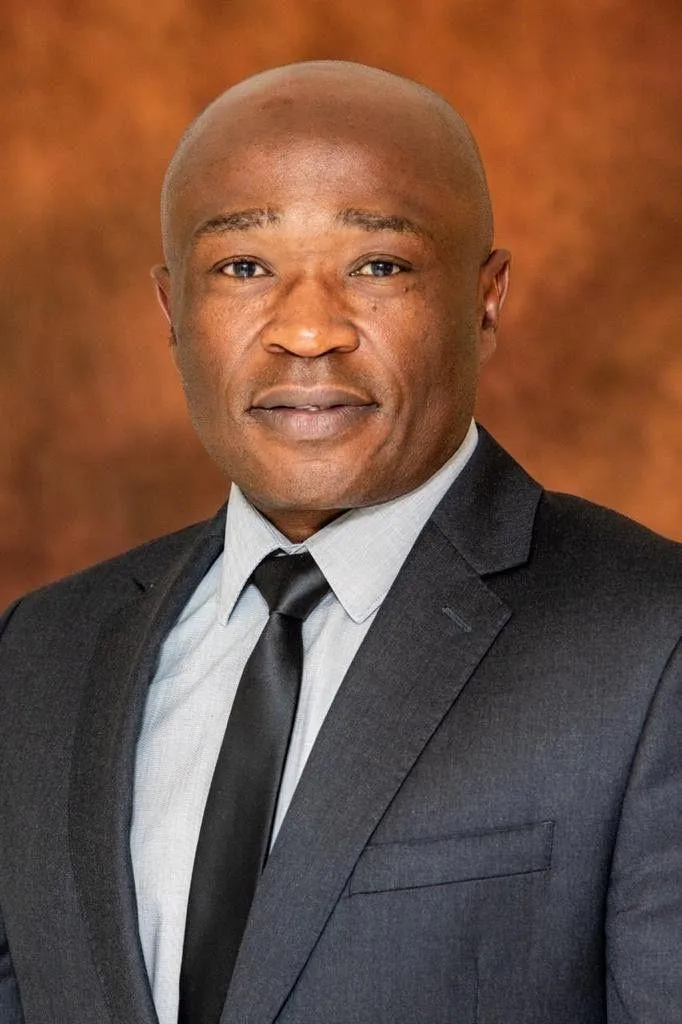
Jacob Mbele, Director General Department of Minerals and Petroleum Resources.
Image: Supplied
Jacob Mbele, Director General Department of Minerals and Petroleum Resources
*** The views expressed here do not necessarily represent those of Independent Media or IOL.
BUSINESS REPORT