

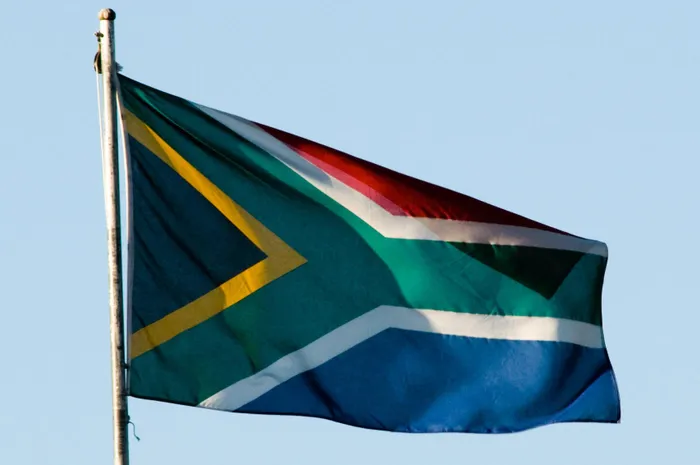
South Africa’s recent removal from the Financial Action Task Force and European Union’s grey list was rightly met with both relief and some pride, says the author.
Image: File
South Africa’s recent removal from the Financial Action Task Force (FATF) and European Union’s (EU) grey list was rightly met with both relief and some pride. It signals that, after two years of intense scrutiny and reform, South Africa has made tangible progress in strengthening its guardrails to counter terrorist financing, and combat fraud and money laundering.
But, as significant as this is, it’s only the end of the beginning. South Africa’s real financial reputation test starts now as the global system that judged us moves into a much stricter era.
The FATF may have cleared South Africa, but its scrutiny will continue into 2026 and 2027 to ensure that the actions taken deliver measurable outcomes and enforcement. Heavier paperwork, slow processing, heightened scrutiny and even disrupted payment flows will continue to impact deals.
Combined with the EU’s sweeping new anti–money laundering reforms, and it’s clear that the map of financial supervision is being rapidly redrawn. For countries like South Africa, that means even deeper scrutiny, and fewer excuses.
A new era of European enforcement
The EU’s Anti-Money Laundering and Countering the Financing of Terrorism (AML/CFT) package, published in June 2024, marks the most significant reform of the bloc’s financial integrity framework in two decades. It replaces a patchwork of national rules with a single, binding AML Regulation and Directive. Crucially, it creates a new supranational regulator: the Anti–Money Laundering Authority (AMLA), based in Frankfurt.
AMLA began operations in July 2025 and will assume full powers by July 2027, when the new Regulation also takes effect.
Its impact will be felt well beyond Europe. While AMLA will directly supervise only a small number of high-risk EU institutions, the standards it sets will cascade across the global financial system and will affect any bank, fintech, or payment provider doing business with EU counterparts.
What South Africa should be doing now
For banks, fintechs, and financial service providers, the priorities are clear.
Exposure must be mapped by identifying every EU link across clients, payment rails, intermediaries and more. This enables an assessment of where enhanced scrutiny is most likely, and the development of an action plan.
Compliance infrastructure must be upgraded. Stronger beneficial ownership data, real-time monitoring, and automated Know Your Client (KYC) systems are now mandatory. Here, data and tech tools that can accurately and quickly combine sources to produce a coherent analysis will serve us best. These should be applied or developed immediately if we’re to stay ahead of the changes and risks.
Investment in meaningful skills building and good governance should be well underway already. The next phase of compliance is not only about effective systems and accurate processing. Rather, its success will be defined by a culture of accountability and credible leadership that goes well beyond ticking off regulatory requirements.
For its part, government must continue to support the work of agencies like SA Revenue Service, Companies and Intellectual Property Commission and law enforcement to enhance intelligence gathering on tax and complex financial crimes, laundering and terror financing, and access to ownership data. Multi-disciplinary skills sharing and training of the state’s human capital is also critical to build capacity for more robust, collaborative investigations and enforcement.
AI tools can enhance reputation building
KYC regimes traditionally require notoriously slow, manual processing of data and documentation. As the compliance net tightens with ever-more intricate requirements and standards, this burden will only increase without clever thinking and sensible deployment of responsible, effective artificial intelligence tools.
Norwegian fintech start-up Strise has developed a KYC tool that scans public registries and media reports to flag potential risky entities and individuals in real-time. That way, compliance analysts can use current information and enhanced live cross-checks as they build a comprehensive picture of ownership, connected parties, links to sanctioned persons or politically-connected individuals, and high-risk jurisdictions – and all at a much quicker pace. This is just one way that smarter use of good, appropriate tech can free up resources for higher order analysis of fraud and money laundering detection.
The next chapter of reform
South Africa’s financial reforms and rigour are helping us hit significant milestones but our journey is far from over. Our ability to keep pace with a global financial world that prizes agility, transparency, digital precision, accountability and consequence will continue to be tested. We cannot let a moment’s pause slow us down in fully rebuilding South Africa’s financial reputation.
Dean Jennison is head of Banking at technology and management consultancy, iqbusiness
*** The views expressed here do not necessarily represent those of Independent Media or IOL.
BUSINESS REPORT