

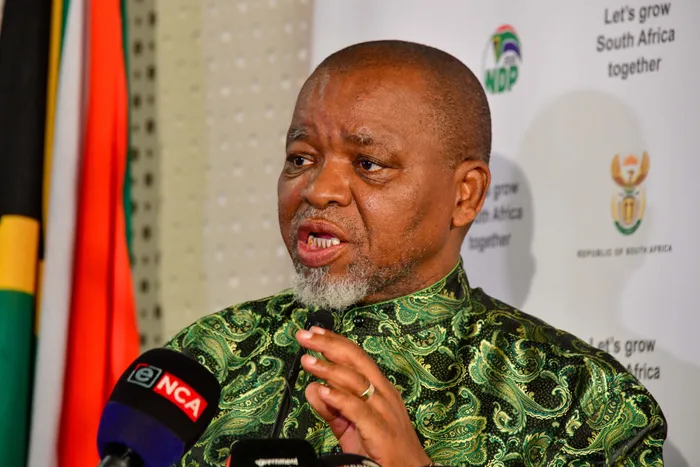
Minister Gwede Mantashe.
Image: GCIS
Minister Mantashe's recent assertion that unemployed people are passive is a “political offside”.
A few years back, I also came across a picture of Mineral Resources Minister Gwede Mantashe clad in a full football kit on social media. He seemed to be participating in a match. But, I am not talking about an offside he may have committed there then.
In a recent television interview, Mantashe called young people who struggle to find employment as passive, not doing enough to find jobs and only waiting for handouts(I paraphrase).
With this statement, the Minister really employed an unfair act to gain political mileage. Hence I say he was “politically offside”.
The high unemployment rate in this country is more of a governance failure than the fault of the general public who suffer this social ill.
A few months ago, Minister Mantashe, who also serves as the chairperson of the African National Congress (ANC), boldly asserted in his party's councillors roll call that all that councillors are good at is singing. He said they lack the capacity to serve the people who elected them to make their lives better(my words). Here, many think he had a point. I add that the lack of capacity in councillors is a challenge to all community members, especially those living in undeveloped and unserviced areas.
This lack of capacity Mantashe pointed to, means that the municipalities these councillors lead, fail to deliver basic services, fail to develop their local economies and fail to attract investment to their communities. For these reasons, the municipalities led by these councillors who have no capacity, fail to make their environment conducive to create jobs. They also fail to employ skilled people to serve their communities and fulfill their municipality’s mandate. So, the fact that many people are without jobs stems from such government failures.
A small municipality that receives an allocation of R250 million a year for the term that started after the 2021 Local Government Elections has thus far received about R1 billion. However, when you travel around many parts of this municipal area, nothing tells you that R1 billion has been invested in it in this term alone. The lack of the visible financial impact demonstrates that councillors running such an area's municipal council have no capacity. They have only been singing this entire term while the community members go on for days without water, contend with broken sewage pipes and refuse that is often not collected.
Such basic service delivery problems should also attract the attention of district municipalities, provincial and national governments who also receive their own budget allocations to deliver for communities contending with such governance problems. As this municipal term comes to an end this year, many South African communities are in decline. When you look at them and listen carefully, you might hear them sing a song that says councillors have no capacity.
Through his assertions, the Minister did not only seek to “score” unfairly. He also chose the wrong opponent. Members of the public are not political rivals of the executive at municipal, district and national levels. If government leaders like the Minister find it best to point fingers at members of the public who have been failed by poor governance, our problems are bigger than we thought. Government leaders are elected and appointed to come up with solutions to society's problems. It is one thing if they struggle to come up with the best solution to society's problems, most of whom are not new. But for a government leader to face a live camera with his microphone on and blame citizens for their disenfranchisement is another.
A majority of South Africans continue to suffer the legacies of the unjust colonial and apartheid dispensation of the past. Most of them still unfairly suffer from the limitations of the current democratic dispensation. Unemployment remains a critical hurdle that both government leaders and members of the public should work together to thwart. If South Africans dig deep, come up with creative and innovative ways to get service delivery to an ideal level, fast track local economic development and build a good investment case out of every corner of our communities, jobs will be realised by all.
But we are still far from there. Currently, municipalities struggle to use their budgets to make their residents' lives easier and communities better than the previous day, month and year.
As it stands, young people pack their bags at the beginning of the year and head to big cities to access tertiary education and training. Unfortunately, when they pack their bags in the city to return home after their final examination or upon graduation some three or four years later, they return to communities that have seen very little development. They find that while they were acquiring the knowledge and skills, governance failed to create an opportunity in their community of origin for them to return to so that they can make their impact.
What is worse, those who lead and work in these municipalities even fail to recognise that the world is advancing with technology. They post job adverts and write in block letters that : NO FAXED OR E-MAILED APPLICATIONS WILL BE ACCEPTED.
So an unemployed person who struggles to buy data, which is so expensive, still has to have fares to go submit a job application at their local municipal offices. In a far flung rural area, a return trip to a municipal office can cost R50 or double or triple that amount.
In all truth, the tens of thousands of graduates who do not work are all but passive. Many applied and ultimately worked under very difficult circumstances to make an impact in many government internships and various skills programmes like the Basic Education Employment Initiative(BEEI) and others. They served every moment of these programmes until the last day. While at it, they displayed determination, excellence and resilience.
There are those who stayed at home because they could not come across any opportunity to work. Some lost out on the available opportunities for one reason or another. But even they too displayed patience with the country's low economic growth and development. They exercised maturity and patriotism not resorting to crime, misconduct and disorder when governance failed. They wait hopefully for someone in governance to get things right. They believe that sooner rather than later an opportunity will come up in their community and they will grab it with both hands. They ask tough questions and accept any logical explanation for the state of affairs. And when they do not get satisfactory responses, they are still constructive. They do not resort to burning their own public facilities to register their needs and demands. They do not unreasonably fight government leaders.
Minister Mantashe, the unemployed are not passive. They are holding on to the promises of a free and fair South Africa where opportunities reach all. They are in their small ways fighting the curse of being born to disenfranchised parents from the less thought of parts of the country. These unemployed people look up to leaders like you to encourage and inspire them as the country tries to navigate a global economy that is not ideally inclusive. They bear the brunt of it all. Commend them. Tell them you are working hard to place South Africa in better stead. Deliver on the promises you as politicians made in every election since the first democratic nation and provincial elections of 1994 and the establishment of local government in 1996.
As we start a new year 2026, the game has changed. We now have VAR and “political offsides” by government leaders will be caught. Unfortunately, they will not count.
We wish every unemployed person the best this year. May they not lose their sanity. May they remember that they fully belong to our families, communities and country. The fact that they are unemployed does not make them second class citizens. South Africa will not prosper if they are not allowed to access employment opportunities.
We hope that government leaders will work harder to create an environment that will breed work opportunities.
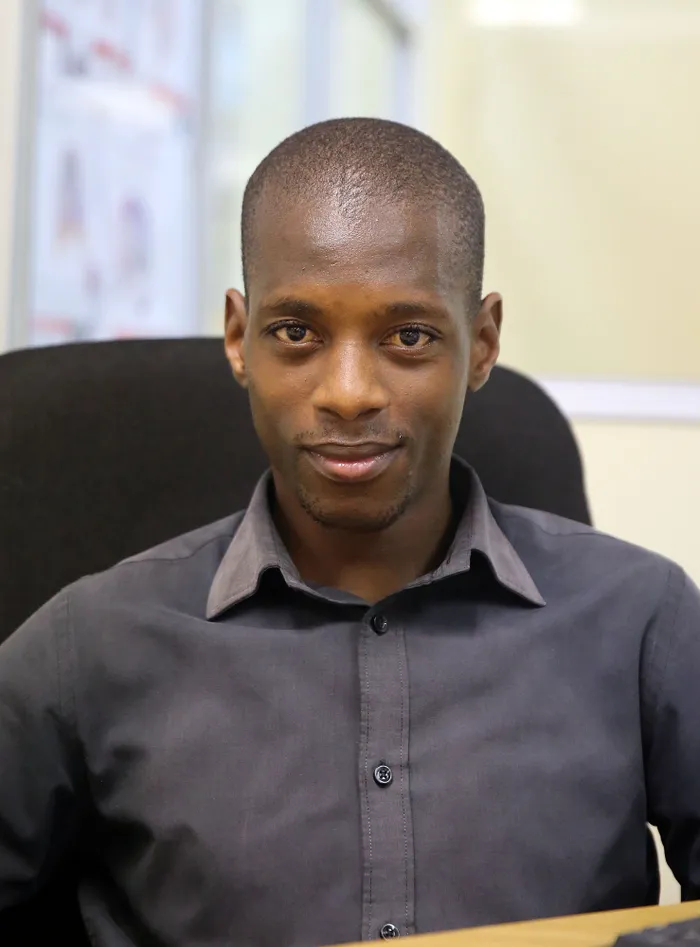
Given Majola is a property journalist at Independent Media.
Image: File
Given Majola is a property journalist at Independent Media. He writes this opinion piece in his capacity.
BUSINESS REPORT