

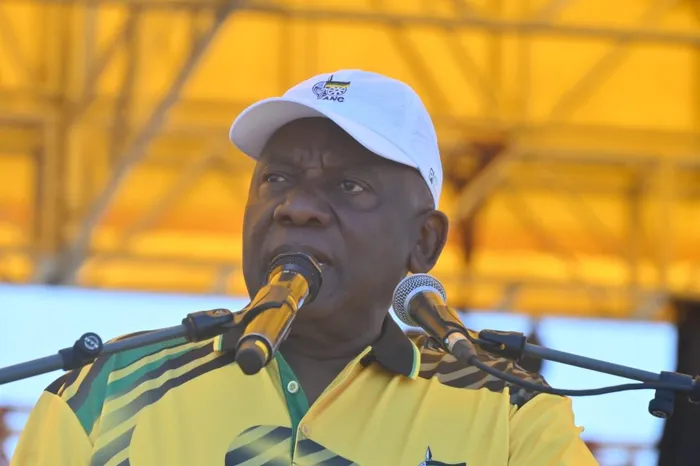
The President of the African National Congress and the Republic, Cyril Ramaphosa, will be presenting the ruling party’s January 8th anniversary statement
Image: Ayanda Ndamane/ Independent Newspapers
2026 is not even a week old and already the dark clouds appearing give little comfort to a nation that has seen more than enough drama.
The President of the African National Congress and the Republic, Cyril Ramaphosa, will be presenting the ruling party’s January 8th anniversary statement. It is critical that this statement be grounded on the very difficult challenges facing society and in particular the working class, and most importantly provide a call to action for all spheres of government as it prepares for the State of the Nation Address and the tabling of the 2026/27 Budget at Parliament.
The January 8th statement and government’s responding plans must speak to the very painful socio-economic challenges faced by the working class and society. It must focus on government’s plans, working with social partners, on how to fix the state, unlock economic growth and tackle unemployment, provide relief to the poor and unemployed, and deal decisively with crime and corruption.
We must at all times bear in mind that our single greatest threat as a nation is our 42.4% unemployment rate. Fix that and most other challenges begin to resolve themselves. Continue to normalise that and one day we may pay a price that no one can afford. The January 8th statement needs to send a message to workers and society that the leadership of the ANC and government has heard their frustrations and will act accordingly, that it will lead with humility and avoid such tone death blunders of excessive salary hikes for politicians whilst many workers go unpaid.
There is a need to highlight specific interventions the government will prioritise that will make a difference to the worker at a mine or a smelter, that will help save factories and farms. A clear mandate needs to be given to be fleshed out in the coming Budget. Priority needs to be given to investing in frontline public services to ensure they have the staff and tools required to deliver the quality public services that working class communities and the economy depend upon.
Particular attention needs to be paid to the state’s Achilles’ heel, the local government, which is in need of massive interventions and some very tough love to ensure thatmunicipalities can and do fulfill their constitutional obligations. Mayors and managers who cannot, must be made a public example of.
The government, Eskom and municipal employees must be commended for their remarkable successes in ending loadshedding. Similar support needs to be given to enable Eskom to plug its still huge financial holes, in particular tackling municipal debt as well as monies lost to wasteful expenditure, corruption, vandalism and cable theft.
Short- and long-term solutions are urgently needed to place electricity tariffs on an affordable regime for working class communities and the economy, in particular heavy electricity users. We simply cannot afford to lose more smelters and jobs.
Similarly, key to unlocking economic growth is further support for Transnet and Metrorail, who have both shown positive improvements at our ports and along our freight and passenger rail network, but who still have very far to go. A modern and efficient Transnet unlocks thousands of mining, manufacturing and agricultural jobs. A rapid and reliable Metrorail provides cheap and quick means for 10 million workers in our cities to get to work whilst easing road congestion. The government must do more to ensure that other struggling state-owned enterprises, in particular Denel, SABC, the Post Office and the Postbank are firmly set on the path to recovery and sustainability.
Mining has long been the backbone of South Africa’s economy and a major source of jobs, direct and downstream, and state revenue. December 2025 saw the opening of a new mine creating new jobs in Limpopo. 2026 must see action to conclude the overhauling of the mining rights application system and other measures key to attracting investment in this strategic sector.
Much has been said during 2025, and correctly so, about our unacceptably high levels of crime and corruption. There are no shortcuts to fixing what has made the lives of millions, especially working-class communities, a nightmare. The government has to ensure that SA Police Service, the National Prosecuting Authority, the courts and other law enforcement agencies have the tools they need to win this war, from working vehicles to state of the art forensics, biometrics and IT infrastructure. We can’t afford to continue to cut corners and remain a country known for high levels of violent crime and wonder why we struggle to attract the investment needed to reduce unemployment. This needs to include seeing those who break the law, including the most senior leaders of the state and private sector going to jail.
Discussions about a bold and progressive Marshall Plan 2.0 to stimulate economic growth, provide much greater access to public and private capital, boost infrastructure investment and provide meaningful and rapid relief for struggling businesses and sectors can no longer remain a distant wish but must become a practical reality and lead to real action. 2025 highlighted the importance of South Africa expanding and diversifying trade opportunities, not only to manage the inevitable global challenges, but most importantly to expand key economic sectors and create decent jobs. Particular attention must be paid to African Continental Free Trade Area as this is where our greatest growth opportunities lay.
Whilst the long-term interventions are put in place to reach the 3% economic growth rate needed to reduce unemployment, more public and private sector employment opportunities need to be provided, from the Presidential Employment Stimulus to artisanships in the private sector to capital for start-ups. More must be done to boost compliance with our progressive labour laws, from paying municipal workers their salaries to security guards’ pension fund contributions. We must become a society with zero tolerance towards those who break the law.
2025 has seen some hopeful green shoots emerge, 2026 must be a year of action where we see the state being fixed, economic growth rising and unemployment falling.
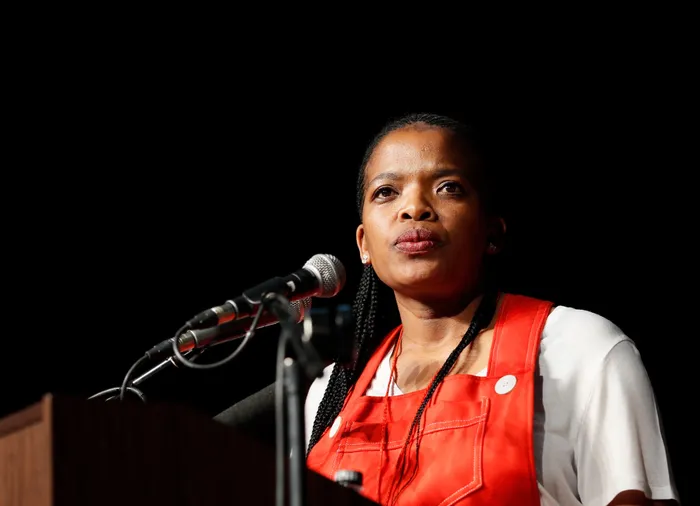
Zingiswa Losi is the president of Cosatu.
Image: Independent Newspapers
Cosatu President Zingiswa Losi
*** The views expressed here do not necessarily represent those of Independent Media or IOL.
BUSINESS REPORT