

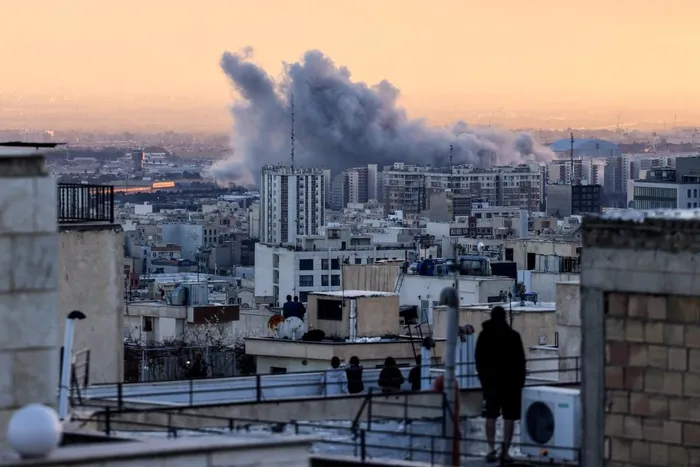
Iran stepped up its attacks on economic targets and US missions across the Middle East on Tuesday as the US president warned it was "too late" for the Islamic republic to seek talks to escape the war.
Image: Atta Kenare
As the war involving Iran, the US and Israel escalates, with recent US and Israeli military actions against Iran followed by Iranian retaliation, global trade and energy markets are feeling the strain - and you will too.
But this isn't a war only felt by the region and its surroundings. The impact is unfolding thousands of kilometres away as South African consumers and businesses should prepare for higher fuel costs, longer delivery times for imported goods, and inflationary pressure on everyday products.
The Strait of Hormuz is a narrow waterway between Iran and Oman and is one of the world’s most critical energy and shipping chokepoints. Around 20% of global crude oil exports and LNG shipments pass through this route each day, so when tensions rise there, global markets and supply chains react almost instantly.
Recently, strikes in the region have effectively halted much of the maritime traffic through Hormuz.
In a webinar on Tuesday, Coface's Head of political risk analysis, Ruben Nizard, noted the increase in oil prices and highlighted Homuz's disruptions to global oil supply. "We saw a jump in oil prices. We are seeing a substantial increase in oil of around 80 dollars per barrel. We are talking about brent crude. Traffic has indeed been disrupted in the strait. There are still some passages open and is not completely closed."
South Africa imports most of its crude oil. When exports from the Persian Gulf are disrupted, global oil prices rise, and these increases feed directly into local fuel costs.
Oil prices have climbed sharply amid the conflict, with Brent crude trading above $80 per barrel. The closure of the Strait of Hormuz, which at times accounts for as much as one-fifth of daily global oil flows, puts upward pressure on petroleum markets.
Fuel regulators told TimesLIVE that higher international costs and geopolitical uncertainty have added tens of cents per litre to petrol, diesel, and paraffin prices.
It’s not just oil that is affected. Container ships and freighters are changing their routes to avoid volatile waters.
Major shipping companies such as Maersk, Hapag-Lloyd, and CMA CGM have suspended sailings through the Suez Canal and the Bab el-Mandeb Strait, key links between Asia, Europe, and the Middle East.
Instead, they are rerouting vessels around the Cape of Good Hope at the southern tip of Africa, which is a longer and more expensive journey.
Industry sources report that avoiding the Hormuz and Red Sea routes adds 10–20 days to transit times and increases freight rates by 40–50% or more on some major trade lanes.
War-risk insurance premiums for vessels operating near Middle Eastern waters have also spiked, sometimes rising by 40–60% or more, adding hundreds of thousands of dollars to the cost of a typical voyage.
What does this mean for South African importers and exporters?
Impact on consumer prices and supply chains
When freight costs rise, companies often pass these through to the final consumer. For example:
Shipping rates from Shanghai to Middle Eastern ports have already more than doubled in recent weeks. Longer routes around Africa also increase fuel consumption for vessels, adding further cost that can eventually show up in retail prices.
This affects a broad range of products that South Africans buy regularly, from electronics and clothing to manufactured goods and agricultural inputs like fertiliser, which are often shipped through global trade lanes.
1. Petrol and diesel costs may continue rising. Higher crude prices and transport costs combined could maintain upward pressure on local fuel prices in the weeks ahead.
2. Imported goods could become more expensive and slower to arrive. Longer sea routes and higher freight bills mean cost increases and logistical delays are likely for businesses reliant on global suppliers.
3. Freight and consumer inflation may rise. With energy and shipping costs up worldwide, inflation pressures could build in South Africa’s economy, complicating policymakers’ decisions in an already delicate economic environment.
So if you have reached the end and are still thinking 'Why should I care?', here is a quick takeaway.
Your fuel may cost more, your online orders could take longer, and your shopping bill might tick higher. The Middle East conflict has ripple effects that reach right into South African homes.
IOL