

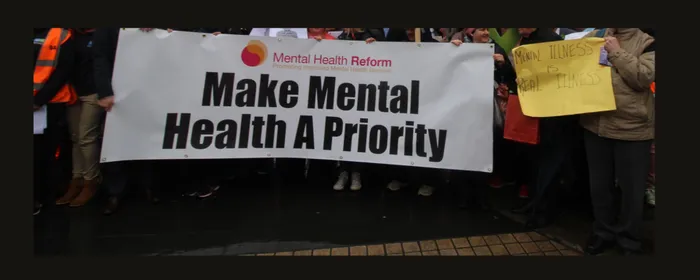
Mental health advocacy in motion during the period of the Life Esidimeni tragedy. The systemic vulnerabilities highlighted then continue to manifest today, exacerbated by the elimination of Regulation 425's comprehensive training for community-level nursing staff.
Image: Flickr
The quiet phase-out of South Africa’s foundational nursing curriculum has triggered a slow-burning, regulatory crisis across the country’s primary healthcare network.
For decades, Regulation 425 has ensured that every graduating general nurse is mandatorily equipped with extensive, hands-on clinical training in psychiatric nursing science. It was a structural safety net that placed vital mental health triage capabilities directly on the frontline of community clinics.
Under the new regulations, psychiatric training has been branched from the standard undergraduate curriculum and reclassified as a postgraduate specialisation.
This policy shift has fundamentally altered the medical workforce, leaving a new generation of frontline nurses to enter community clinics without the compulsory psychological training and hours needed to safely recognise, de-escalate, or manage acute psychiatric conditions.
The South African Federation for Mental Health, an advocacy organisation, has launched a targeted campaign demanding policy revision.
"We are focusing on holding systems accountable for delivering on existing commitments, particularly those outlined in the Mental Health Policy Framework," the federation stated in its strategic directive. "A key focus area is workforce advocacy, particularly around reintroducing psychiatric training within undergraduate nursing curricula."
The Democratic Nursing Organisation of South Africa has previously warned that frontline workers cannot bear the blame for systemic failures when the state alters the educational tools required for the workload.
The union has noted that the current nursing shortage, compounded by diminished specialised training places, imposes immense pressure on remaining clinic personnel. The training deficit directly contradicts the National Department of Health’s broader objectives for universal health coverage
While the government’s current annual performance plan heavily emphasises the expansion of primary care to reduce inequality ahead of the National Health Insurance rollout, the baseline medical workforce lacks the basic training required to deliver comprehensive mental healthcare.

Thomas Chauke speaking to student nurses from Sefako Makgatho University (formerly MEDUNSA) about things nurses should watch out for.
Image: DENOSA (Democratic Nursing Organisation of SA)
Addressing the treatment gap requires immediate, structural intervention from both the National Department of Health and the South African Nursing Council (SANC).
Suggested measures include integrating mandatory mental health triage modules into existing nursing diplomas and utilising task-sharing strategies to train community health workers in psychological first aid.
Countries like Canada and Australia have successfully implemented similar community-based models. By equipping frontline healthcare workers and nursing staff with standardized, foundational psychiatric triage skills, these systems have reported significantly improved access to localized mental health services, a reduced burden on tertiary psychiatric hospitals, and better long-term outcomes for patients experiencing acute crises.
IOL