

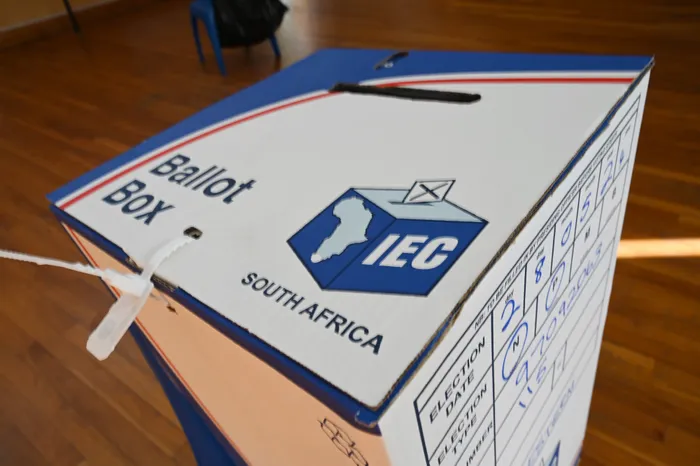
IEC warns of growing youth disengagement ahead of local government elections.
Image: File/Armand Hough/Independent Newspapers
As South Africa prepares for the 2026 local government elections in November, electoral officials and fact-checkers are once again battling a flood of misinformation that resurfaces during almost every election cycle.
From claims that non-voters automatically support the largest political party to allegations that elections can be invalidated by low turnout, many of these myths have been repeatedly debunked by the Electoral Commission of South Africa (IEC).
Here are eight election myths South Africans should stop believing before heading to the polls.
This is perhaps the most widespread election myth in South Africa.
According to the IEC, only valid votes cast by voters are counted when election results are calculated. If a registered voter decides not to vote, there is no ballot to count and therefore no vote to allocate to any party.
The misconception likely arises because a party's share of the vote can increase if fewer opposition supporters turn out, but no actual votes are transferred.
In a similar vein, some voters believe intentionally spoiling a ballot paper benefits a particular political party.
In reality, spoiled ballots are recorded but excluded from the calculation used to allocate seats. They do not count toward any political party's total.
Electoral experts note that while voters may choose to spoil their ballots as a form of protest, those ballots have no impact on the number of votes received by any party.
Unlike some countries, South Africa does not have a minimum voter turnout threshold for elections to be valid.
Whether voter turnout is 80%, 50% or even lower, election results remain legally valid provided the voting process complies with electoral laws and constitutional requirements.
This myth is closely linked to the claim that non-voters somehow support the largest party.
The reality is that parties receive seats based on the percentage of valid votes cast. When fewer people participate, the relative share of votes can change, but no party receives additional votes from people who did not vote.
While South Africa's national elections involve millions of voters, local government elections can often be decided by surprisingly small margins.
Several municipal wards over the years have been won or lost by a few dozen votes. In tightly contested areas, a small increase in voter turnout can significantly alter the outcome.
Political analysts often point to local elections as the level of government where individual votes can have the greatest impact.
The IEC is an independent constitutional body tasked with administering elections and ensuring they are free and fair.
The commission has repeatedly rejected suggestions that it favours any political party and has warned political organisations against using IEC branding in ways that could mislead voters into believing the commission endorses them.
Political parties are also allowed to appoint party agents to observe voting and counting processes.
South Africa's voting system contains safeguards designed to prevent double voting.
Voters must appear on the voters' roll, present valid identification and are marked as having voted. Ballot papers are issued under controlled procedures, while party agents and election observers monitor the process.
The IEC has consistently maintained that voting more than once is both illegal and difficult to accomplish.
Claims about deceased individuals remaining on the voters' roll frequently surface before elections.
The IEC updates the voters' roll using information received from the Department of Home Affairs. While there may occasionally be a delay before a death is reflected on the roll, this does not mean deceased persons are casting ballots.
Political parties can inspect the voters' roll and raise objections if they identify discrepancies.
So why does misinformation matter? Election misinformation can undermine public confidence in democratic institutions and discourage voter participation.
With local government elections expected later this year, voters are being encouraged to rely on information from official IEC channels and reputable fact-checking organisations rather than social media rumours.
IOL