

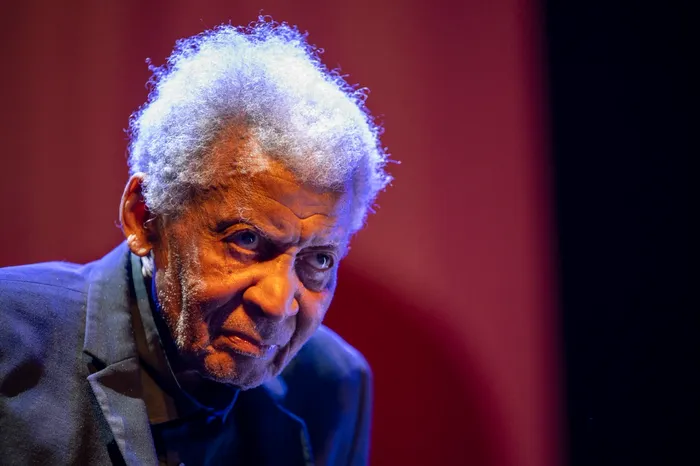
South African jazz legend Abdullah Ibrahim performs on the Rosies stage during the Cape Town International Jazz Festival.
Image: Armand Hough / Independent Media
Tributes for cultural activist and global jazz icon Abdullah Ibrahim have poured in from the political realm, with President Cyril Ramaphosa leading the tributes of condolences from Parliament and political parties.
Ramaphosa expressed his profound sadness at the passing of Ibrahim, who was also an Esteemed Member of the Order of Ikhamanga. Ibrahim has passed away at the age of 91, at the end of a life in music that spanned jazz genres and geographies.
Born in 1934 and previously known as Dollar Brand, Ibrahim was in a class of his own.
He was a renowned pianist and composer. His music, shaped by his childhood in Cape Town's multicultural port areas, spanned traditional African songs, AME Church gospel, ragas, modern jazz, and various Western styles, reaching from Cape Town to Soweto and across Africa and Europe.
During the 1960s, under apartheid, Ibrahim moved to New York City and stayed in exile until the early 1990s, briefly returning to South Africa in the 1970s.
As a pianist, composer, arranger and mentor, Abdullah Ibrahim campaigned against apartheid and drew audiences to his highly curated performances.
On Tuesday, President Ramaphosa offered his deep condolences to Ibrahim’s loved ones, including his children, pianist Tsakwe and hip-hop artist Jean Grae. Their mother, Sathima Bea Benjamin, a performer and recording artist herself, passed away in 2013, nine years after she received the Order of Ikhamanga.
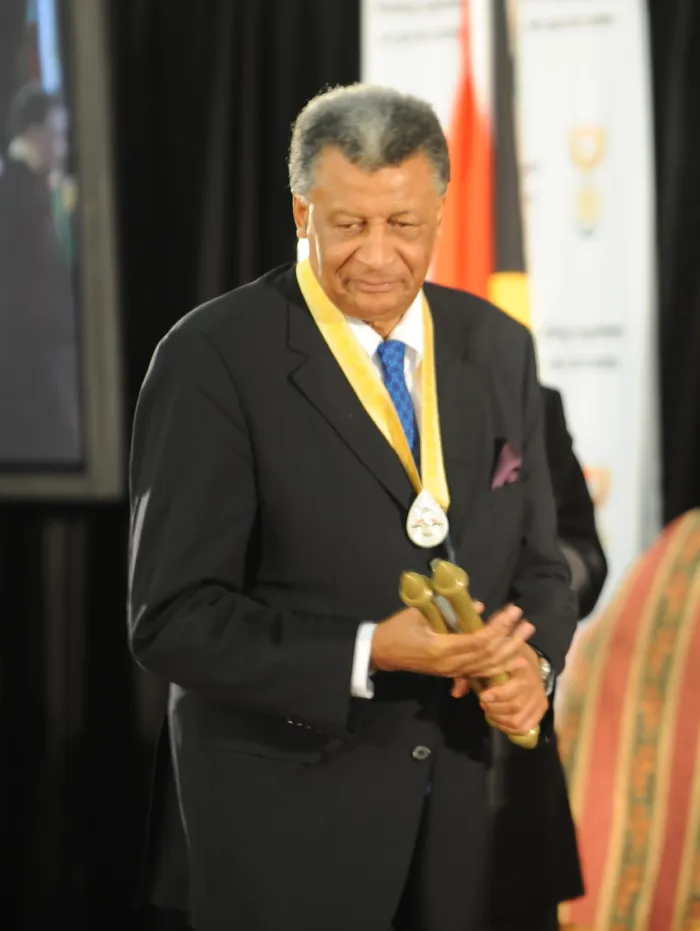
Abdullah Ibrahim with his Order of Ikhamanga Silver at the presentation of National Orders at the Presidential Guesthouse yesterday. Picture: Etienne Creux
Image: Etienne Creux
“Today our nation mourns the passing of an international icon and global citizen whose profound creations honoured the South Africa that shaped his political commitment and musical brilliance.
“As we commemorate the 50th anniversary of the Youth Uprising, the passing of Abdullah Ibrahim reminds us of the then-illegal benefit concert he organised in support of the liberation movement following the Uprising, as a demonstration of his commitment to our struggle,” Ramaphosa said.
“We give thanks for the many decades of his life that he devoted to his personal passion, which he shared with humanity through his recordings and his appearances in clubs and concert halls throughout the globe. He has enriched our lives with his musical gifts and his involvement in making the world a better place. May his soul rest in peace.”
Parliament’s National Assembly Speaker, Thoko Didiza, and National Council of Provinces Chairperson, Refilwe Mtshweni-Tsipane, said his music was never merely entertainment; it was a powerful weapon of liberation.
“During the darkest years of apartheid, Mr Ibrahim’s compositions, most notably the iconic Mannenberg, became synonymous with the struggle for freedom. Mannenberg was adopted as an unofficial anthem of the anti-apartheid movement, frequently played at rallies and concerts of the United Democratic Front and other progressive organisations, directly linking his art to the politics of resistance.
“As a coloured man in apartheid South Africa, he was subjected to severe racial restrictions and was repeatedly denied opportunities, including being refused admission to the University of Cape Town’s College of Music because of his race. Nevertheless, he persevered using his piano as a voice and a shield,” they said.
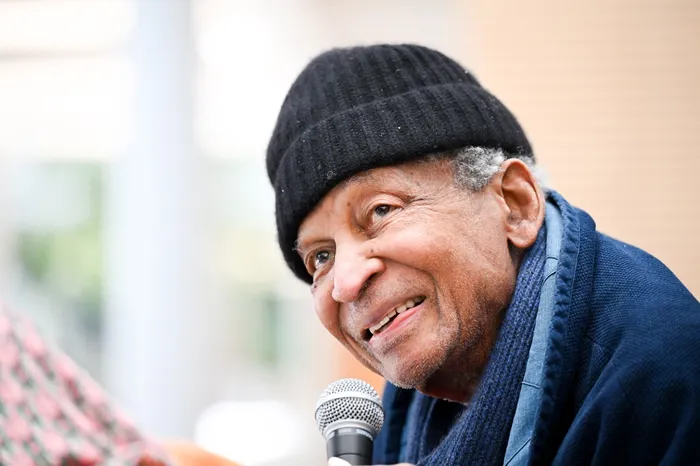
South African jazz pianist and composer Abdullah Ibrahim, fielding questions during a press conference in Cape Town.
Image: Henk Kruger / Independent Media
Premier of the Western Cape, Alan Winde, said: "Abdullah Ibrahim’s life and work represent the very best of the Western Cape and South Africa. Through his extraordinary musical talent, he carried our stories, our history and our humanity onto the global stage.
"His legacy reminds us of the power of culture to connect people, transcend divisions and build understanding across generations and communities. We honour his immense contribution and extend our deepest condolences to all who mourn his passing."
Western Cape Cultural Affairs and Sport MEC, Ricardo Mackenzi, said: "The passing of Abdullah Ibrahim marks the end of an era in South African music. He was not only a world-renowned musician and composer but a cultural giant whose work transcended borders and generations. His music carried the soul of our nation and reminded us of our shared humanity.
RIZE Mzansi said Ibrahim was not just a musician: “he was an activist for a free and democratic South Africa, and perhaps unwittingly, a great philosopher”.
“It is perhaps poetic that his passing comes on the eve of the 50th anniversary of the Youth Day uprising, as many of his masterful compositions, like Mannenberg, became soundtracks to the resistance against the brutality and indignity of apartheid.
“His life has come to an end, but it was a full life. It was a life that will be remembered as fondly as the music that will reverberate for generations to come,” they said.
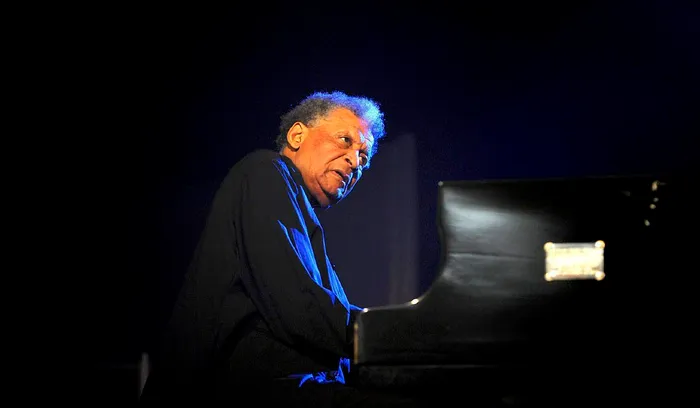
Legendary Abdullah Ibrahim, Jazz Pianist, performs at the opening of the Joy of Jazz in Newtown in 2013
Image: Dumisani Dube
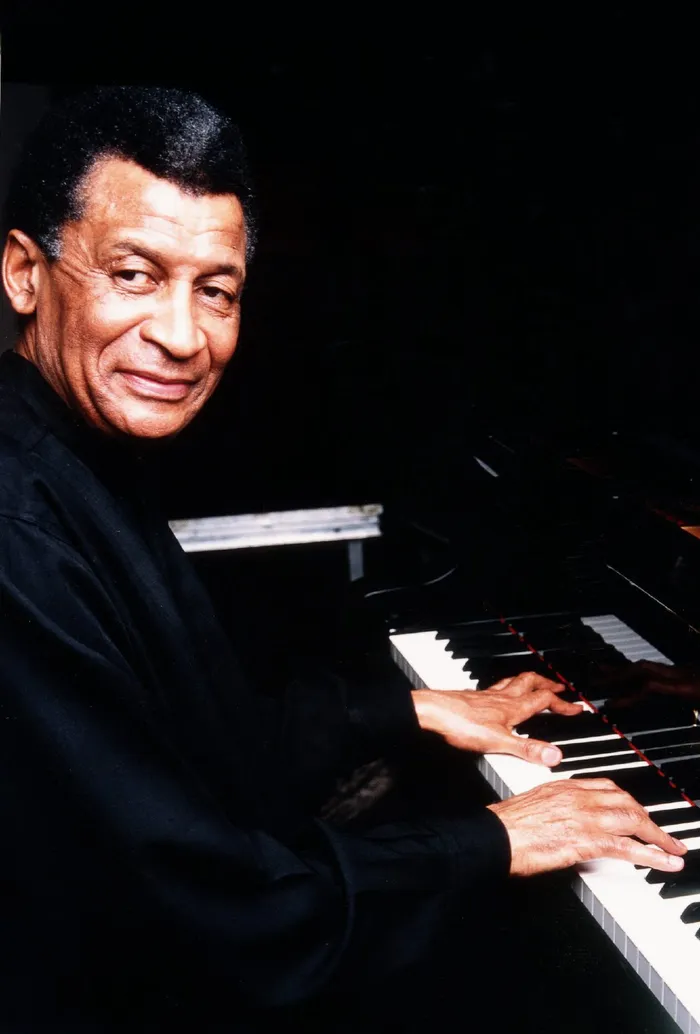
Abdullah Ibrahim, singer musician.
Image: Archives
The Economic Freedom Fighters said: “We thank Tata Abdullah Ibrahim for the immeasurable contribution he made to South Africa’s cultural heritage and liberation history. Through his music, he gave voice to the struggles, resilience, and aspirations of our people, proving that art can be a powerful instrument of resistance and social transformation.”
Mayor Geordin Hill-Lewis said that generations of Capetonians have found meaning and inspiration in his music.
“I encourage everyone, especially young people, to explore and delight in this rich heritage. Cape Town has lost a defining artist who transcended divides and generations.
“We extend our condolences to Abdullah Ibrahim’s family, friends, and all those around the world who were touched by his extraordinary music. We will never forget this cultural legend’s contribution to our city’s identity and to South Africa’s proud heritage," said Hill-Lewis.