

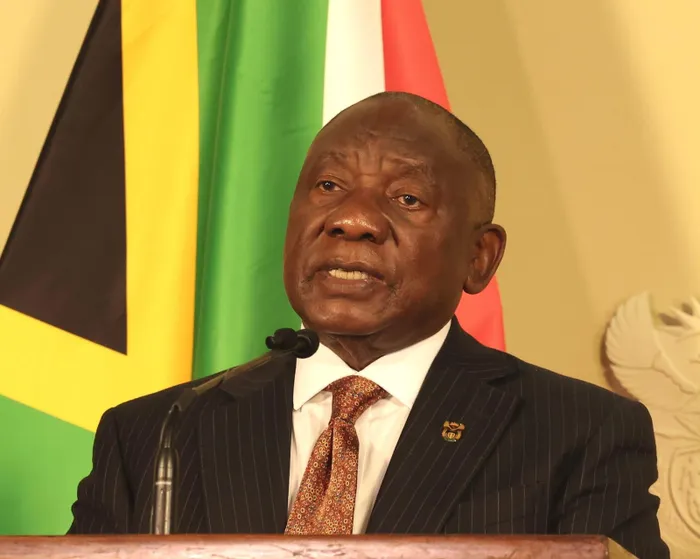
President Cyril Ramaphosa addresses concerns over illegal immigration during a meeting with faith-based organisations at the Union Buildings in Pretoria, emphasising that deeper issues like unemployment and corruption are the root causes of South Africa’s economic challenges.
Image: GCIS
President Cyril Ramaphosa has pushed back against growing claims that illegal immigration is responsible for South Africa’s social and economic challenges, arguing that the country’s problems stem from deeper issues such as unemployment, poverty, crime and corruption.
Addressing a special meeting with faith-based organisations at the Union Buildings on Wednesday, Ramaphosa acknowledged widespread public concern over migration and illegal immigration but cautioned against using migrants as scapegoats for the country’s struggles.
“These concerns are real. They need to be heard and to be addressed,” Ramaphosa said.
He noted that concerns about migration have intensified amid persistently high unemployment, poverty, pressure on public services and rising crime levels in many communities.
However, the President stressed that migration itself is not the root cause of these challenges.
“Yet illegal immigration is not the cause of our social and economic difficulties,” Ramaphosa said.
“To tackle the challenges our country faces, we need faster and more inclusive growth, investment and the creation of jobs.”
He added that government must strengthen efforts to combat poverty and hunger, improve policing and root out corruption if it hopes to address the issues affecting communities across the country.
The President’s remarks come amid heightened public debate over immigration and growing calls for tougher enforcement against undocumented foreign nationals.
Ramaphosa said government’s response is guided by a newly adopted Comprehensive Approach to Migration Management, which seeks to balance law enforcement with constitutional and human rights obligations.
“Every person within our borders must be here lawfully,” he said, while emphasising that immigration enforcement remains the responsibility of the state.
He warned that citizens should not take the law into their own hands by demanding proof of nationality or immigration status from others.
“No matter how frustrated people may be, there is no place for racism, sexism, xenophobia, Afrophobia or any other form of intolerance,” he said.
The President outlined pillars underpinning the government’s migration strategy:
“We can protect our borders while protecting human dignity. We can enforce our laws while upholding our Constitution. We can secure our communities while preserving the values of Ubuntu,” Ramaphosa said.
He also called on religious leaders to help promote social cohesion and prevent frustration over migration from turning into hostility against foreign nationals.
“Together, we must work to ensure that frustration is never turned into hatred, and that the stranger among us is met with the dignity that all our faith traditions demand,” he said.
Turning to the National Dialogue process, Ramaphosa urged faith communities to play an active role in shaping conversations about South Africa’s future, describing the initiative as a people-led effort aimed at building consensus and finding solutions to the country’s challenges.
“There are many challenges facing our nation. But we can address them together.”
He called for a South Africa that is “secure, lawful, compassionate and prosperous” while upholding the dignity of all people and the values enshrined in the Constitution.
IOL News