

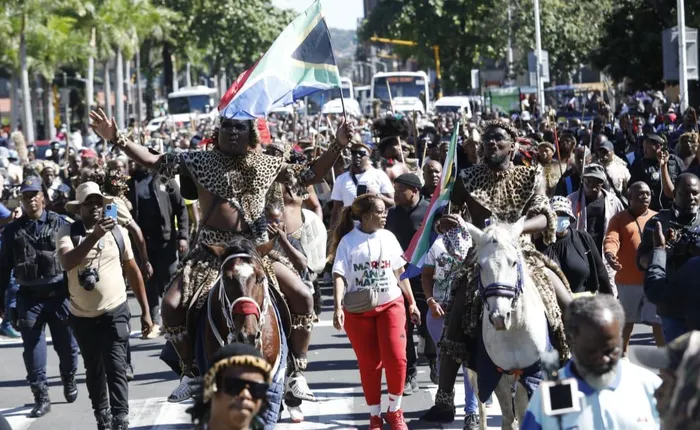
Afrika Mayibuye Movement leader Floyd Shivambu and March and March leader Jacinta Ngobese-Zuma have agreed to work together on a campaign against undocumented and illegal immigration.
Image: Doctor Ngcobo / Independent Newspapers
Afrika Mayibuye Movement leader Floyd Shivambu and March and March leader Jacinta Ngobese-Zuma have agreed to collaborate on initiatives aimed at addressing undocumented and illegal immigration in South Africa.
However, one immigration expert has urged authorities to investigate the ongoing issues surrounding the current immigration dispute.
The two leaders confirmed in a joint statement that they held a bilateral meeting in Johannesburg on Monday, June 15.
Their meeting comes amid growing political debate over immigration.
Some political analysts have argued that political parties are increasingly focusing on illegal immigration in an effort to gain support ahead of the next local government elections.
Parties associated with anti-illegal immigration campaigns include the uMkhonto weSizwe Party (MKP), the Inkatha Freedom Party (IFP) and ActionSA.
Similar campaigns have been held in several towns and cities, particularly in KwaZulu-Natal, Gauteng and the Eastern Cape.
"The meeting deliberated on various issues confronting South African society, in particular immigration and the influx of undocumented and illegal immigrants into South Africa," the statement said.
"Both Mayibuye and March and March share a common perspective that we do not support undocumented and illegal immigration into South Africa from all corners of the world."
The organisations said undocumented and illegal immigration poses both internal and external security risks and complicates government planning and resource allocation.
They also accused some private-sector employers of exploiting undocumented migrants through employment practices.
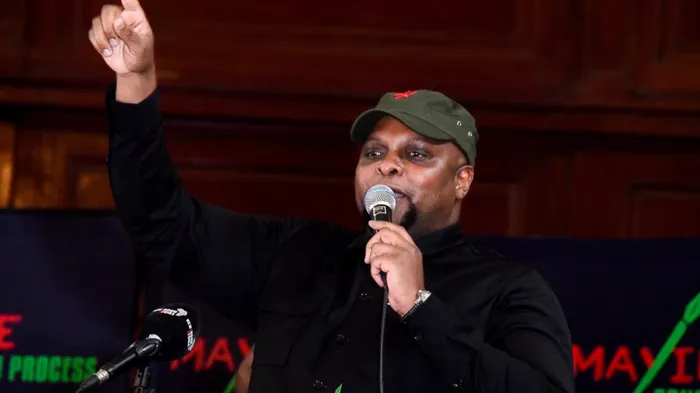
Afrika Mayibuye Movement leader Floyd Shivambu and March and March leader Jacinta Ngobese-Zuma have agreed to work together on a campaign against illegal immigration.
Image: X
According to the joint statement, the meeting resolved to hold joint seminars, workshops and public lectures aimed at engaging communities concerned about illegal immigration and developing short-, medium- and long-term solutions.
The two agreed to collaborate on a series of initiatives, including reviewing immigration laws, consulting stakeholders on policy reforms, educating the public on immigration-related issues and supporting peaceful campaigns against undocumented and illegal immigration.
"All these will culminate in the development of policy perspectives aimed at addressing the crisis of undocumented and illegal immigration in South Africa," the statement said.
They called on political parties, civil society groups, the private sector and government to work together to find solutions.
"We call on all sectors of society, inclusive of all political parties, civil society, private sector and government, to combine efforts in seeking solutions to the immigration crisis and avoid delegitimising forces that are fighting against undocumented and illegal immigration," they said.
The meeting took place as the government continues to condemn protests targeting foreign nationals, some of which have been linked to March and March.
Tensions related to immigration have escalated in parts of the country.
Some foreign nationals from Ghana, Mozambique and Nigeria have reportedly left South Africa amid the unrest.
March and March has called on undocumented migrants to leave the country by 30 June.
The group is demanding stricter visa controls, tougher asylum policies, action against employers who hire undocumented workers and greater accountability for officials accused of corruption.
In response, President Cyril Ramaphosa recently outlined measures aimed at strengthening immigration management.
These include intensified arrests and deportations, tighter border controls, reforms to immigration and labour laws, and increased cooperation with African countries to address the root causes of migration.
Immigration expert Dr Gideon Chitinga told IOL News that the government should investigate the issue of immigration.
"The government needs to investigate these issues beyond the obvious challenges we are discussing so that it can determine whether illegal exploitation, violence and manipulation are contributing factors," he said.
Chitinga said authorities should address the issue through legal, security and policy interventions while ensuring that lawful protests remain protected.
He said the measures announced by Ramaphosa could help improve immigration administration if properly implemented.
"Many of these measures already exist in policy and legislation. The issue is enforcement. If implemented effectively, they could partly resolve the challenge," he said.
However, Chitinga argued that economic growth remains central to addressing migration-related tensions.
"The bigger issue is stimulating the economy under difficult domestic and global conditions. People are competing for livelihoods and often seek someone to blame. Illegal immigrants frequently become the target, which is not unique to South Africa," he said.
He added that stronger economic conditions across the Southern African region could reduce migration pressures by creating opportunities in neighbouring countries.
Chitinga also warned that continued anti-immigration tensions could damage South Africa's international standing.
"South Africa has historically played an influential political and economic role on the continent. These developments risk eroding the country's reputation and creating tensions with other African nations," he said.
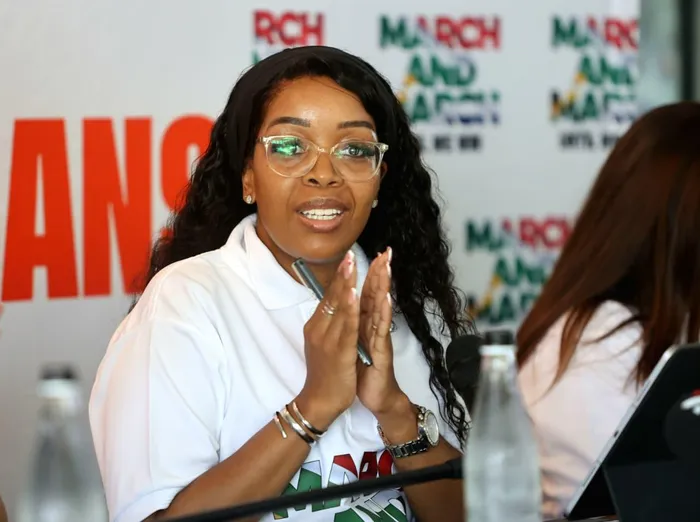
Afrika Mayibuye Movement leader Floyd Shivambu and March and March leader Jacinta Ngobese-Zuma have agreed to collaborate on efforts aimed at strengthening immigration laws and addressing undocumented migration.
Image: TUMI PAKKIES Independent Newspapers
He cautioned that perceptions of hostility towards migrants could weaken South Africa's influence within continental institutions and multilateral forums.
Meanwhile, Minister of Justice and Constitutional Development Mmamoloko Kubayi has warned that members of the public may not conduct identity checks or enforce immigration laws.
Speaking during a briefing of the Inter-Ministerial Committee (IMC) on Migration on Sunday, Kubayi said such powers are reserved exclusively for law enforcement authorities.
"We have observed, disturbingly, that some citizens are insisting on conducting identity checks and other immigration enforcement actions. This is illegal and should not be encouraged in our country," she said.
“Only the state has the responsibility to enforce immigration laws and no one else. Citizens are, however, encouraged to report or alert law enforcement authorities whenever they suspect or witness criminal activity."
The IMC, chaired by Kubayi and tasked with implementing Ramaphosa's migration strategy, met amid growing tensions and protests linked to immigration across several parts of the country.
IOL News